

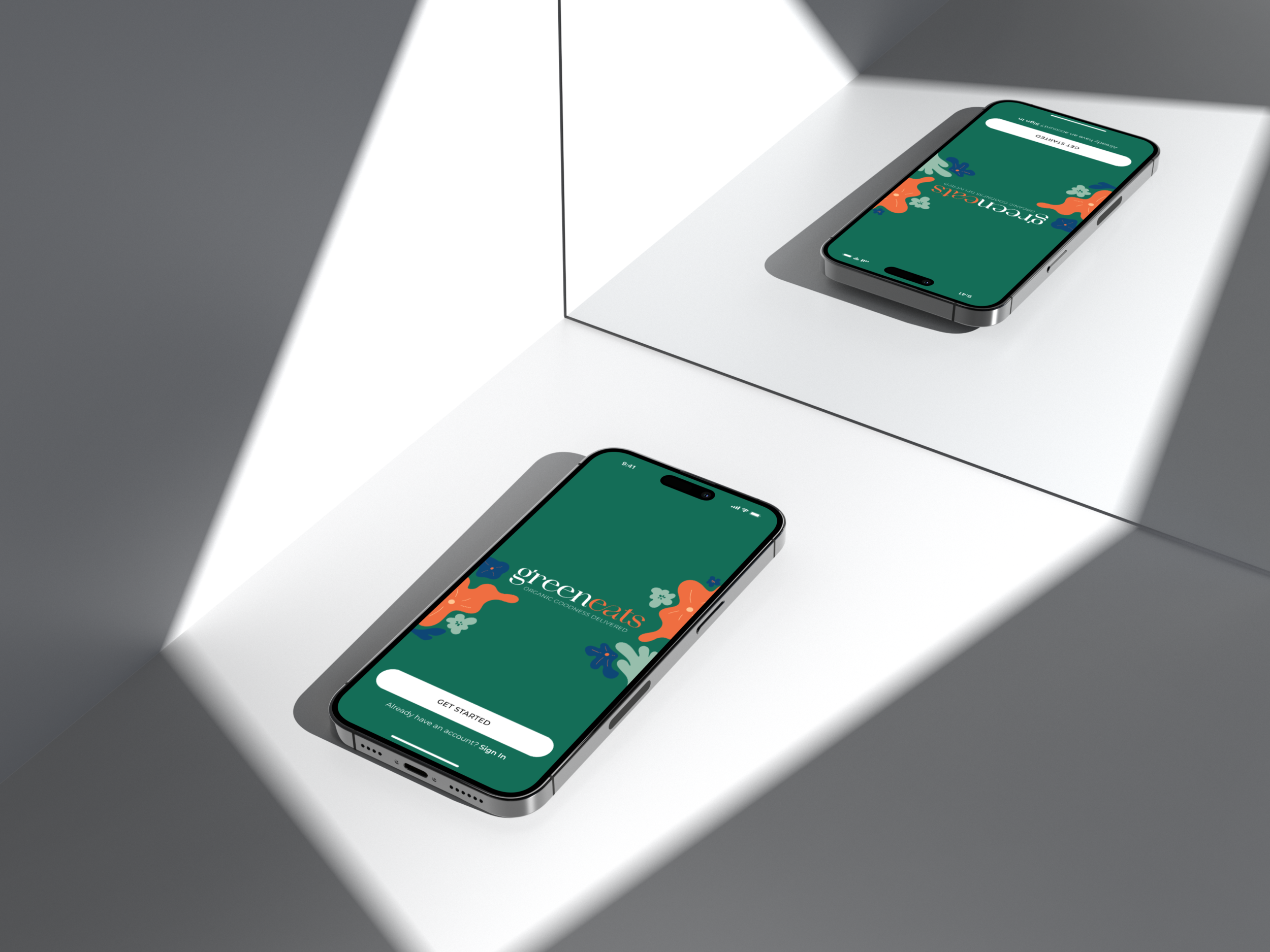
GREEN EATS

Timeframe + Logistics
MY INVOLVEMENT
80 hours of comprehensive design work: end-to-end design. This work involved: creating a research plan, conducting secondary and competitive research, conducting user interviews, developing user personas, defining the mood board, organizing information through task flows, synthesizing research, creating lo-fi and hi-fi wireframes, conducting usability testing, developing a UI kit, revising hi-fi wireframes and prototype.
TEAM
Individual Capstone Project - DesignLab 2023
Project Overview
STORY
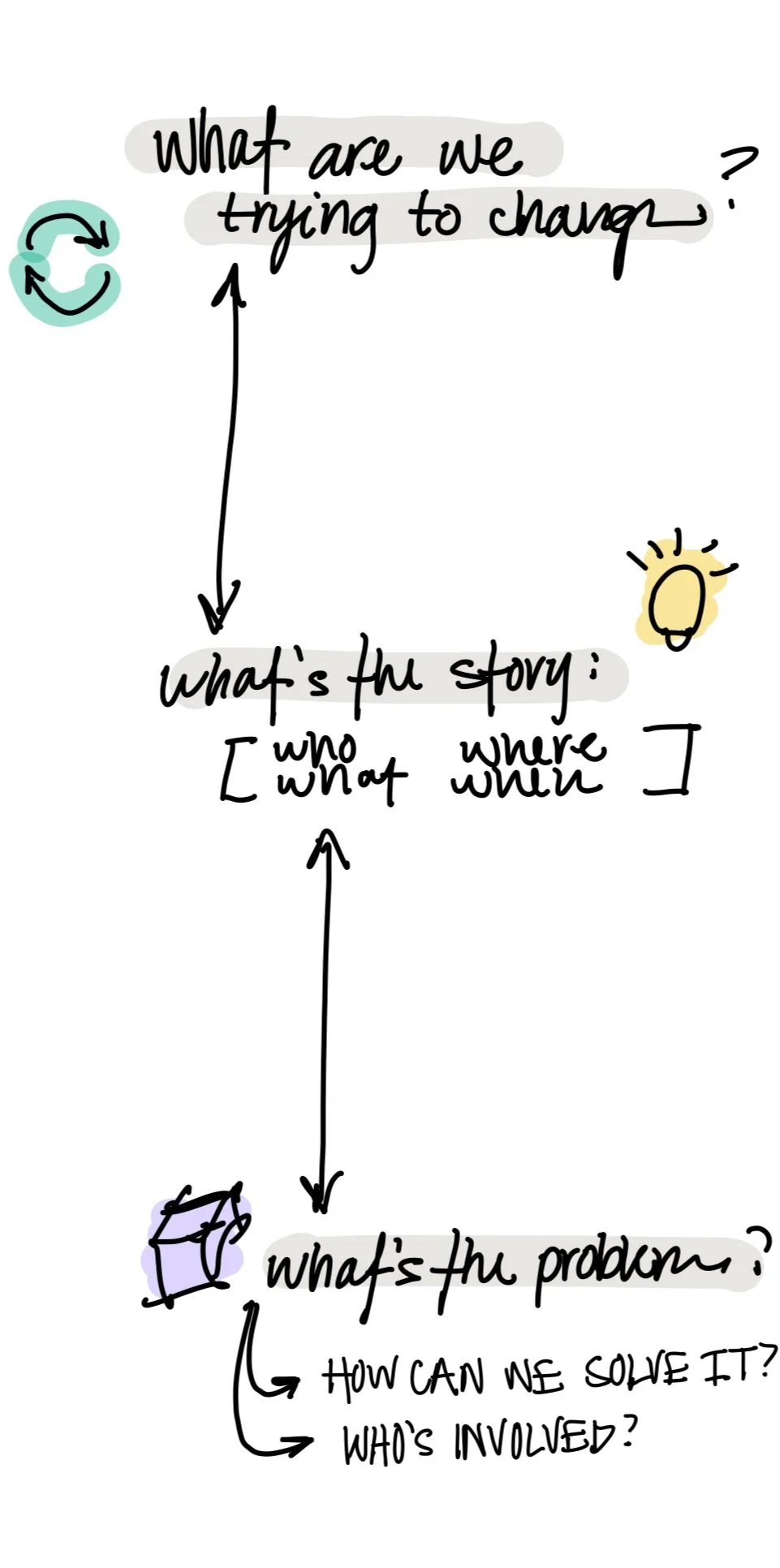
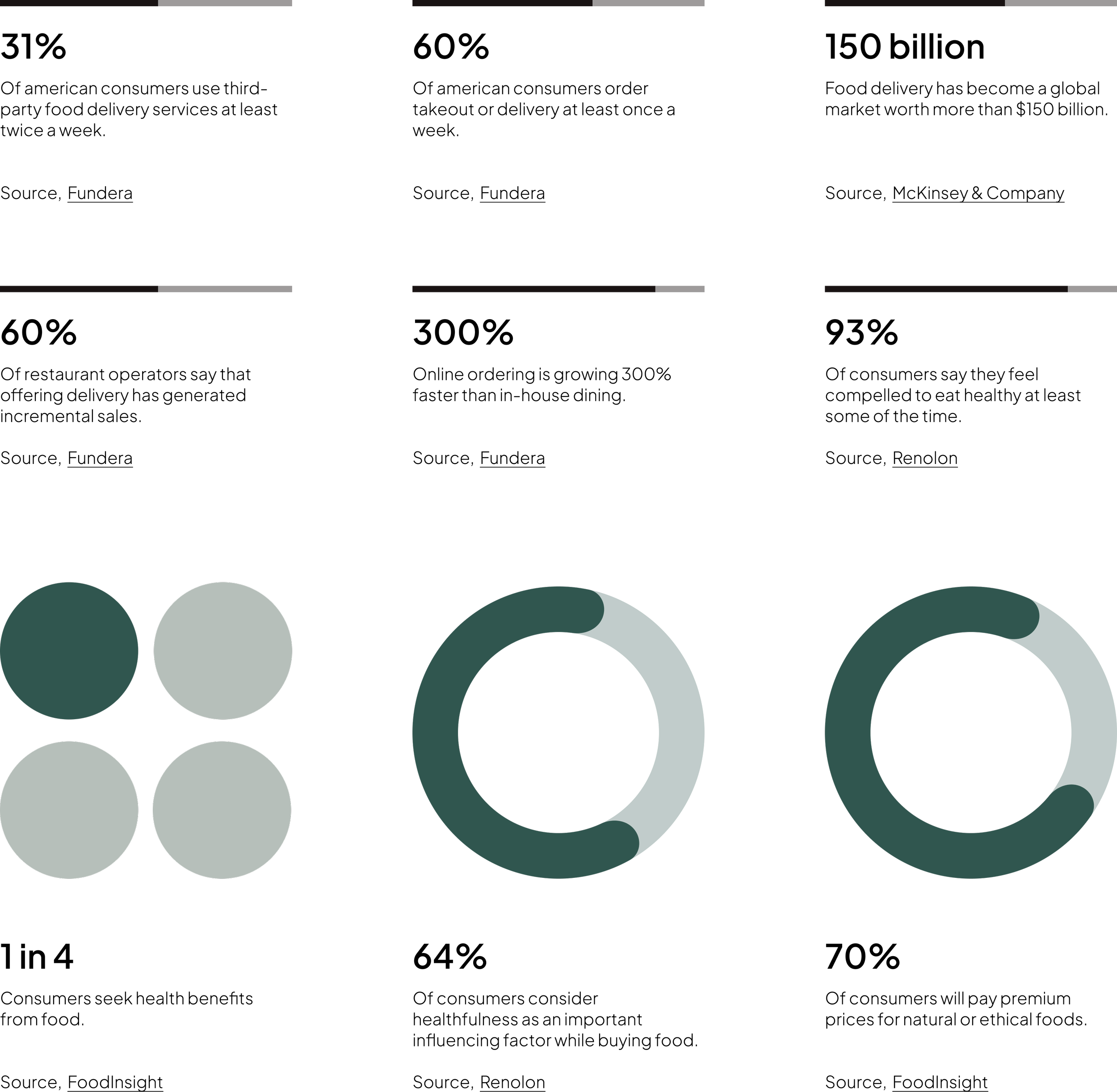
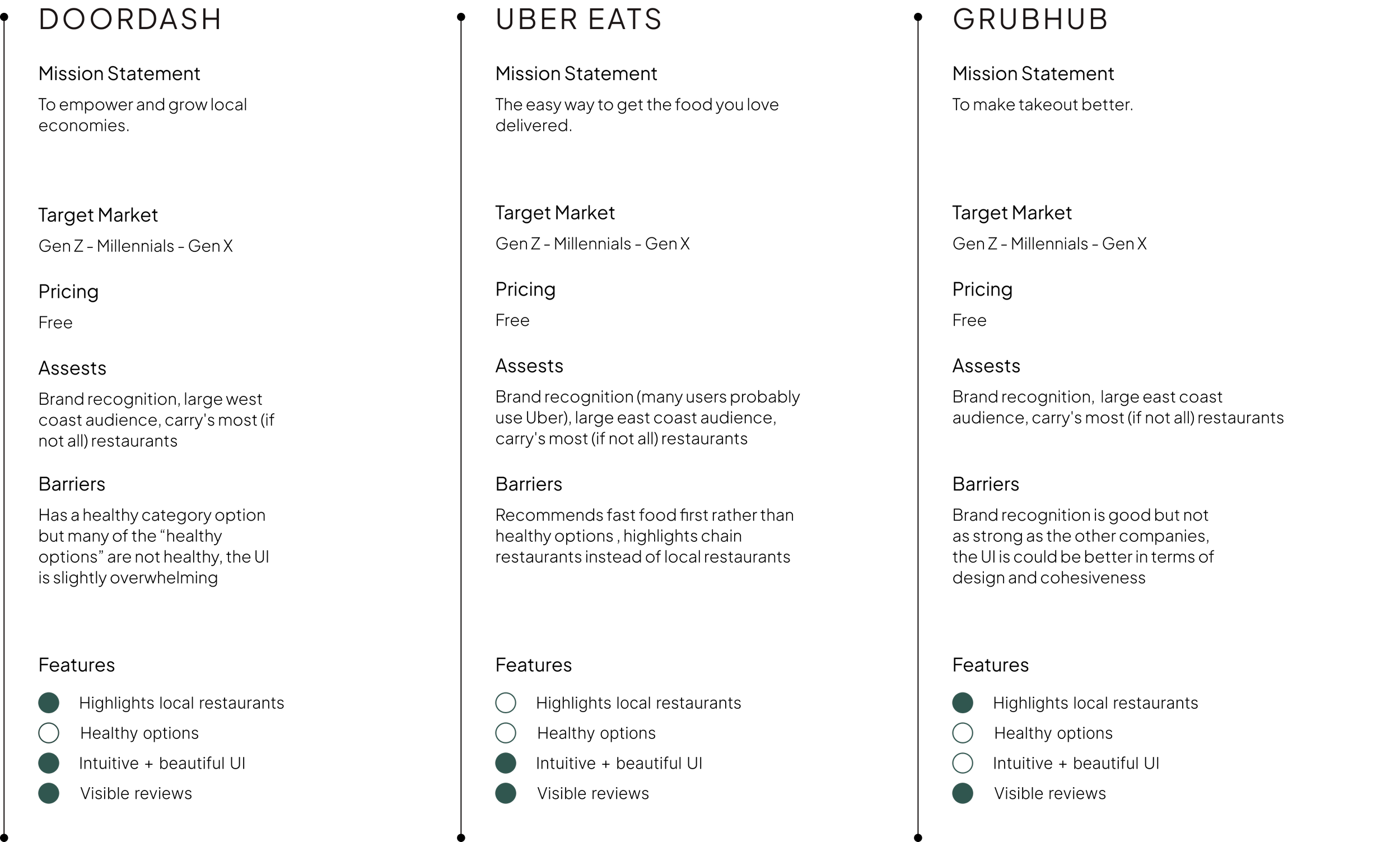
Recall your last takeout experience. Mine involved savoring delightful Thai cuisine, but its nutritional value left me pondering. Shockingly, over 60% of Americans opt for weekly takeout, with more than half of these choices lacking essential nutrients. Digging deeper, I explored popular delivery apps like DoorDash and Uber Eats, only to find their featured restaurants heavily skewed toward unhealthy options. Even their "healthy" filter seemed misguided.
But what if we could transform this landscape? Imagine a platform, Green Eats: Organic Goodness Delivered, where nutrition experts vet restaurants for optimal health offerings. This exclusive selection process not only promotes well-being but also encourages other establishments to follow suit. Picture a world where takeout doesn't mean compromising health—a world where Green Eats reshapes the food delivery scene into a journey of both indulgence and wellness.
PROBLEM
Existing delivery services lack healthy options, often promoting processed, inflammatory foods. From this issue and the success of delivery apps, Green Eats was born. It features:
Effortless account creation
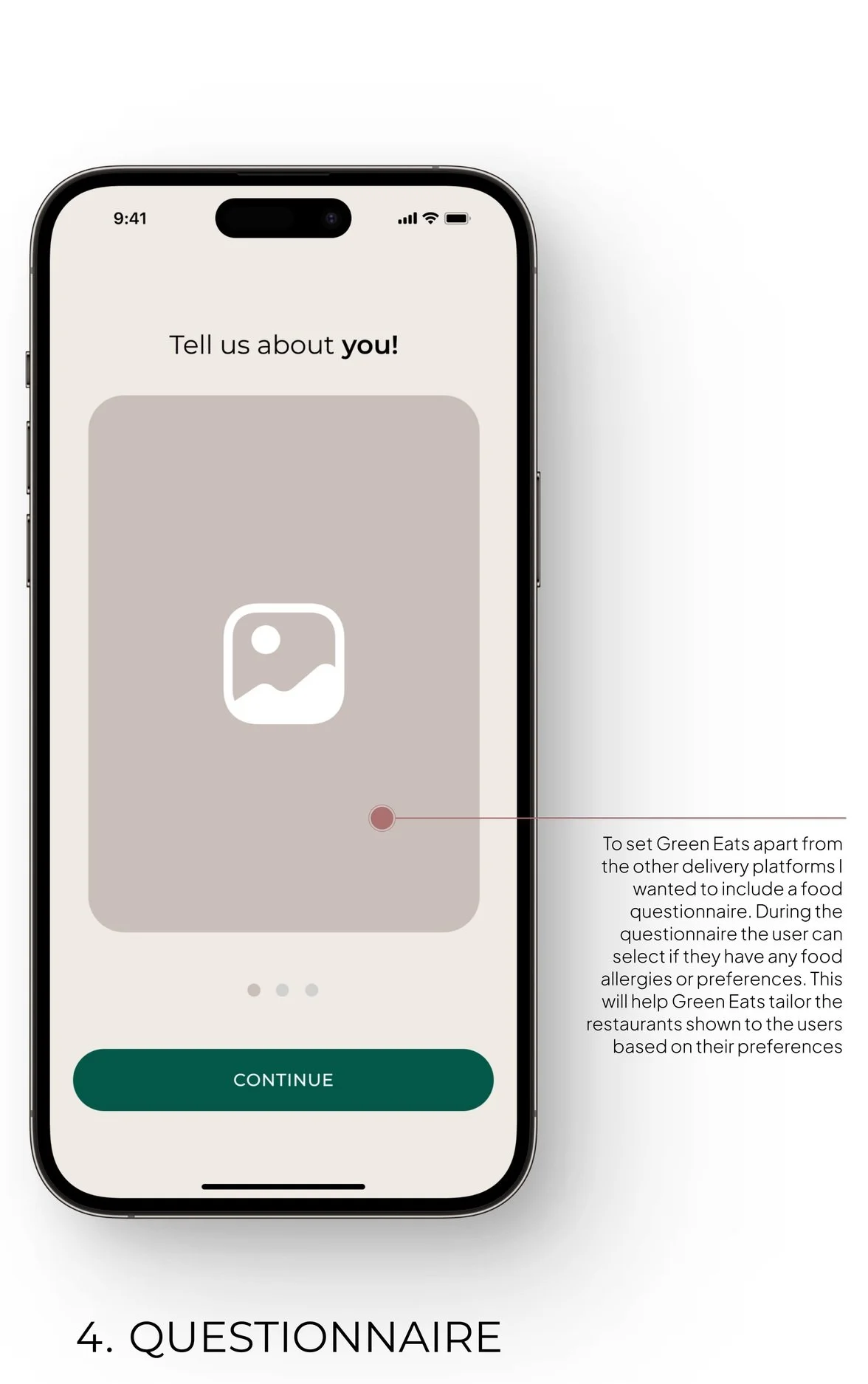
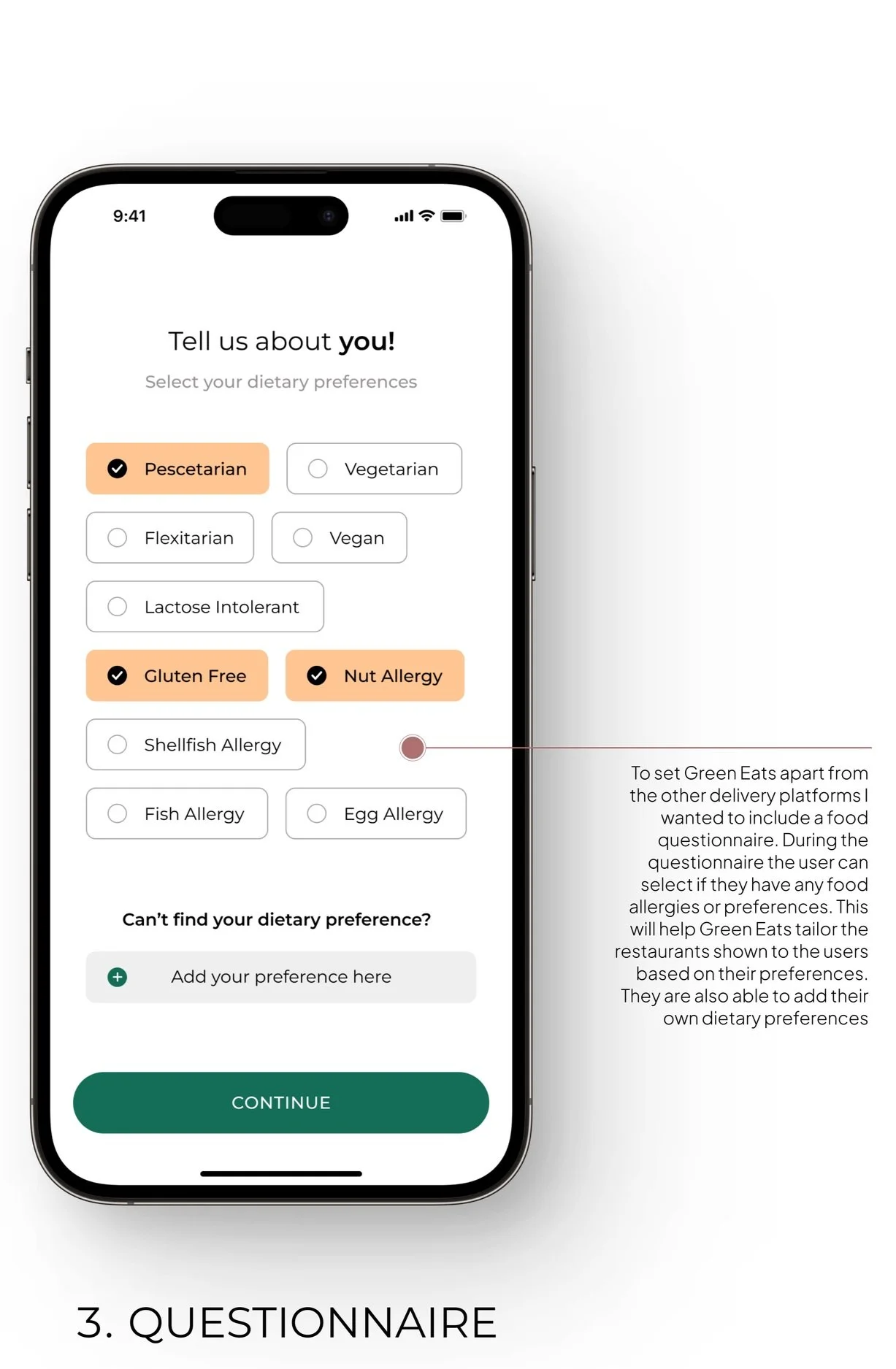
Custom dietary questionnaire
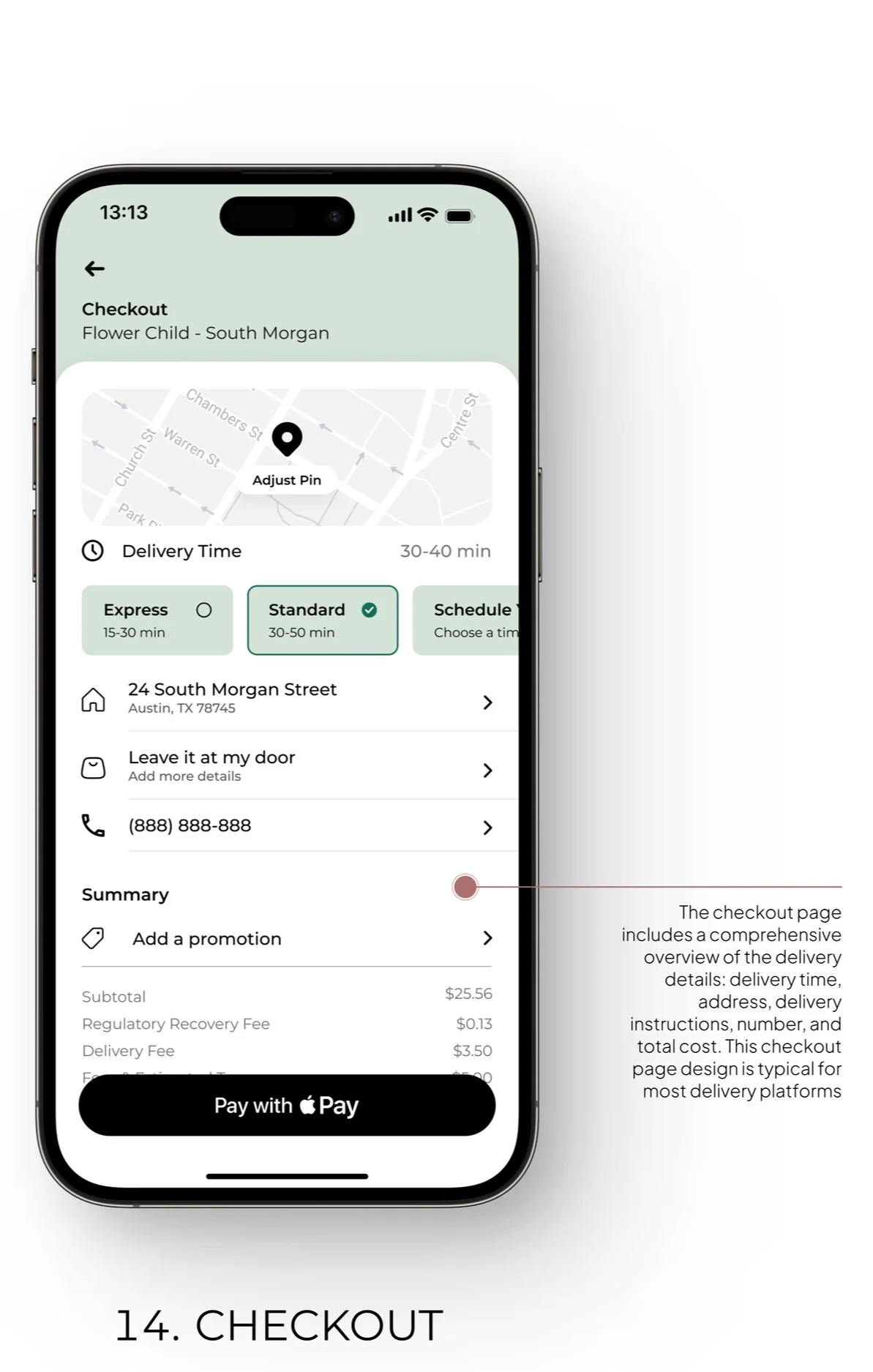
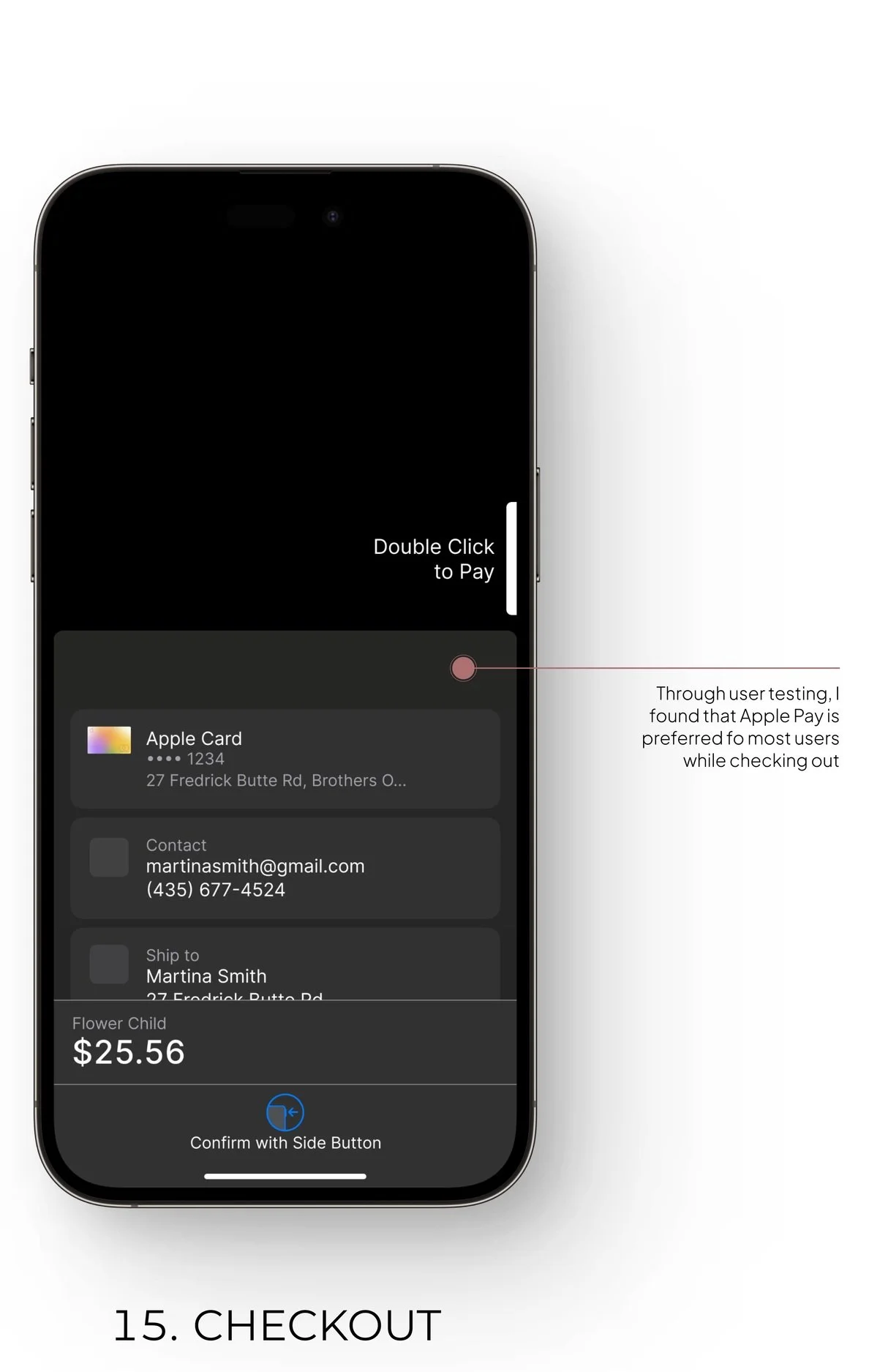
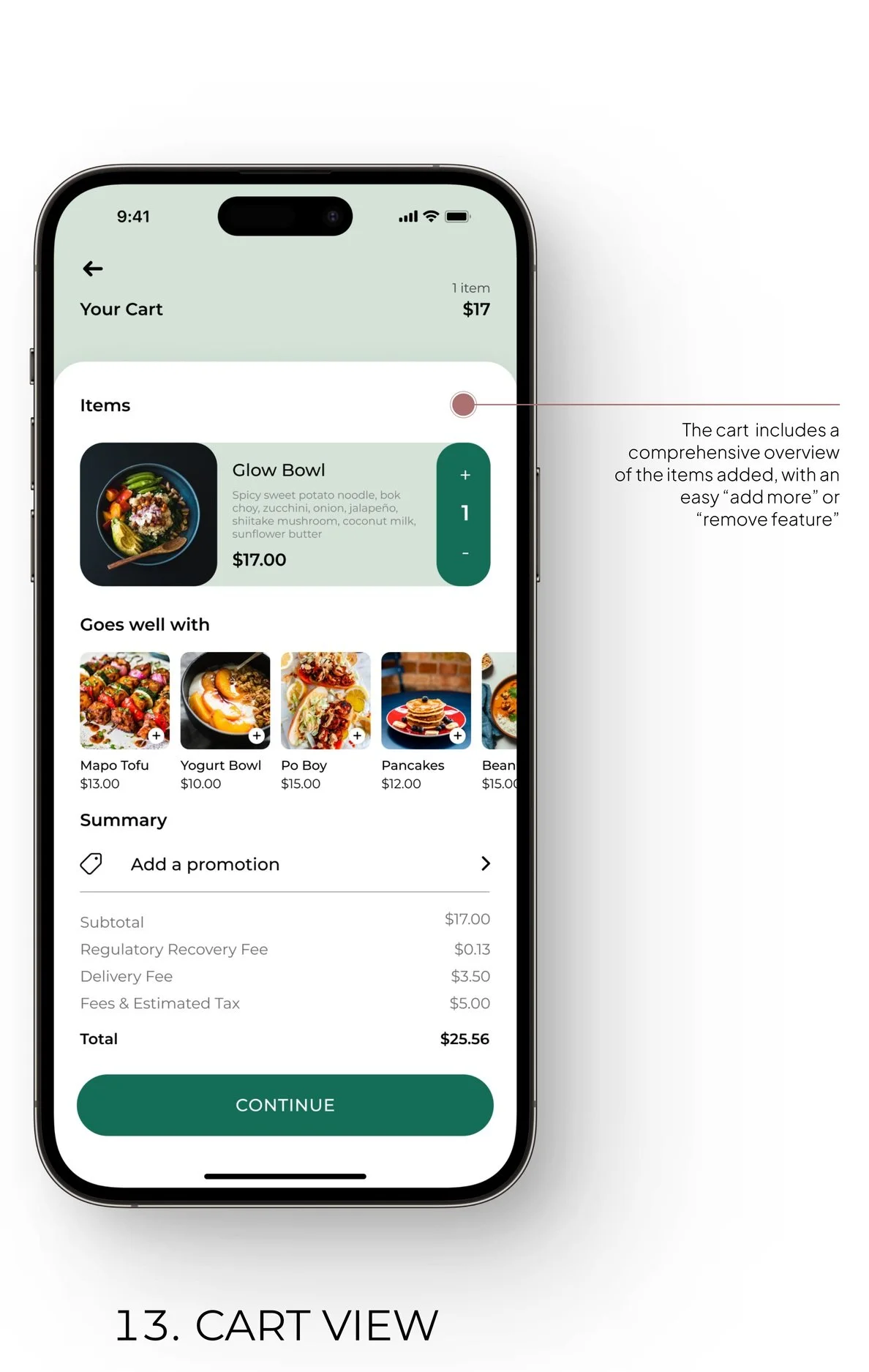
Smooth delivery process (homepage to checkout)
Secondary and Competitive Research
RESEARCH FINDINGS
Before design, understanding the podcast industry was vital. Recognizing rivals, learning from their shortcomings, and adopting their successes will help Green Eats redefine its edge in food delivery.
User Interviews
DISCOVERING PAIN POINTS
To uncover user pain points, I conducted three interviews to gather qualitative data. This data informed persona creation, problem identification, and behavioral insights.

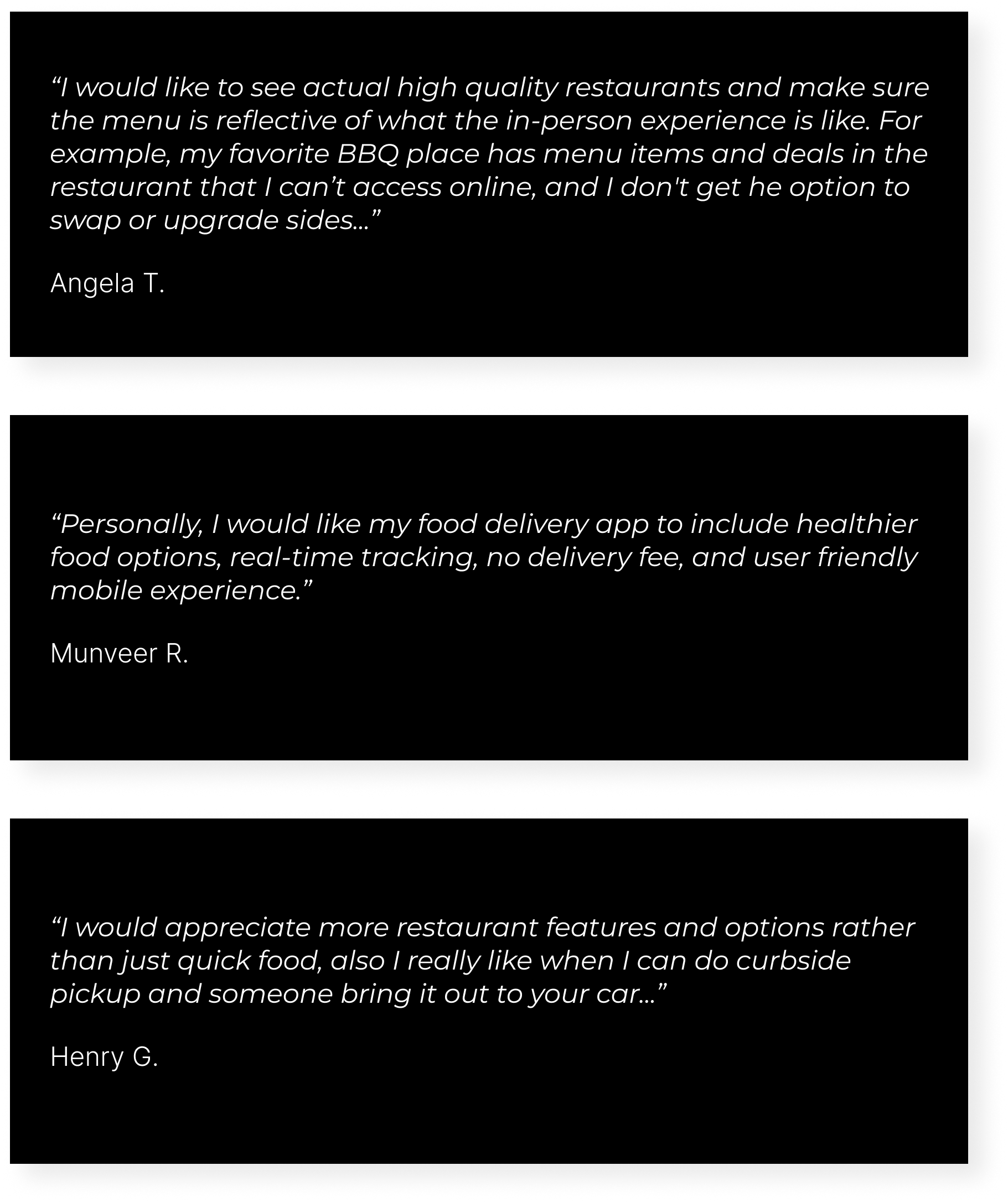
MAGIC WAND QUESTION
The "magic wand question" has proven invaluable in user interviews. It offers a limitless perspective. When I posed the question – "With a magic wand, what's your ideal online food delivery/ordering experience? What tools would you find most beneficial?" – I gained insightful responses, including:
User Personas
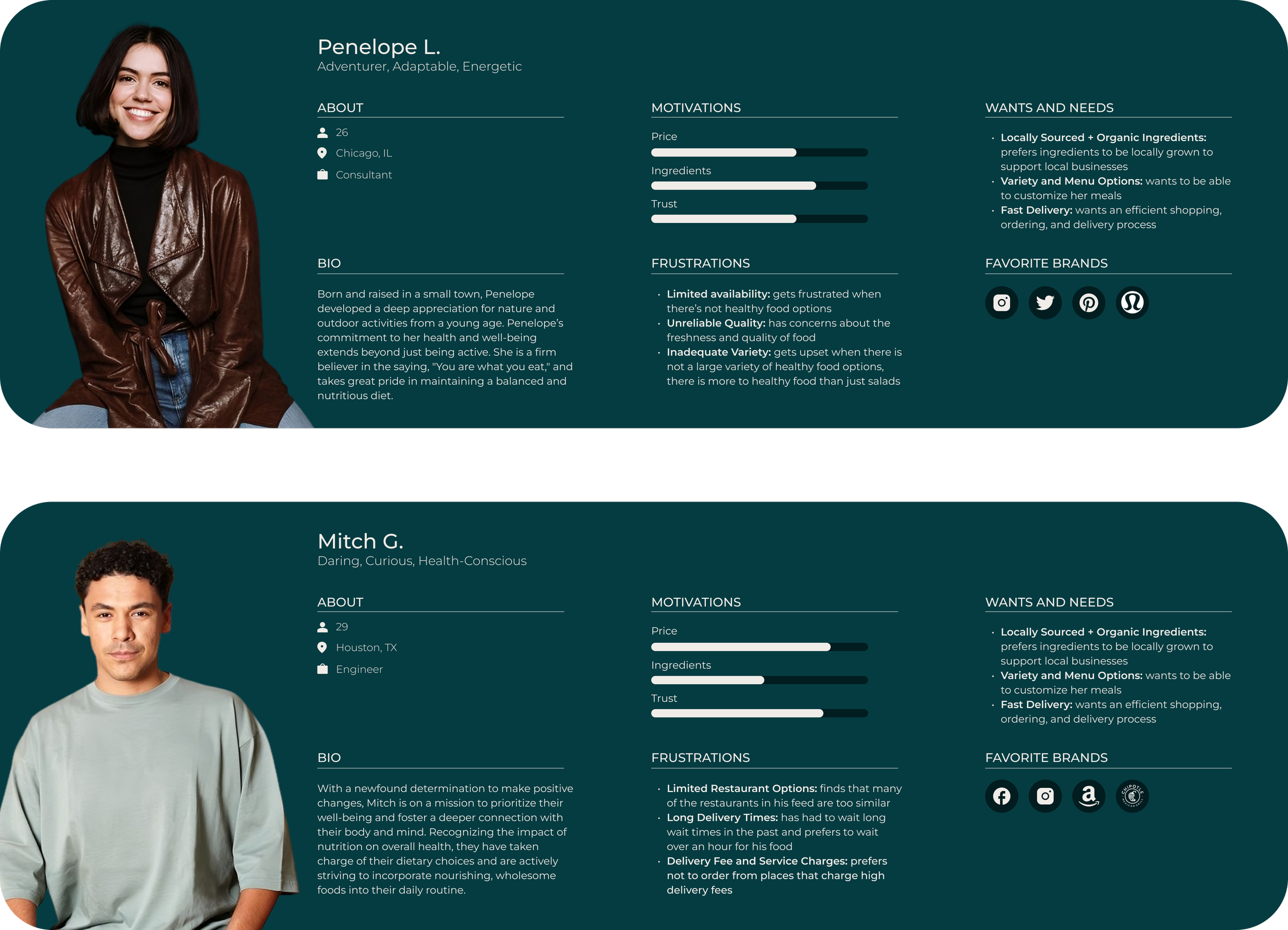
A REPRESENTATION OF USERS
Following user interviews, I condensed insights into two user personas. This shapes Green Eats' focused user base by understanding their app usage, habits, and health preferences. These insights will steer design discussions in later stages.
MOOD BOARD
ESSENCE OF THE BRAND
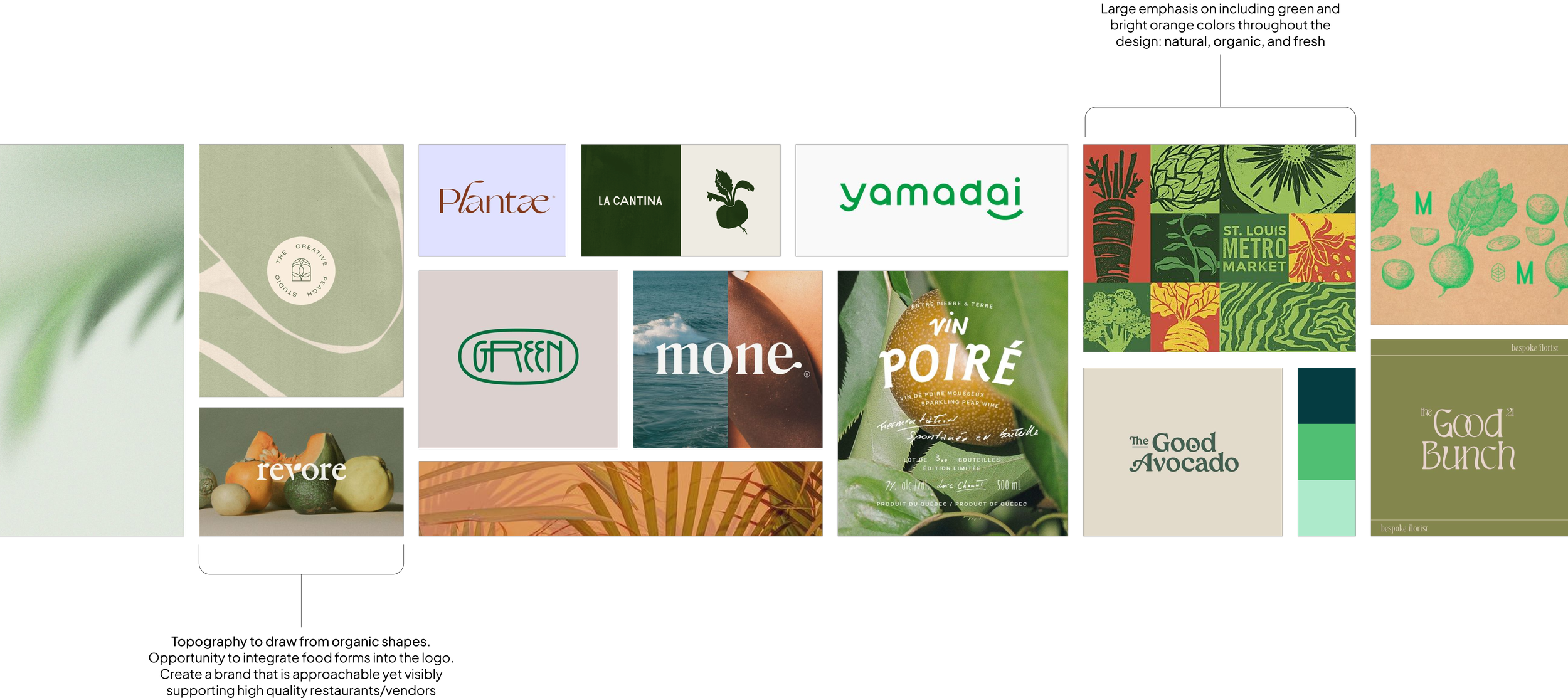
Crafting an all-encompassing design involves brainstorming the brand's visual identity, and setting the tone for branding elements like color palettes, typography, and graphics.
Developing a mood board assisted in framing Green Eats' user presentation. Key descriptors like natural, organic, fresh, colorful, and unique guided this envisioning process.
Information Architecture
HOW SHOULD WE ORGANIZE?
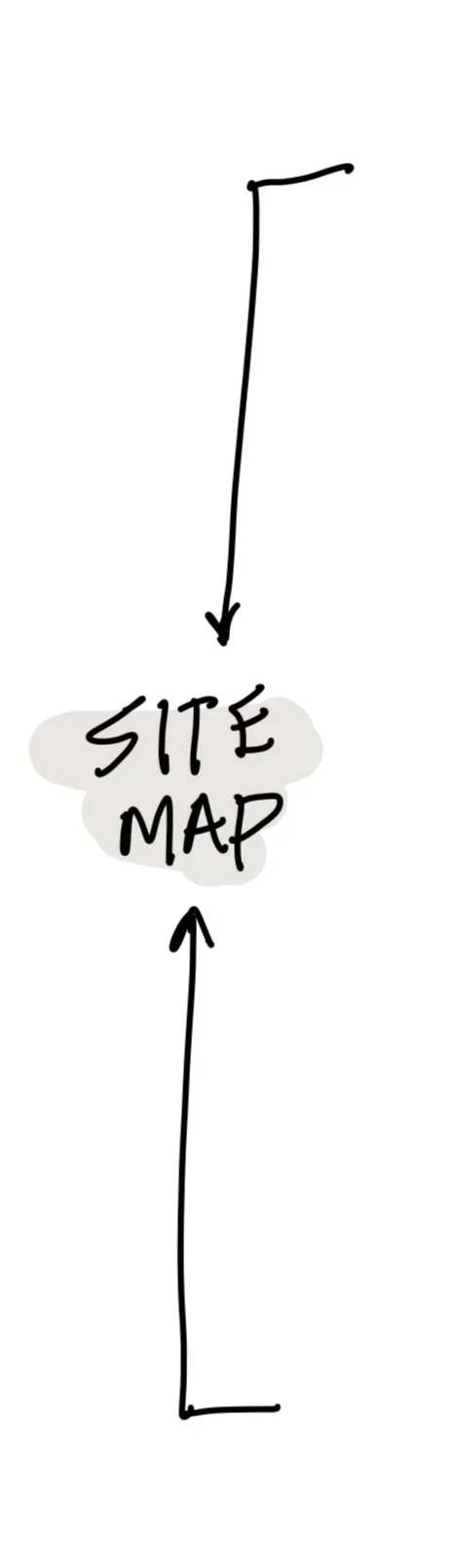
Organizational decisions play a vital role in shaping a seamless and user-friendly design. Just as we organize spaces like kitchens and bedrooms, we must arrange elements according to user expectations. Drawing insights from user interviews, a site map emerged to visualize the new features coherently.
Research Synthesis + Feature Roadmap
HOW MIGHT WE?
1
2
3
How might we eliminate the stress of finding healthy food through a comprehensive food delivery platform?
How might we make food delivery uniquely tailored to the user and efficient?
How might we make food delivery more user-friendly by including features that increase user satisfaction?
MUST HAVE FEATURES

LO-FI WIREFRAMES
GEARING UP FOR USER TESTING
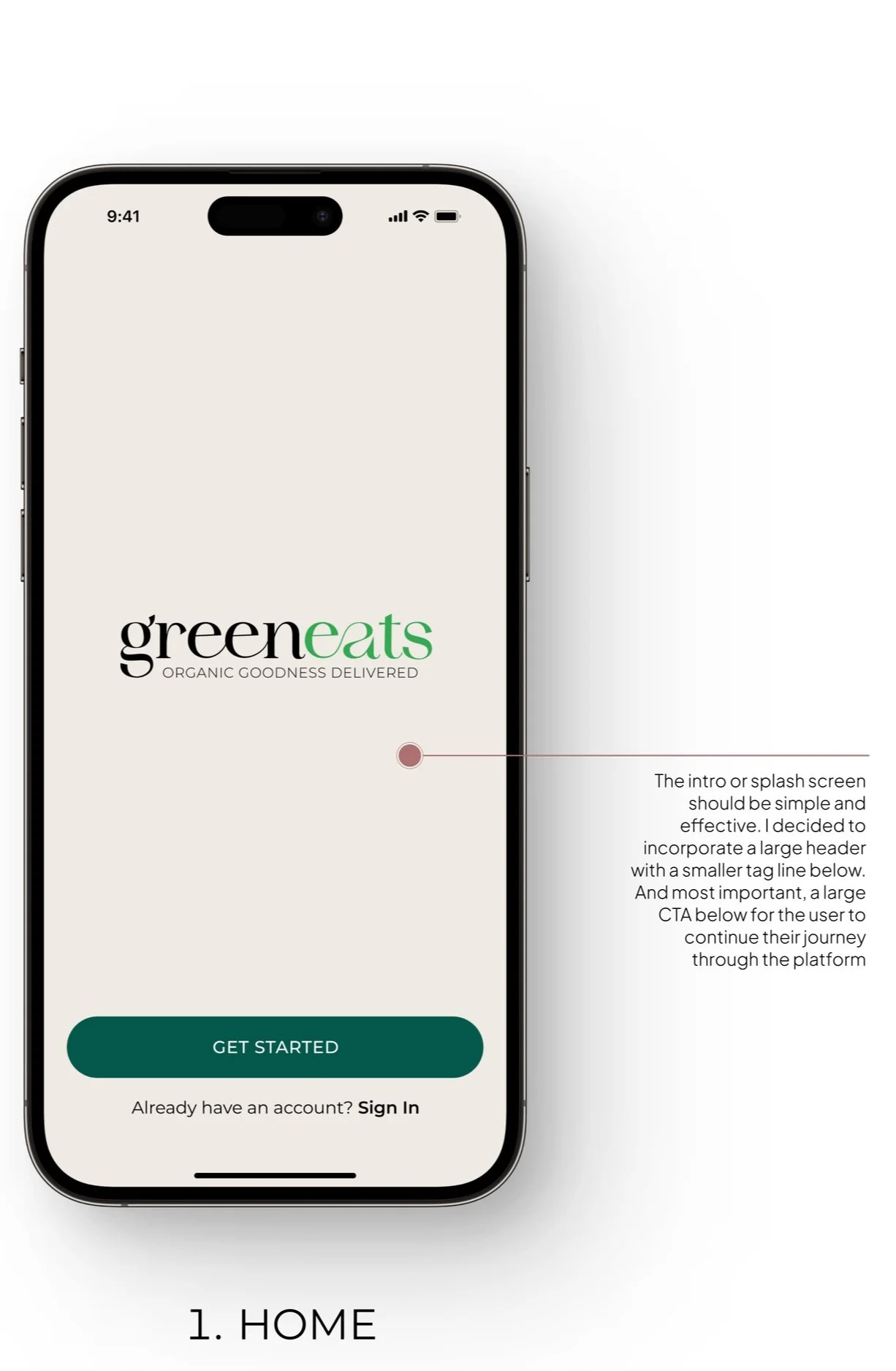
To initiate user testing, I crafted a low-fidelity prototype. This not only garnered valuable user insights but also served as a springboard to elevate my initial sketches into a more deliberate and polished design.
USABILITY TESTING
USER TESTING
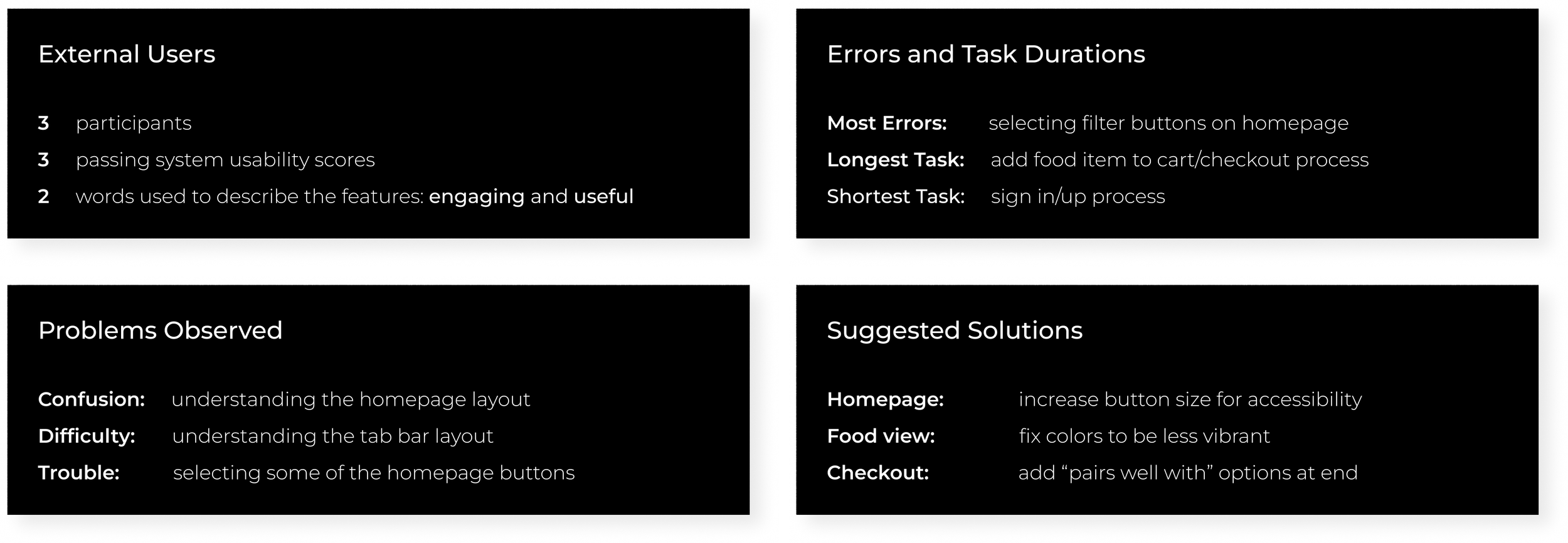
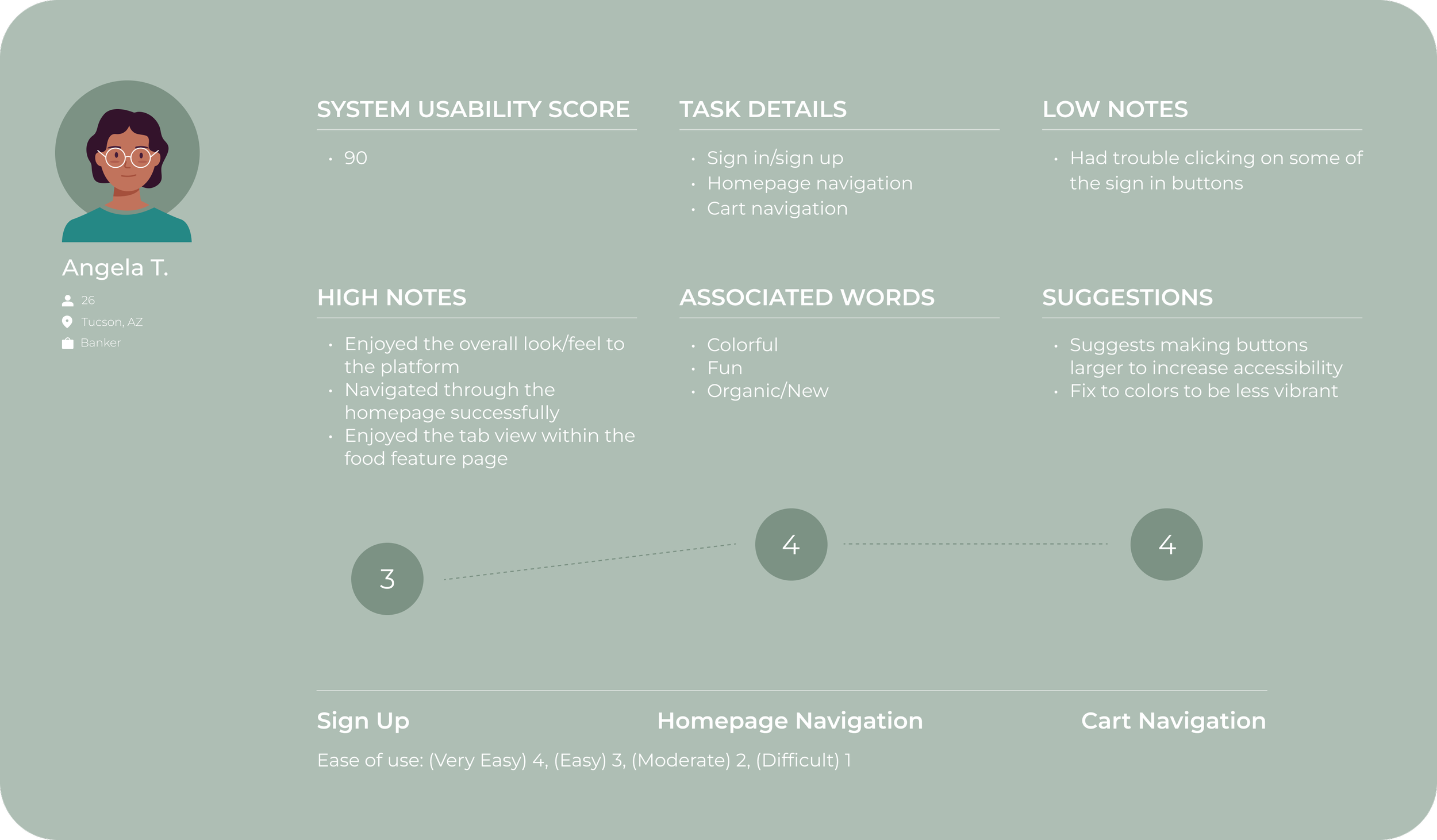
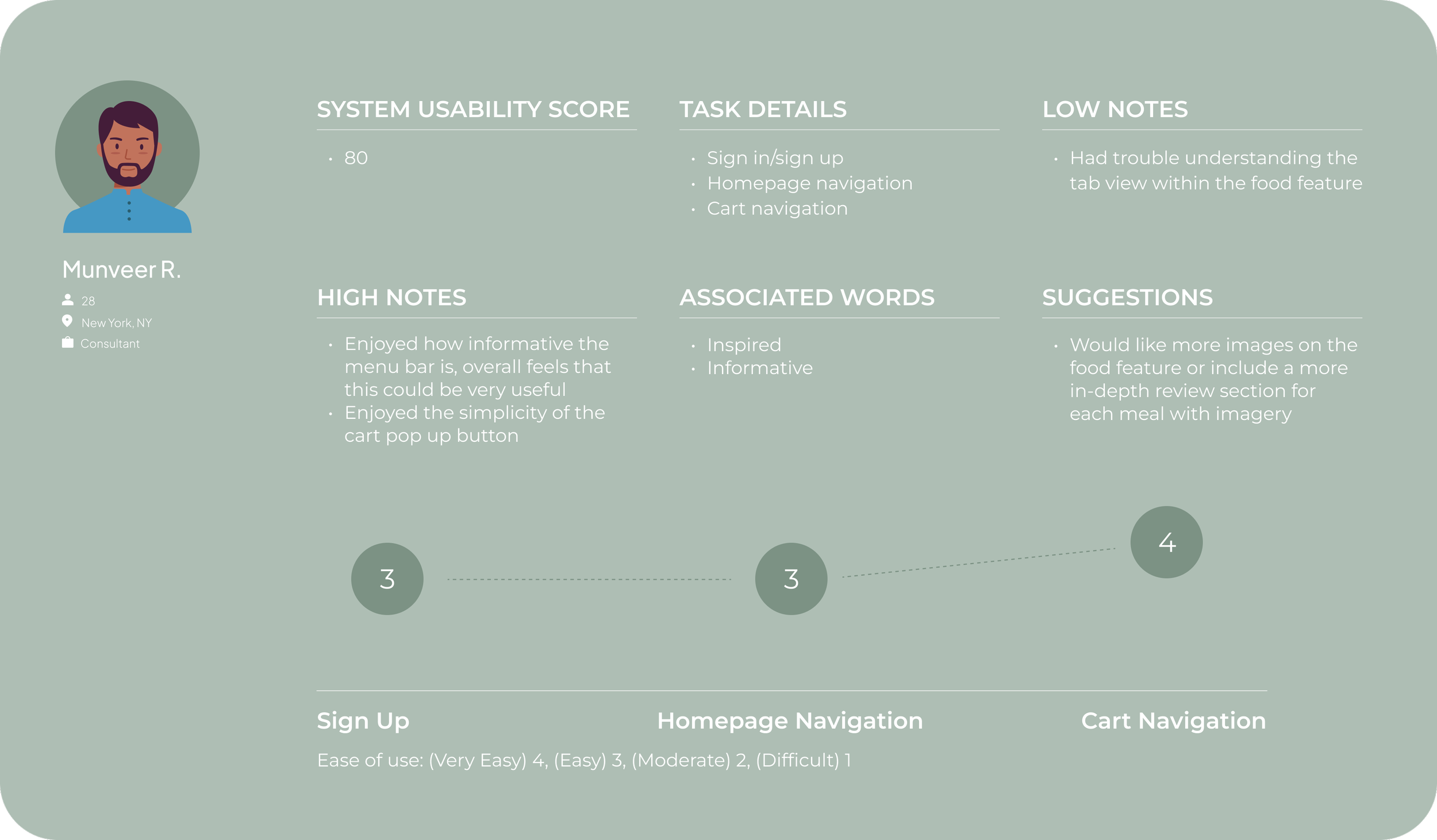
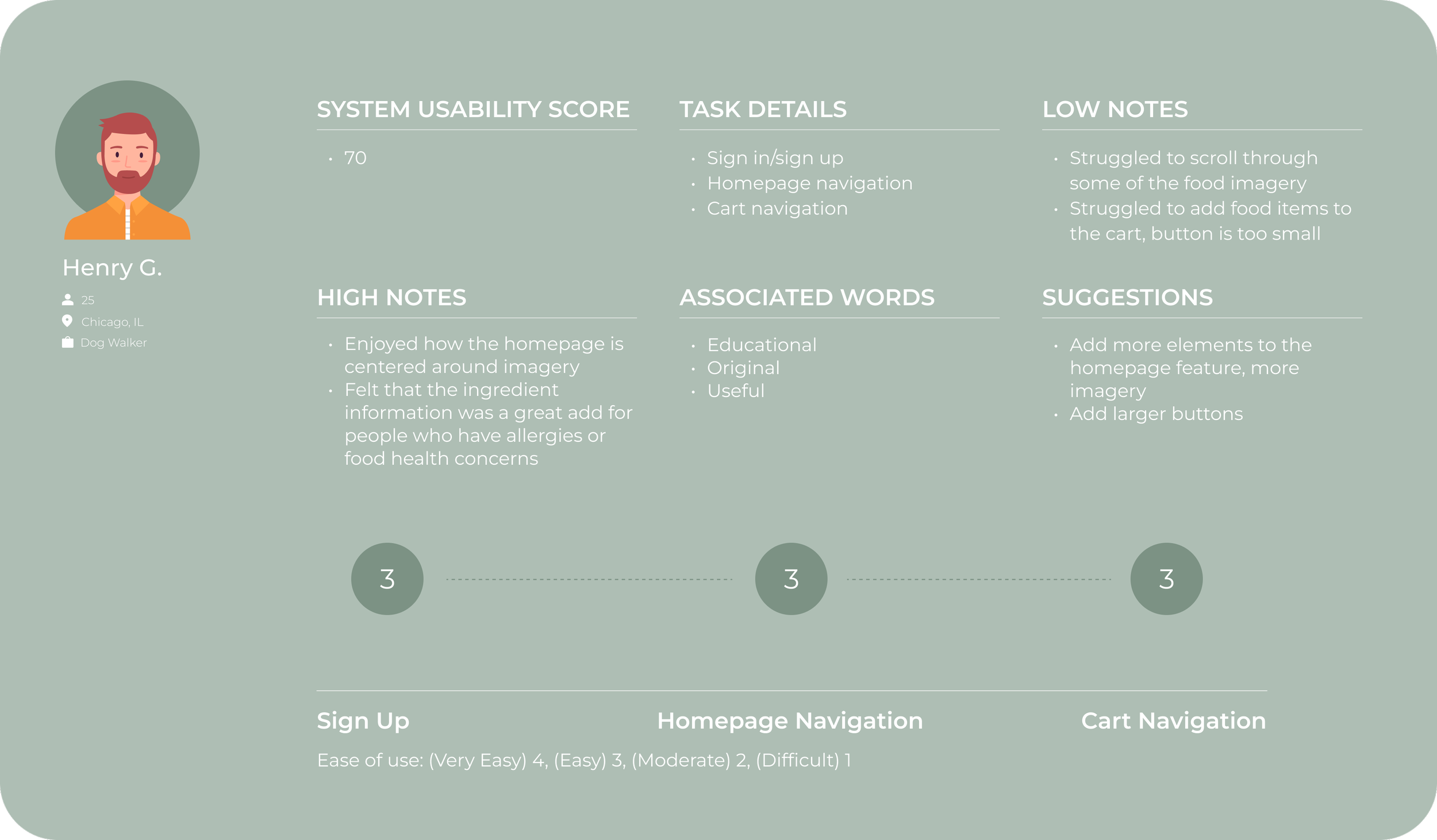
For hi-fi prototype assessment, I conducted three in-person usability tests. Presenting my hi-fi prototype, I guided them through three task flows: creating an account, navigating the homepage, and adding items to the cart.

RESEARCH GOALS
Our goal is to design a user-friendly and visually appealing platform that enhances brand recognition and online sales for the right audience. We're also focused on aligning the Green Eats app with health-conscious users' values. Our research aims include:
Evaluating feature usefulness and intuitiveness
Analyzing user interactions with homepage, cart, and profile features
Identifying ordering challenges
Assessing product effectiveness
DESIGN
CREATING A BRAND
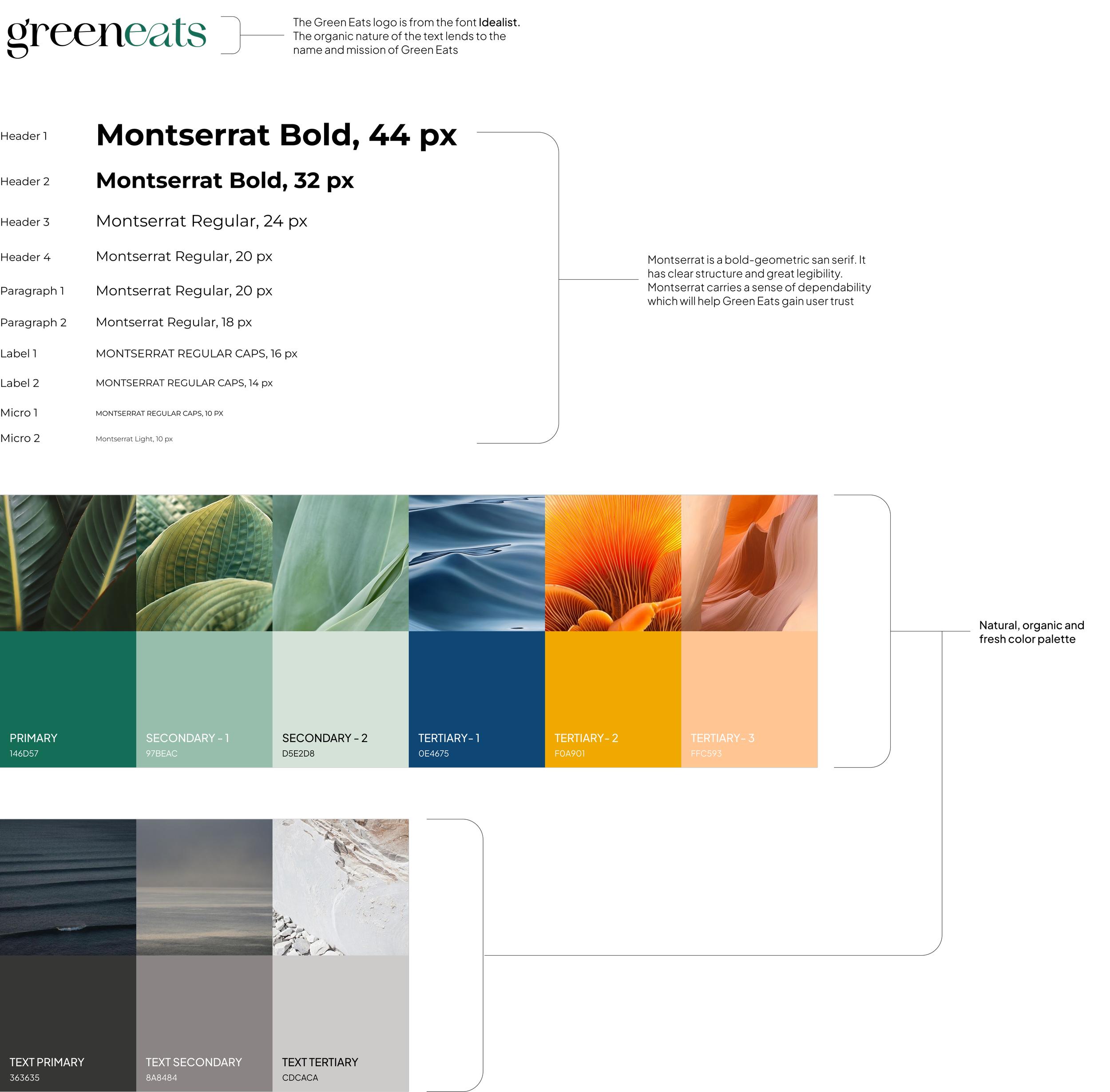
Following user testing, I honed the Green Eats platform's visual identity. Insights from testing directed my subsequent actions. Notably, feedback mainly pertained to design aspects. I made enhancements like enlarging buttons, fine-tuning the color scheme, and streamlining the overall flow based on these insights.
HI-FI WIREFRAMES
FINAL PRODUCT
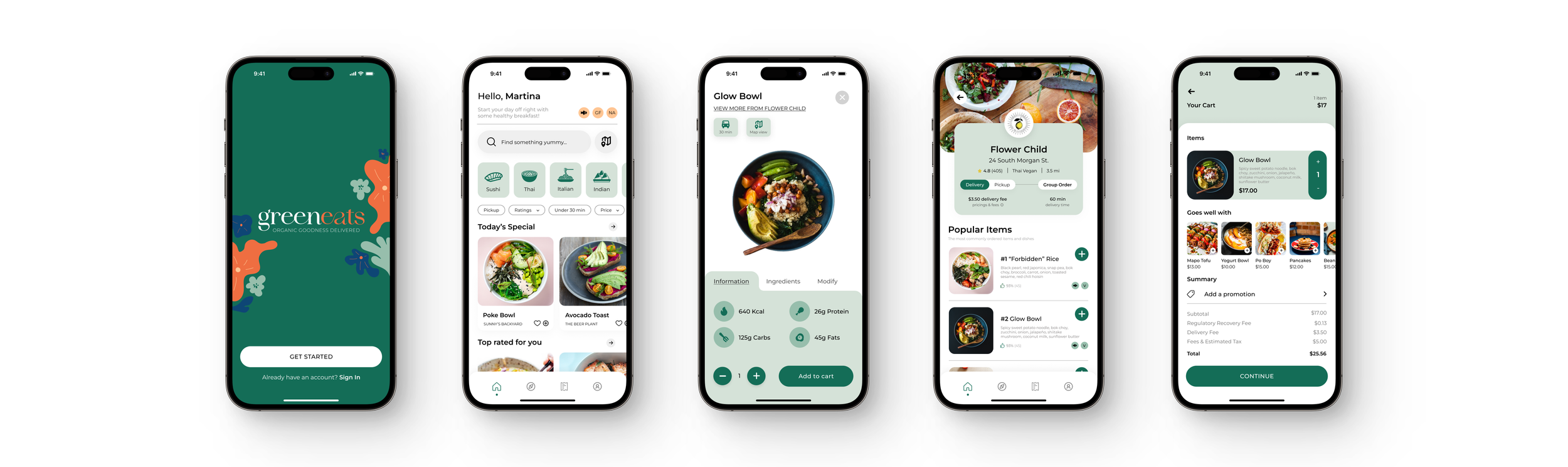
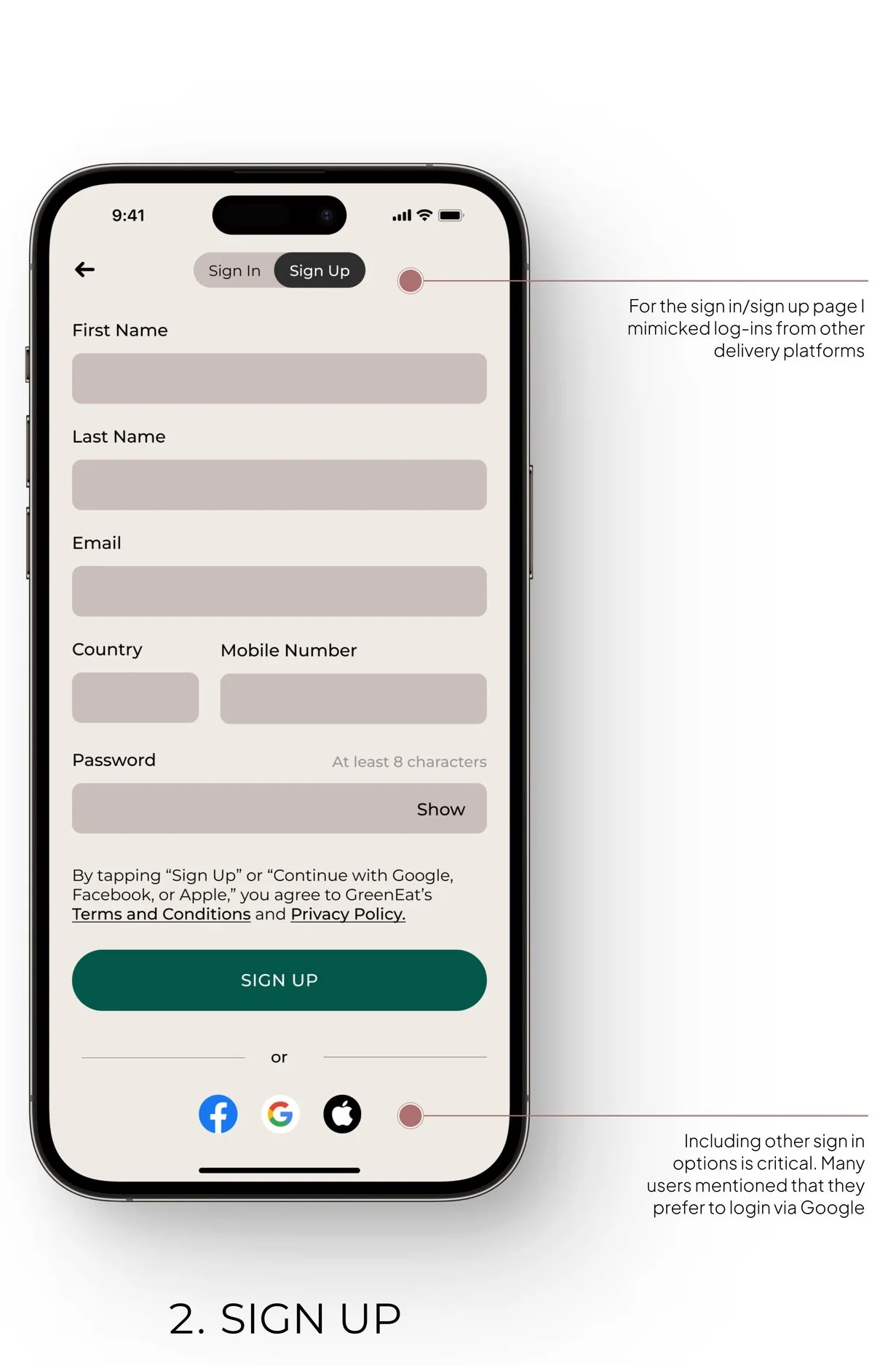
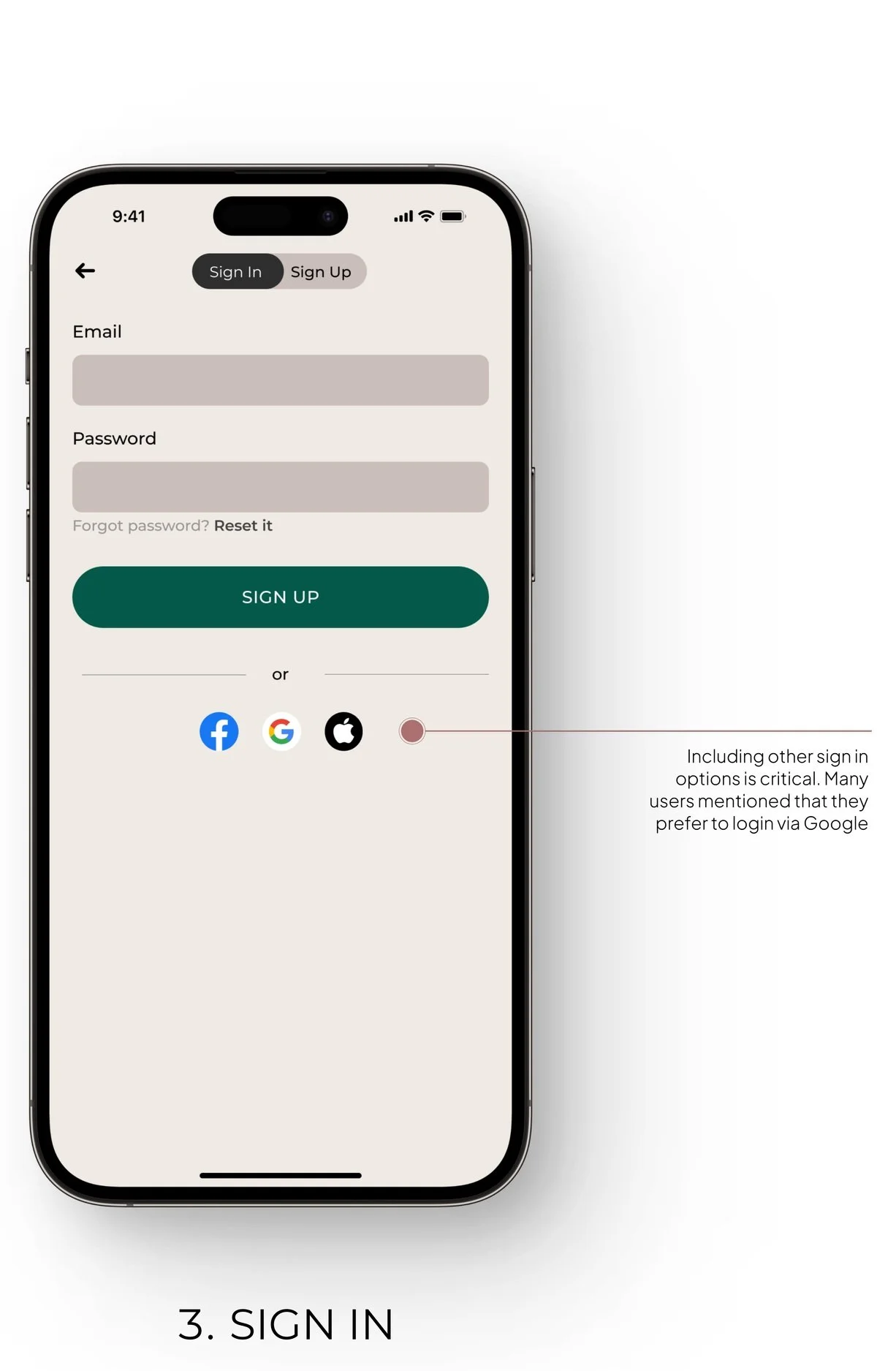
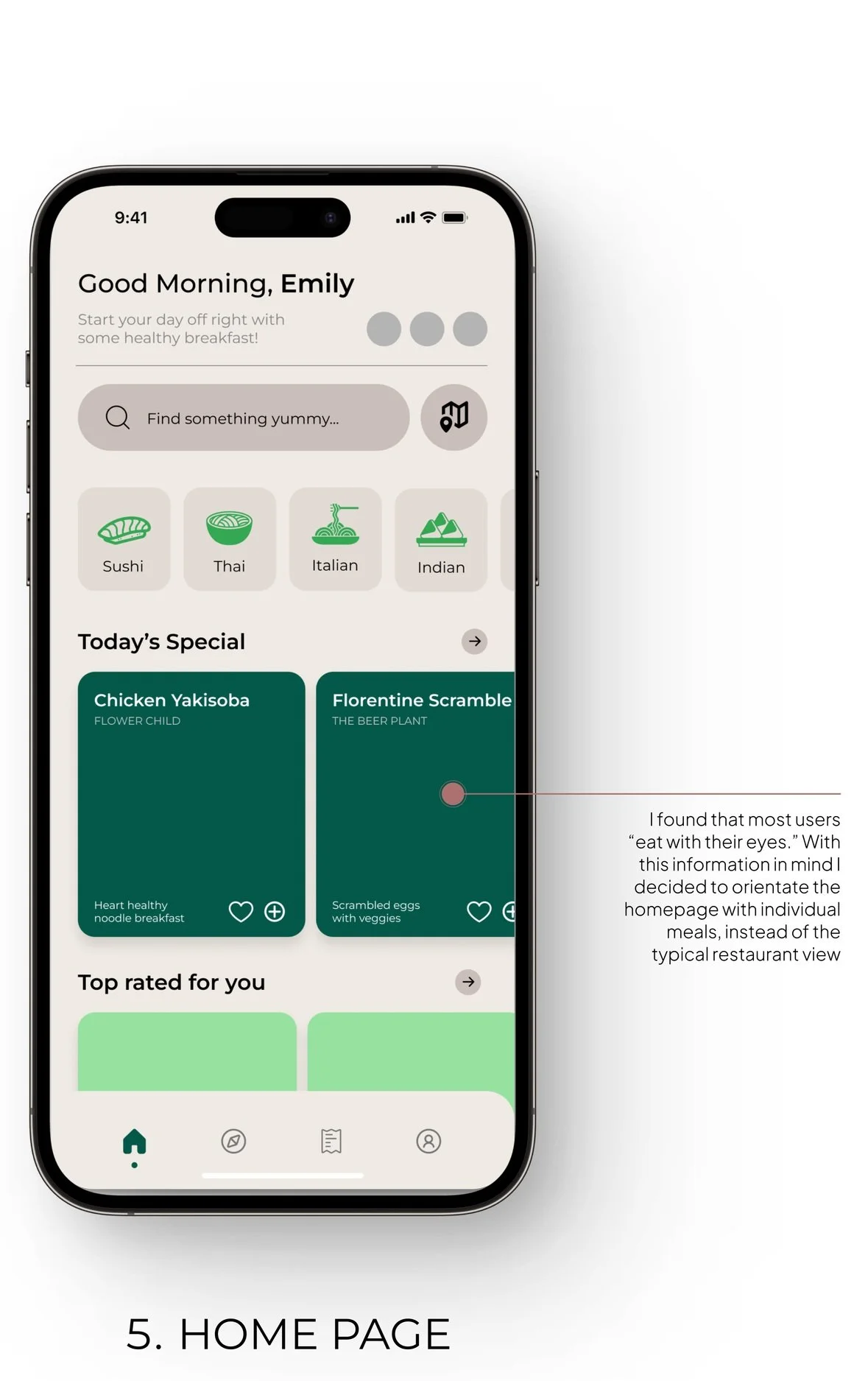
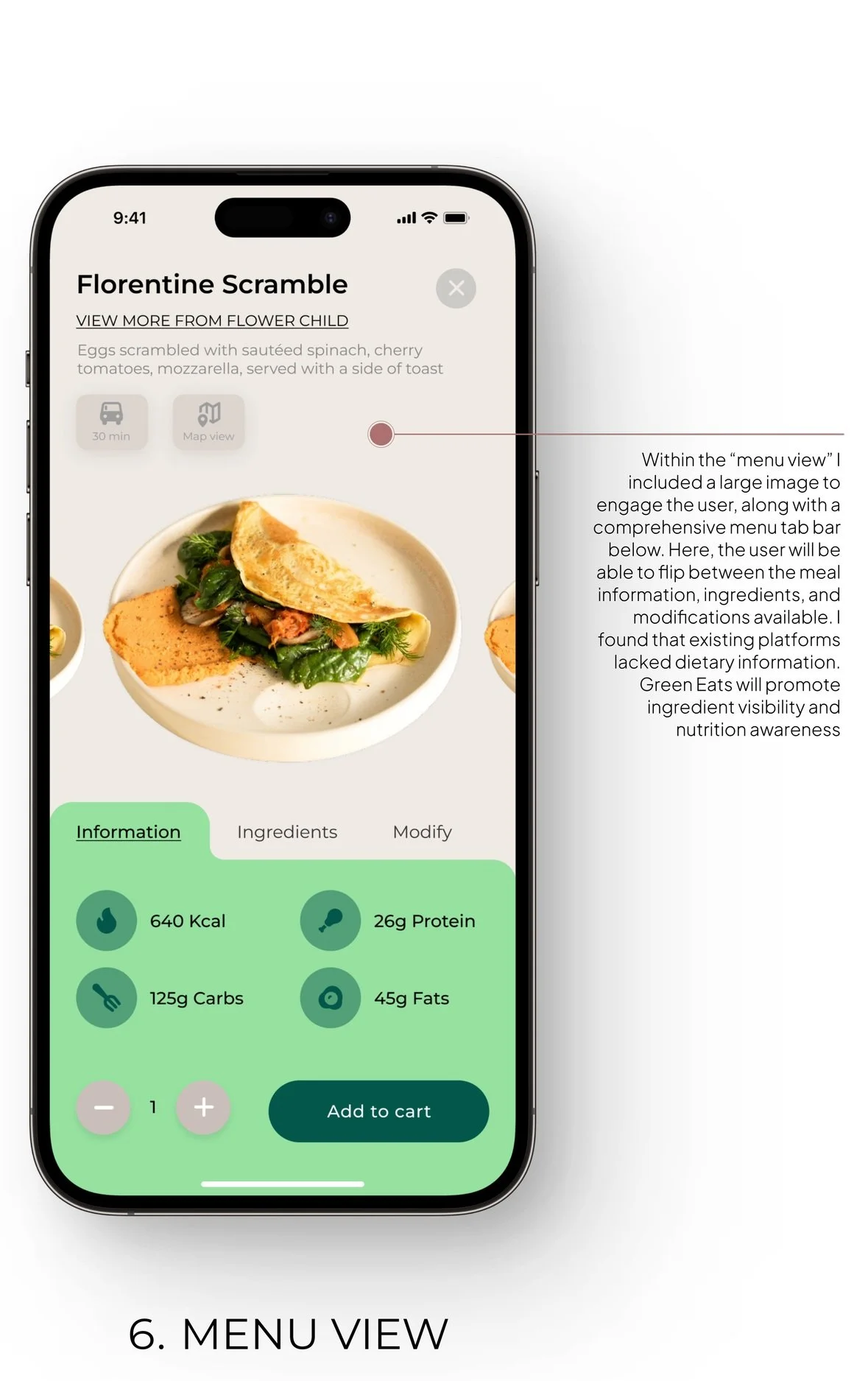
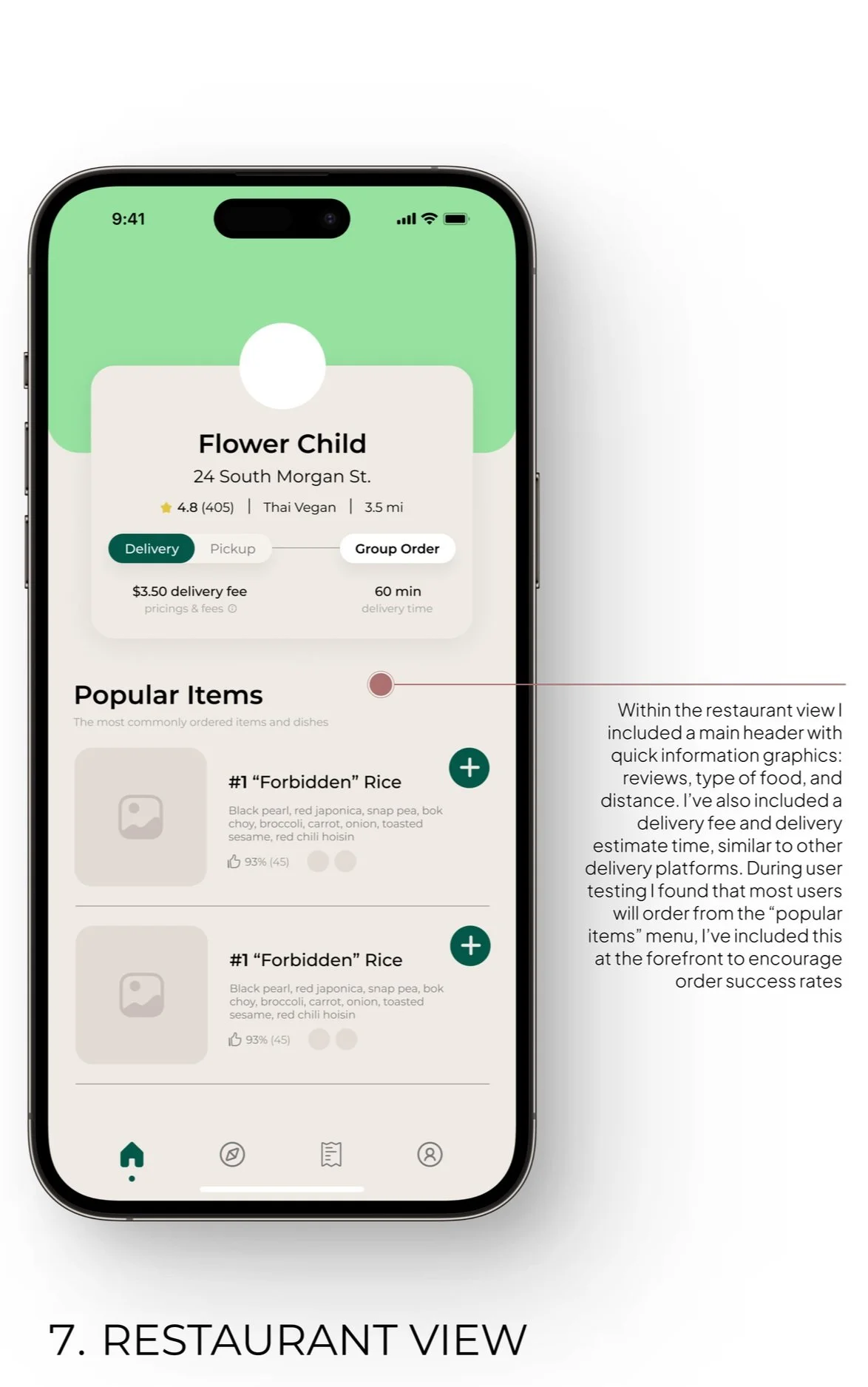
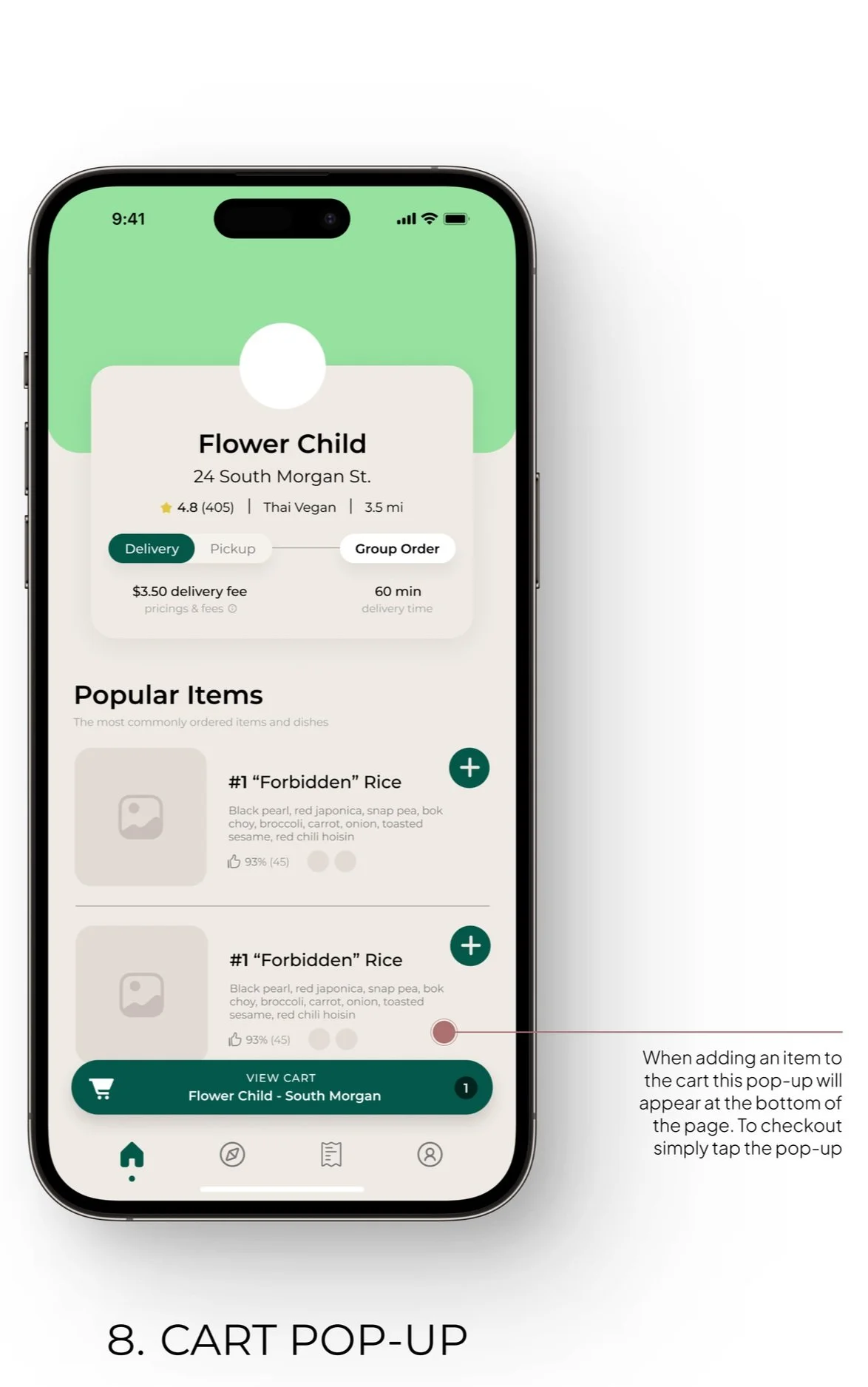
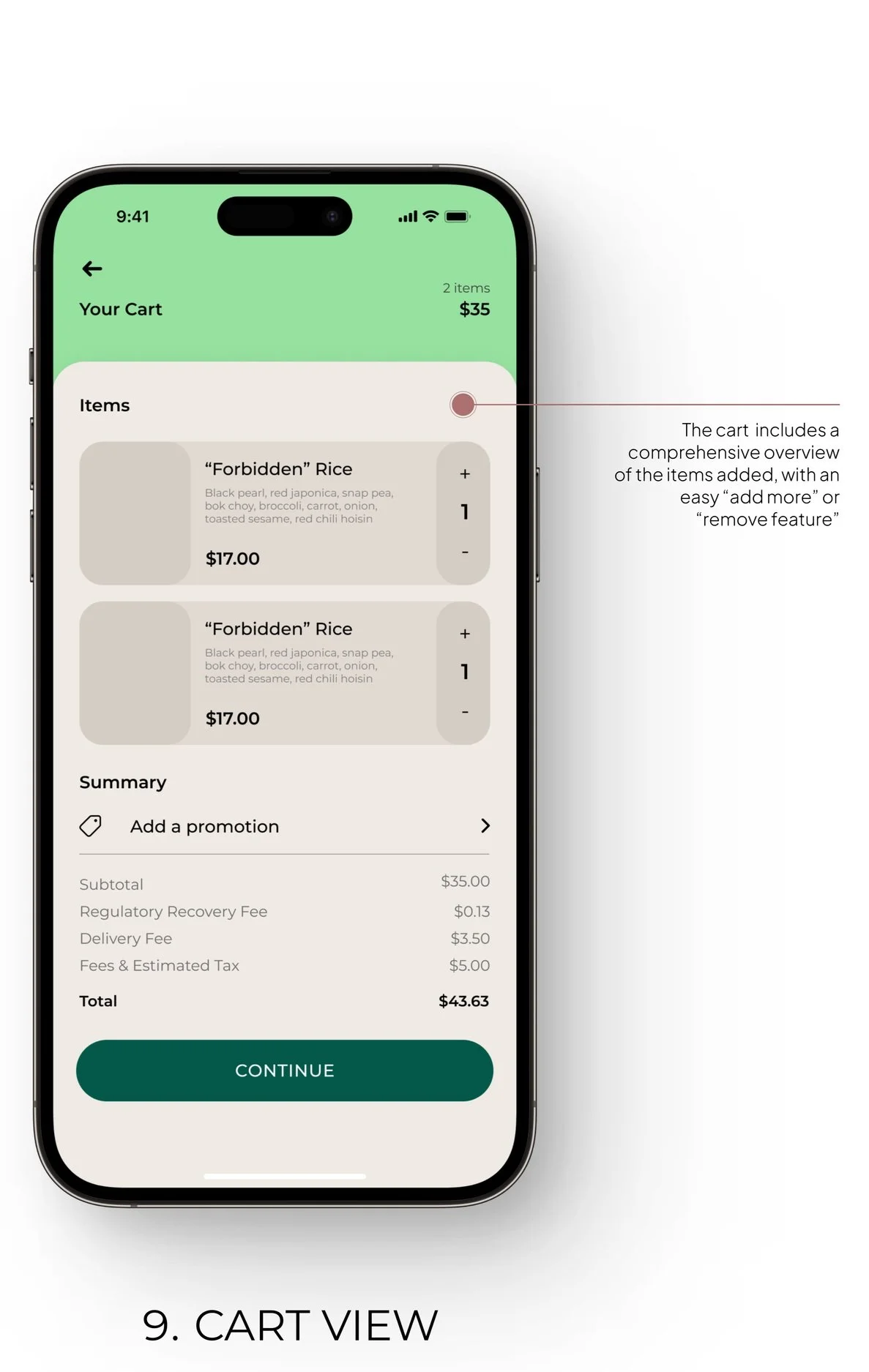
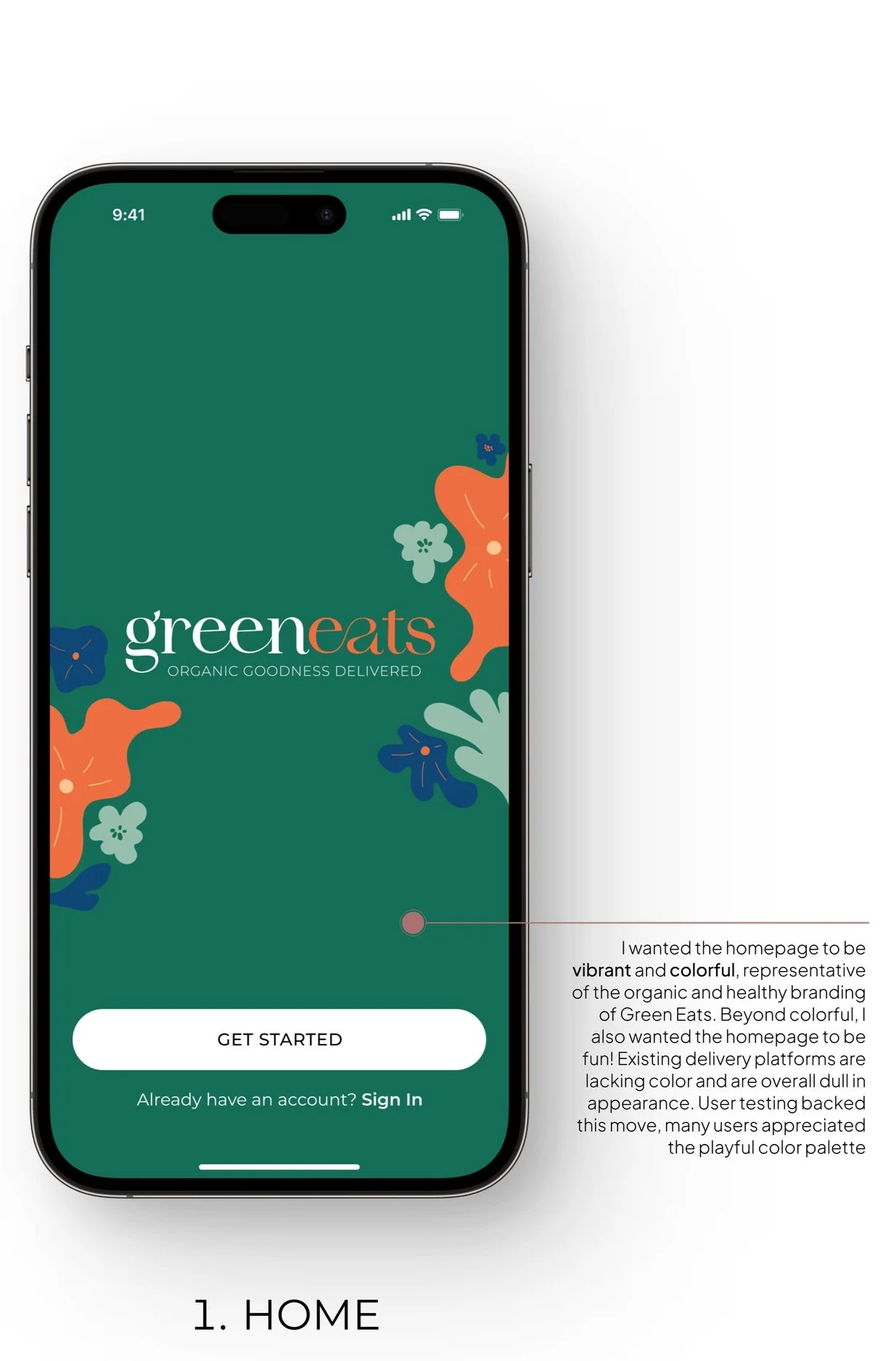
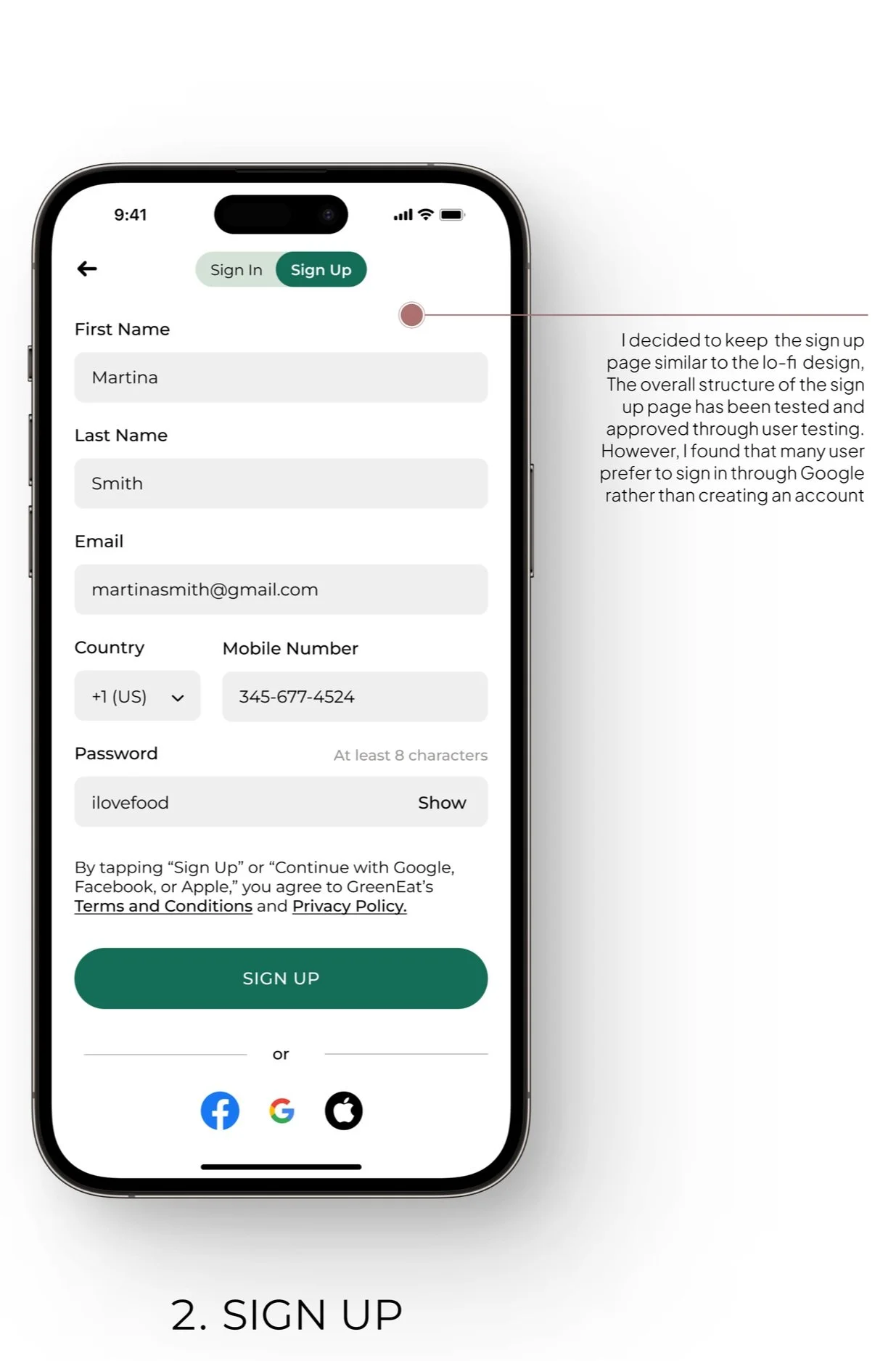
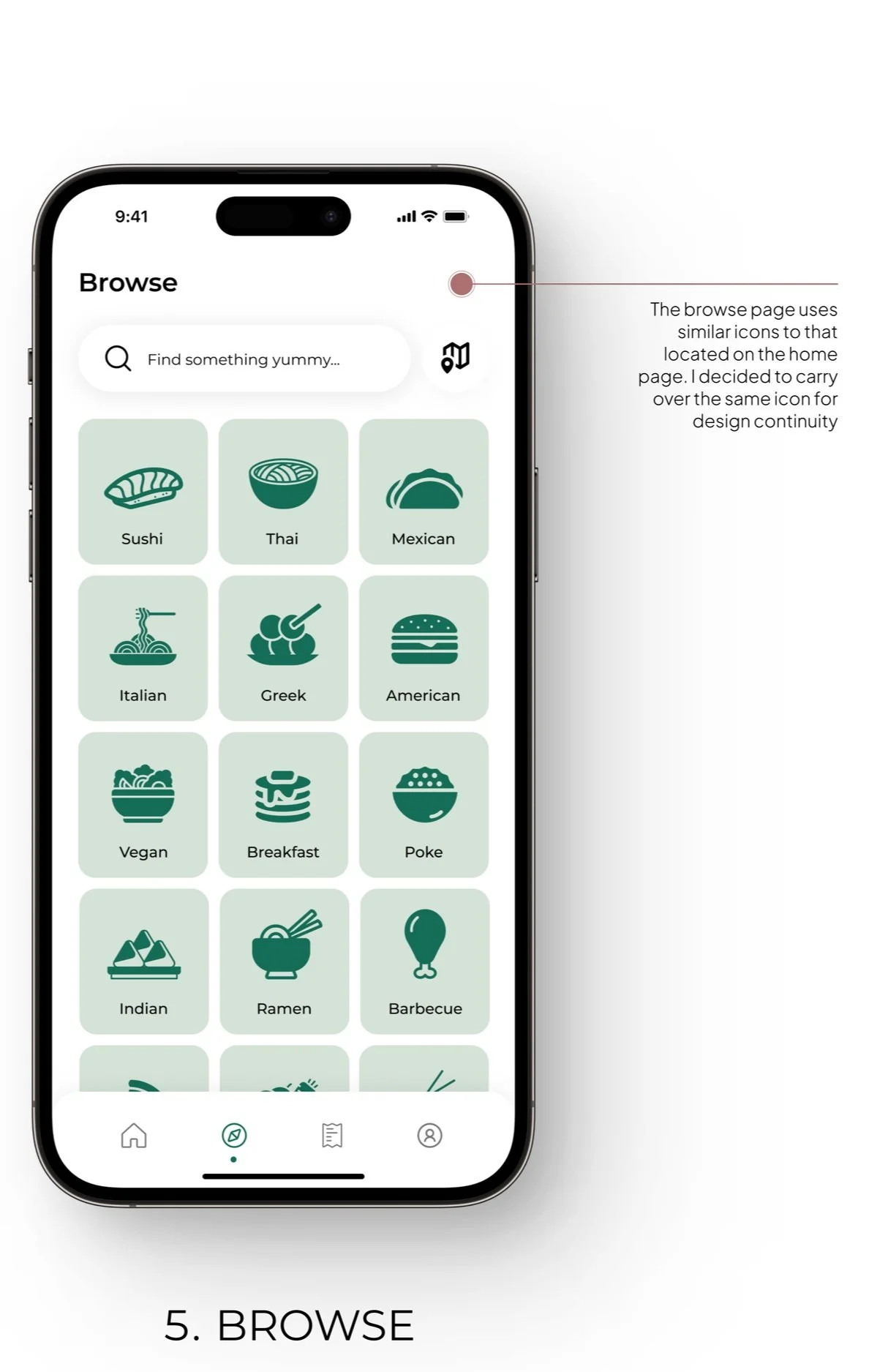
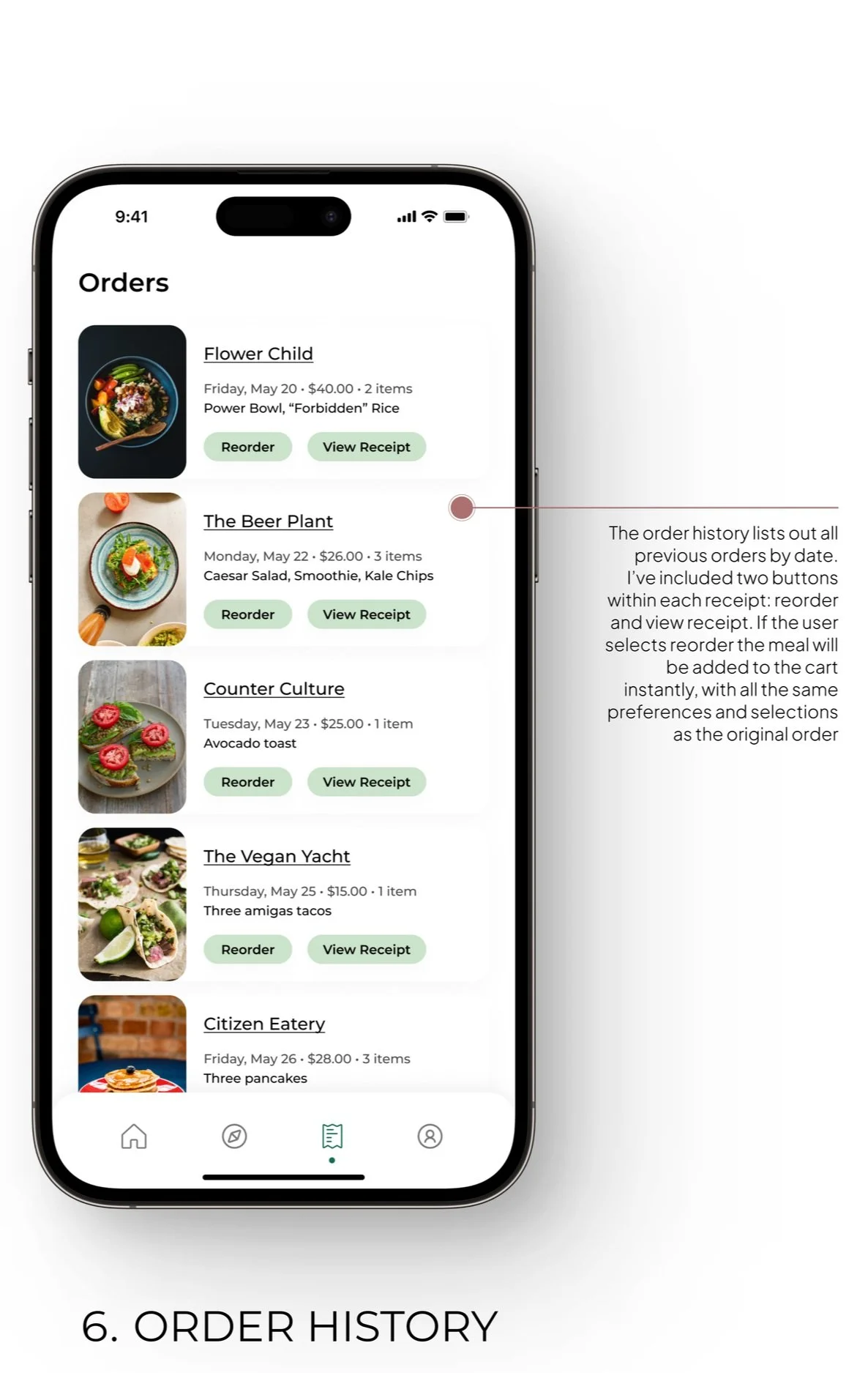
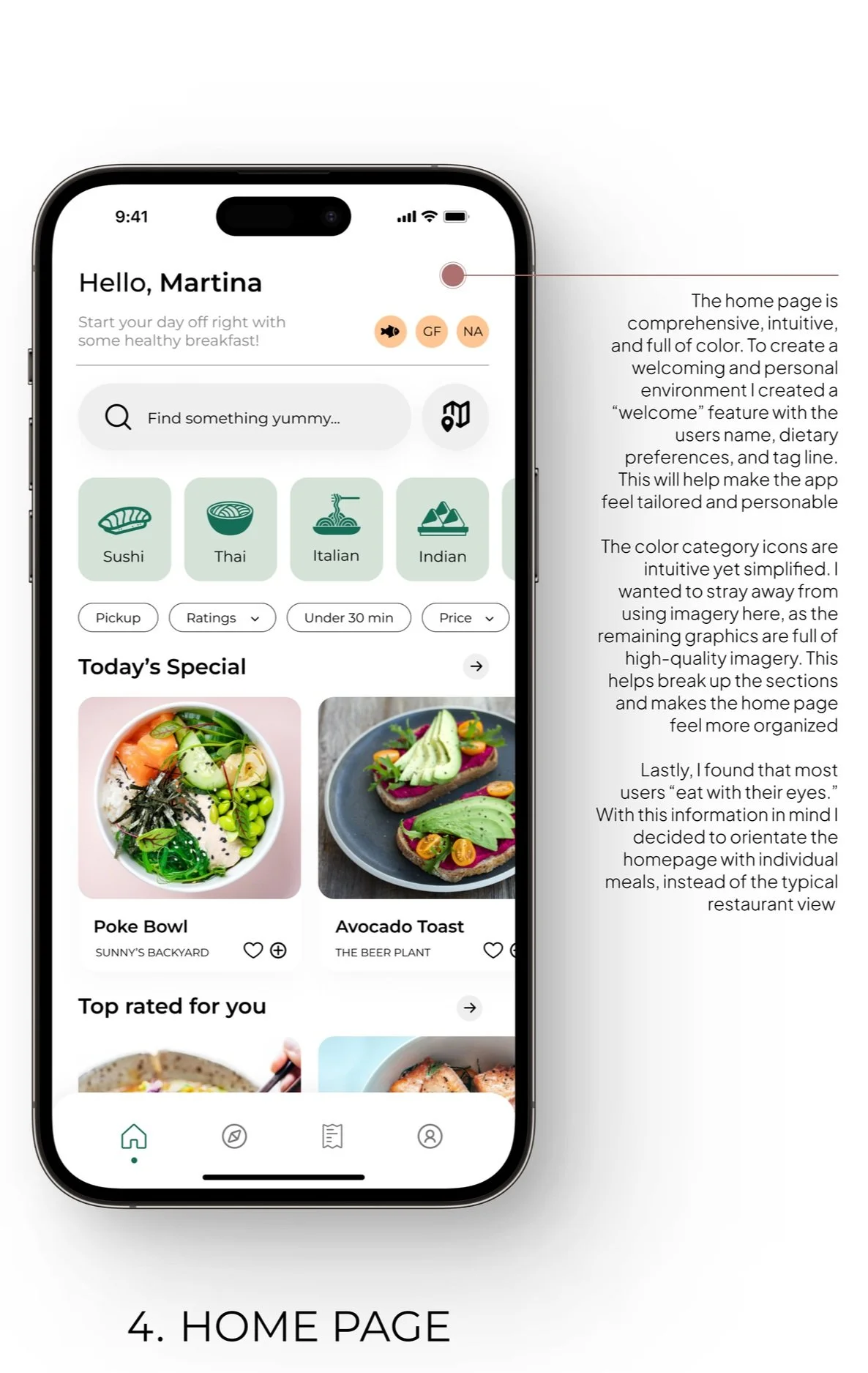
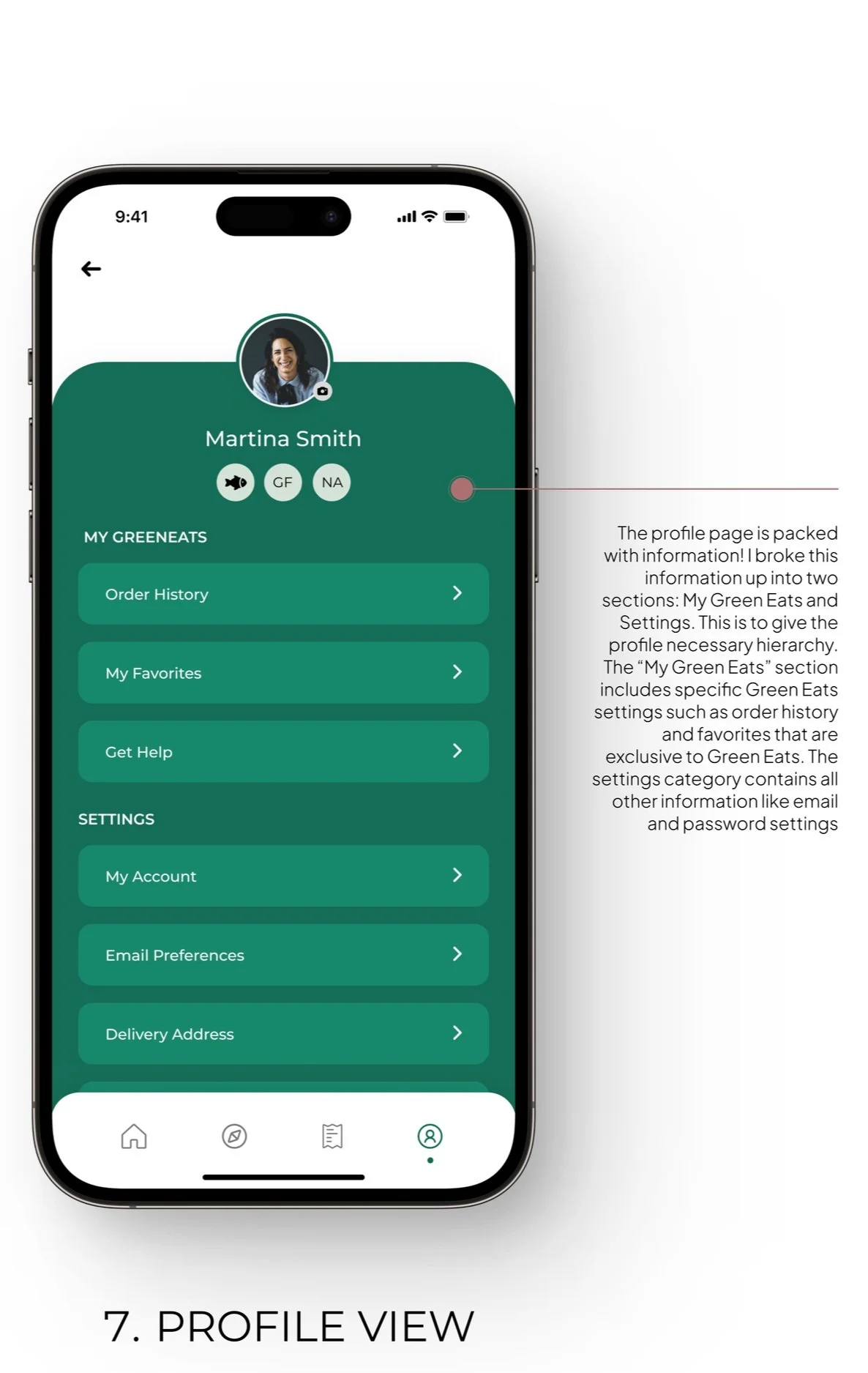
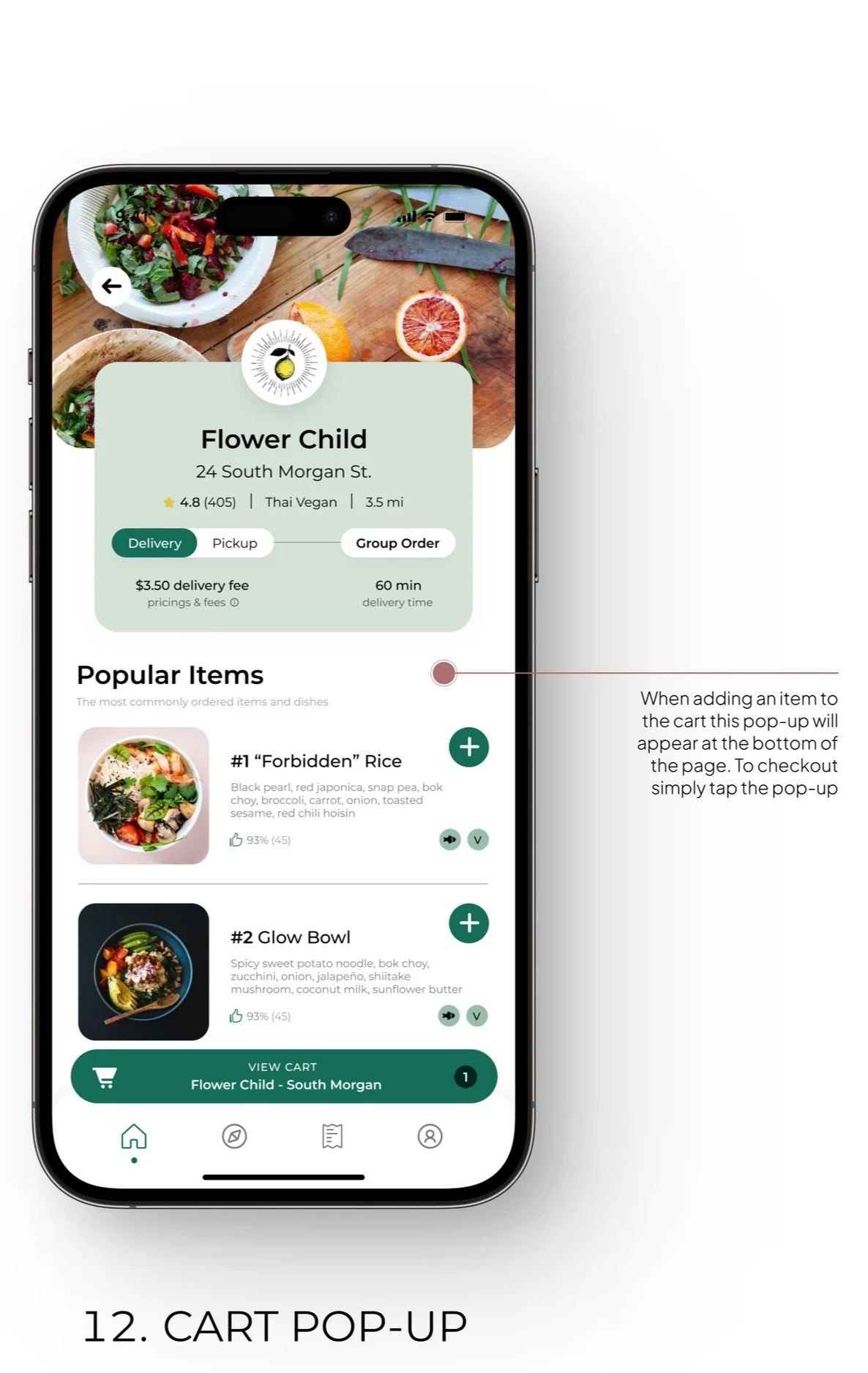
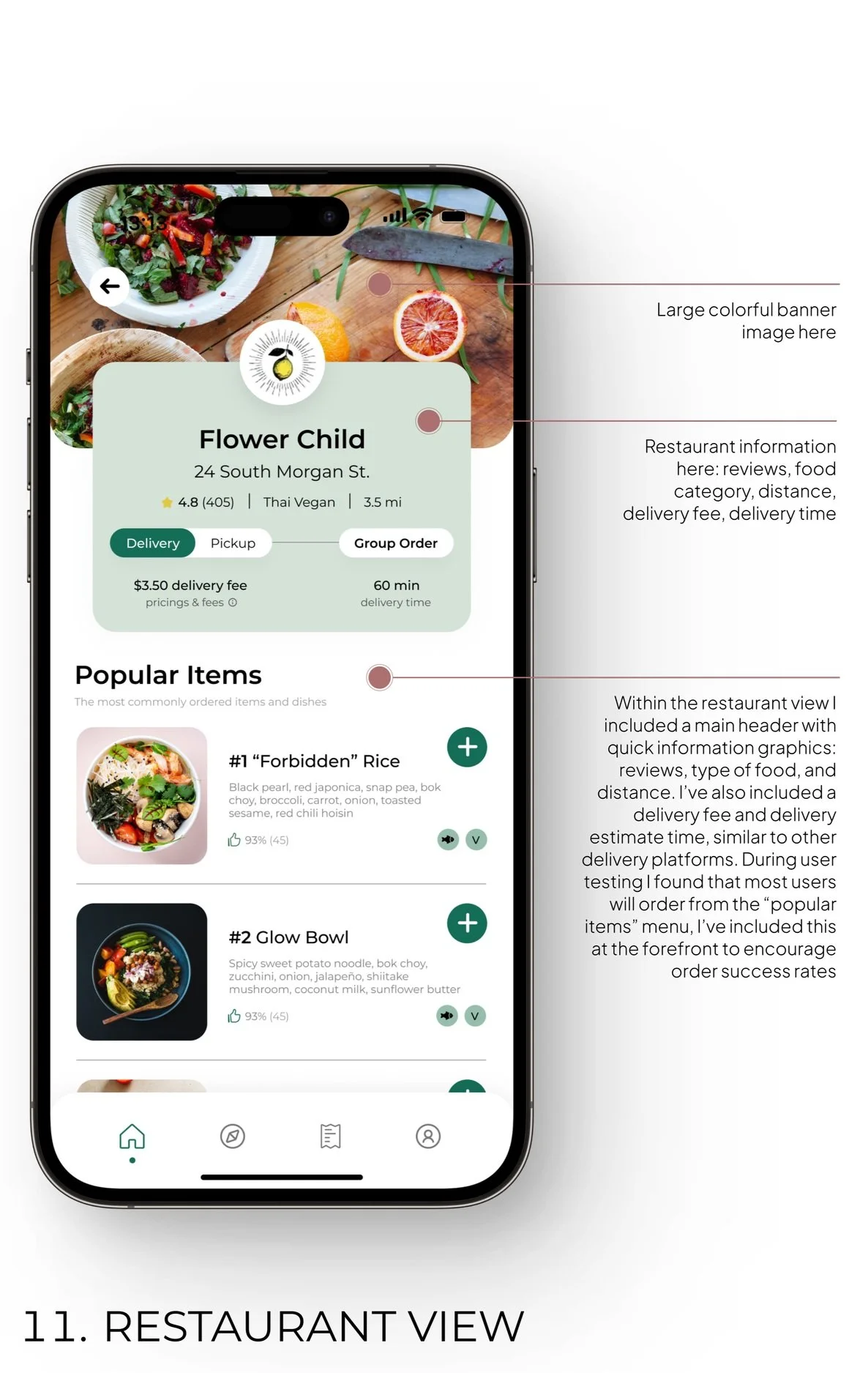
The hi-fi prototype integrates user testing revisions and my improvements for an enhanced Green Eats ordering experience. Notably:
Streamlined sign-up process
Personalized homepage via dietary preferences
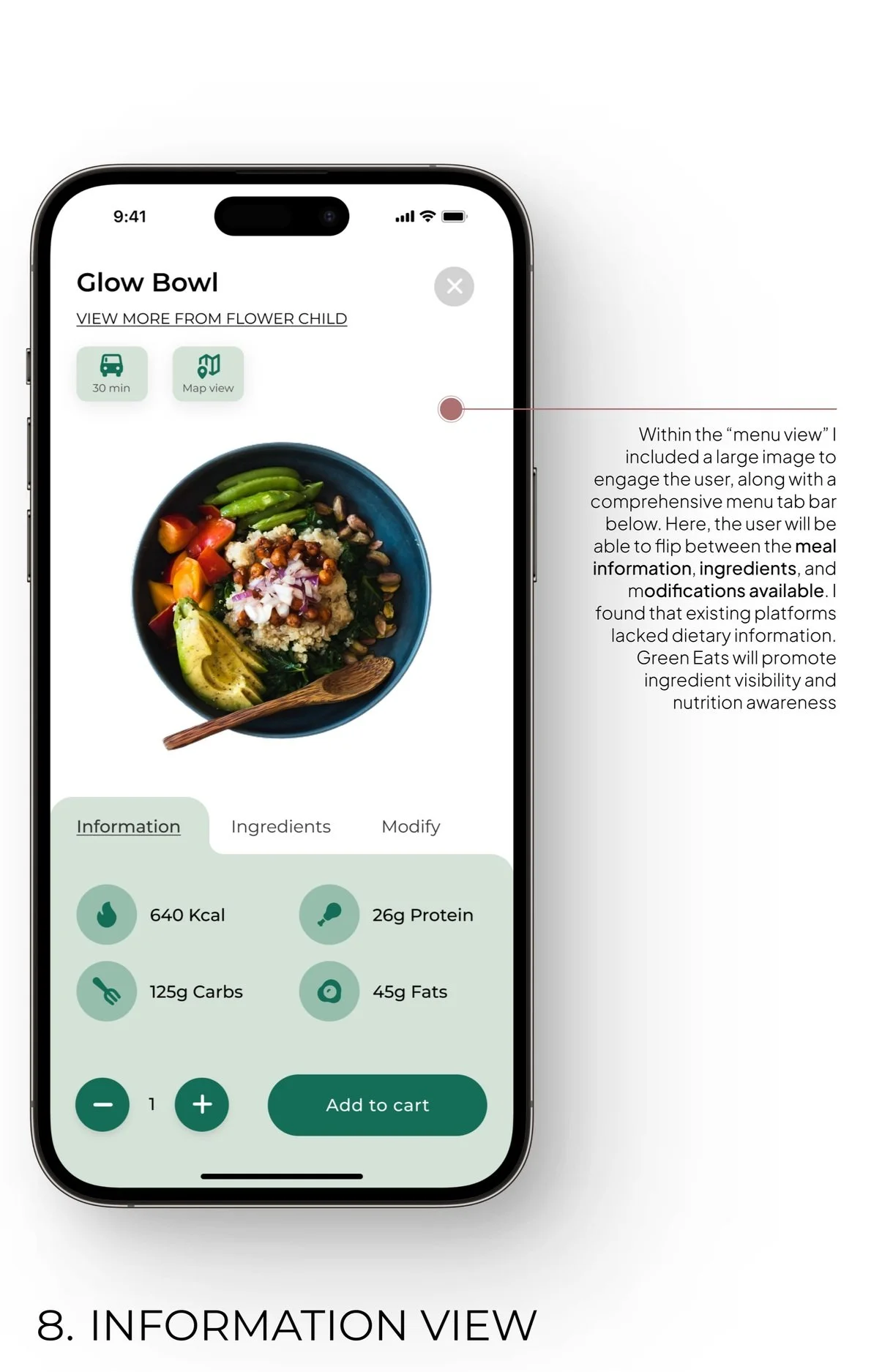
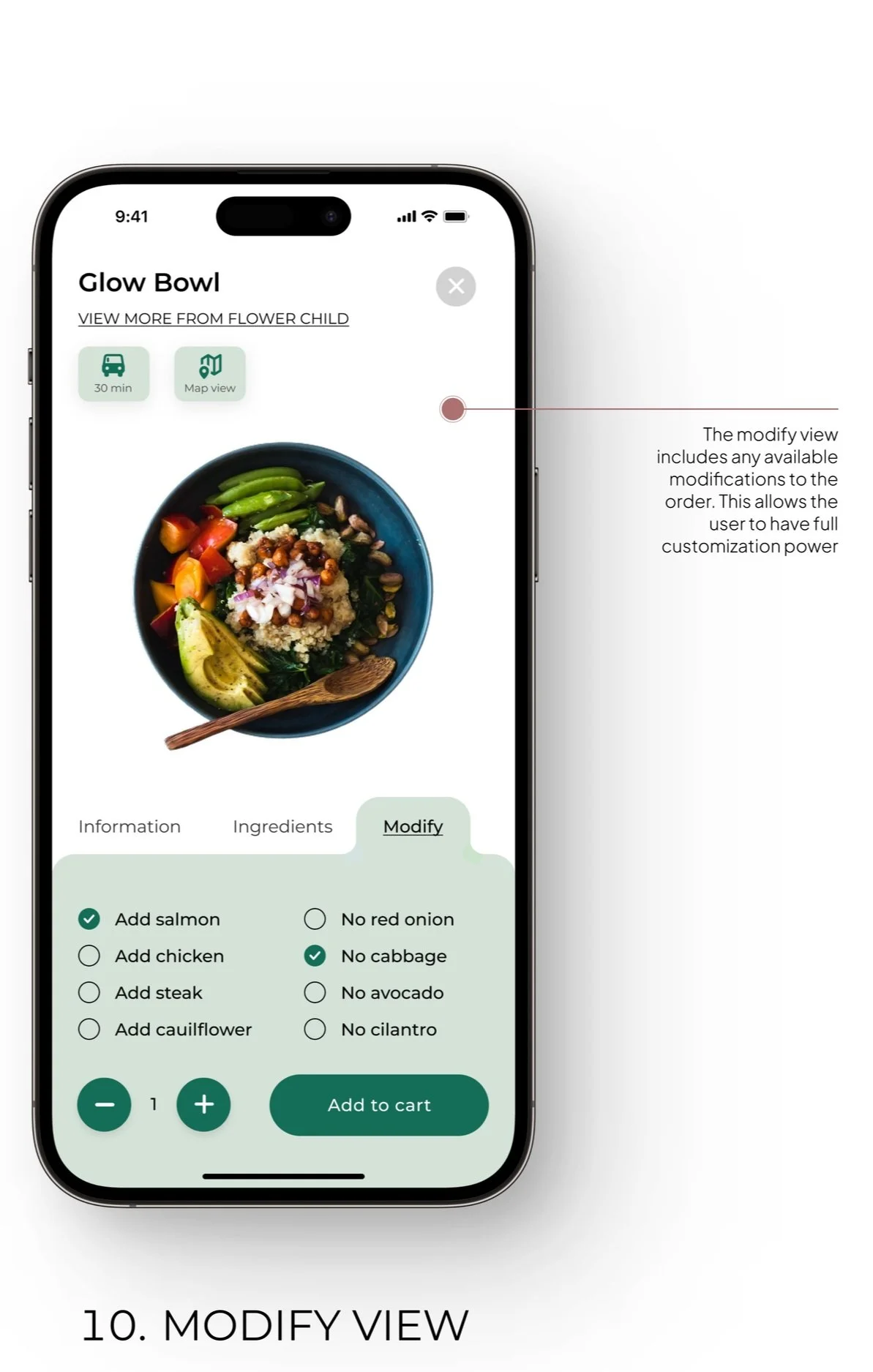
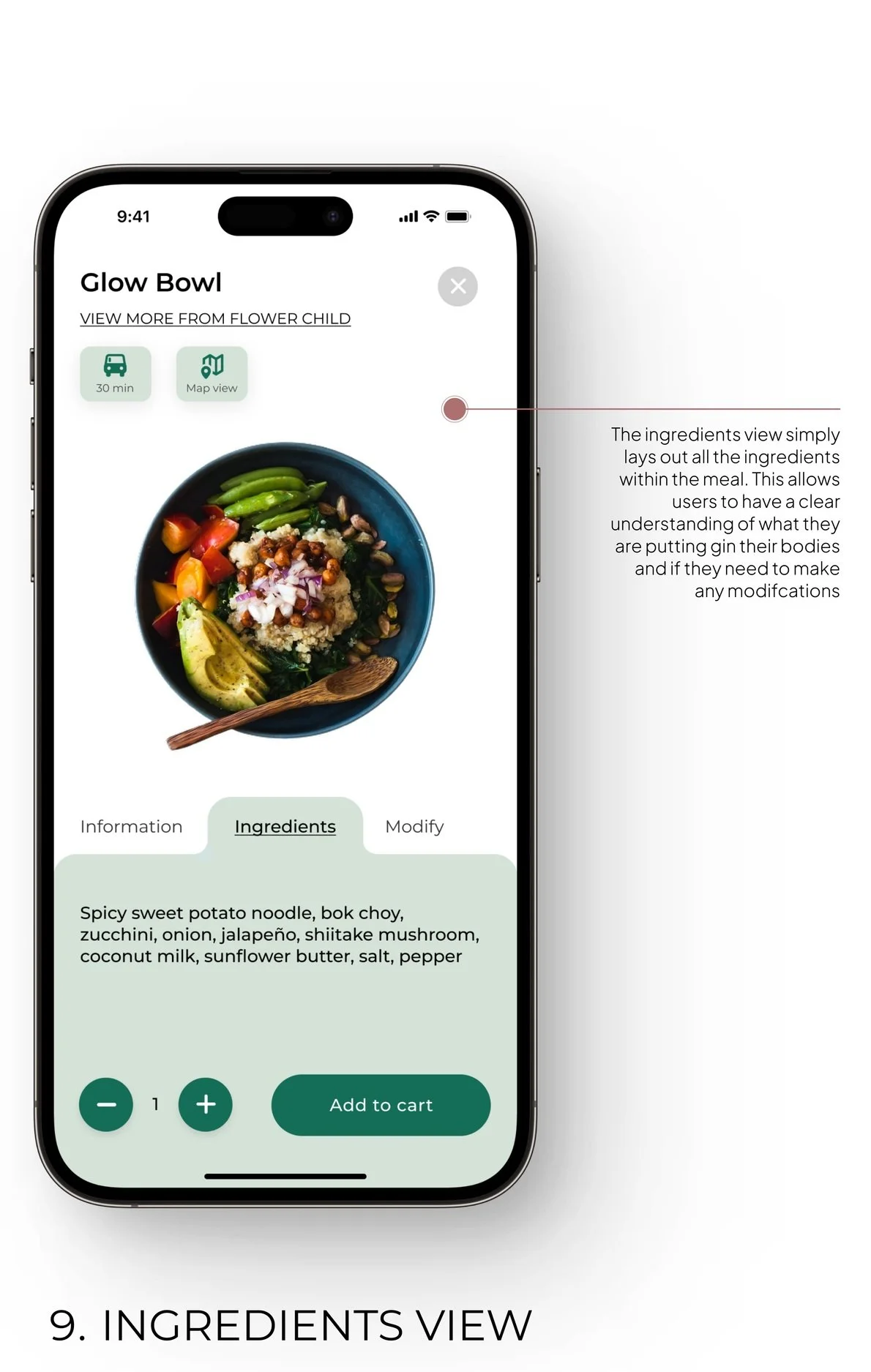
User-friendly ingredient details in menu view
Unified pages: browse, profile, order history, checkout
CLOSING THOUGHTS
DESIGN IS ITERATIVE
Crafting Green Eats was an enjoyable journey. It's a product that resonates with me and others, occupying a unique space in a vast market. In retrospect, I realize the profile page could have received more attention. An in-depth exploration of users' dietary preferences and restrictions, analyzed by a nutritionist, could be advantageous. Additionally, a round of user testing for design alignment with the target audience would enhance all projects, in my view.