SPOTIFY

Timeframe + Logistics
MY INVOLVEMENT
80 hours of comprehensive design work: end-to-end design. This work involved: creating a research plan, conducting secondary and competitive research, conducting user interviews, developing user personas, defining the mood board, organizing information through task flows, synthesizing research, creating lo-fi and hi-fi wireframes, conducting usability testing, developing a UI kit, revising hi-fi wireframes and prototype.
TEAM
Individual Capstone Project - DesignLab 2023
Project Overview
STORY
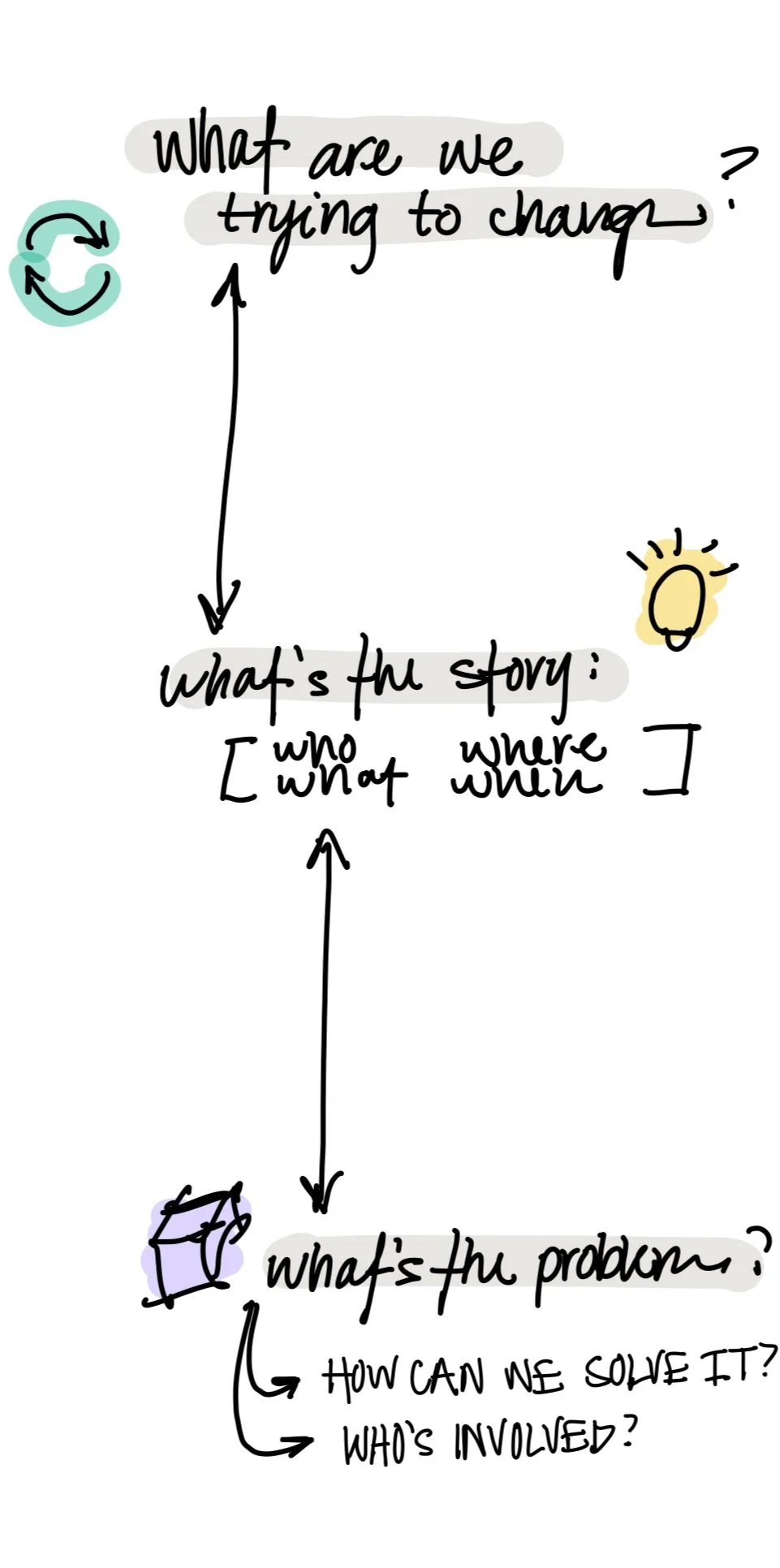
Every day, a staggering 180 million individuals globally engage with Spotify. The platform's seamless music and podcast experience has positioned it as a leader, alongside giants like Apple Music. Established in Sweden in 2006, Spotify has blossomed into a premier music streaming service. Its user base spans 178 markets, boasting over 365 million active users by September 2021.
Spanning smartphones, tablets, desktops, and smart speakers, Spotify's platform caters to diverse devices. Users can effortlessly find and play songs, curate and exchange playlists, unearth new music gems, and track their beloved artists.
PROBLEM
Spotify's platform has enduring features, embracing both music and podcast content. Its impressive reach includes 32.5 million monthly podcast listeners. However, cluttered organization and lack of episode structure pose challenges. To address this, I propose:
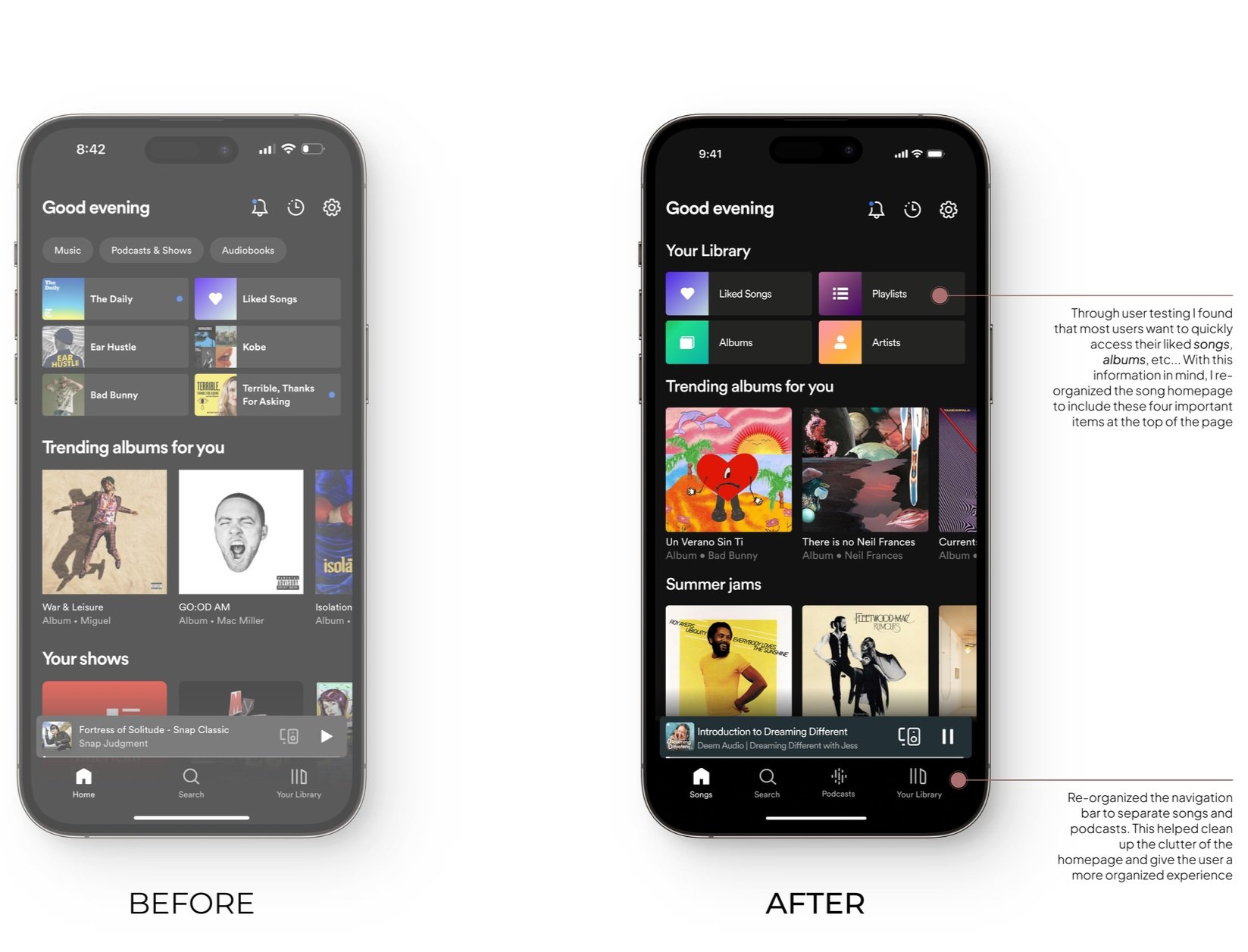
Revamping the navigation bar for better organization
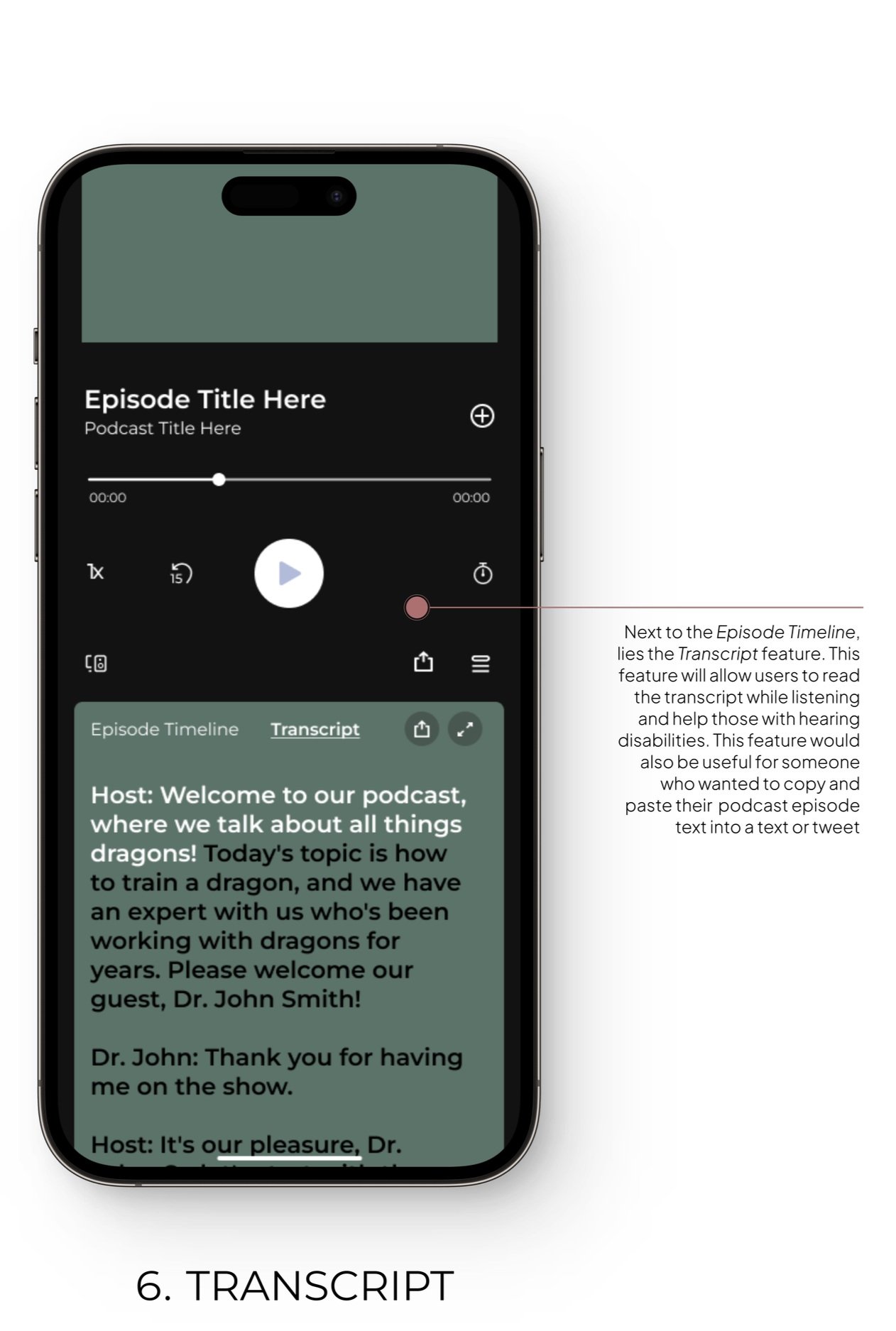
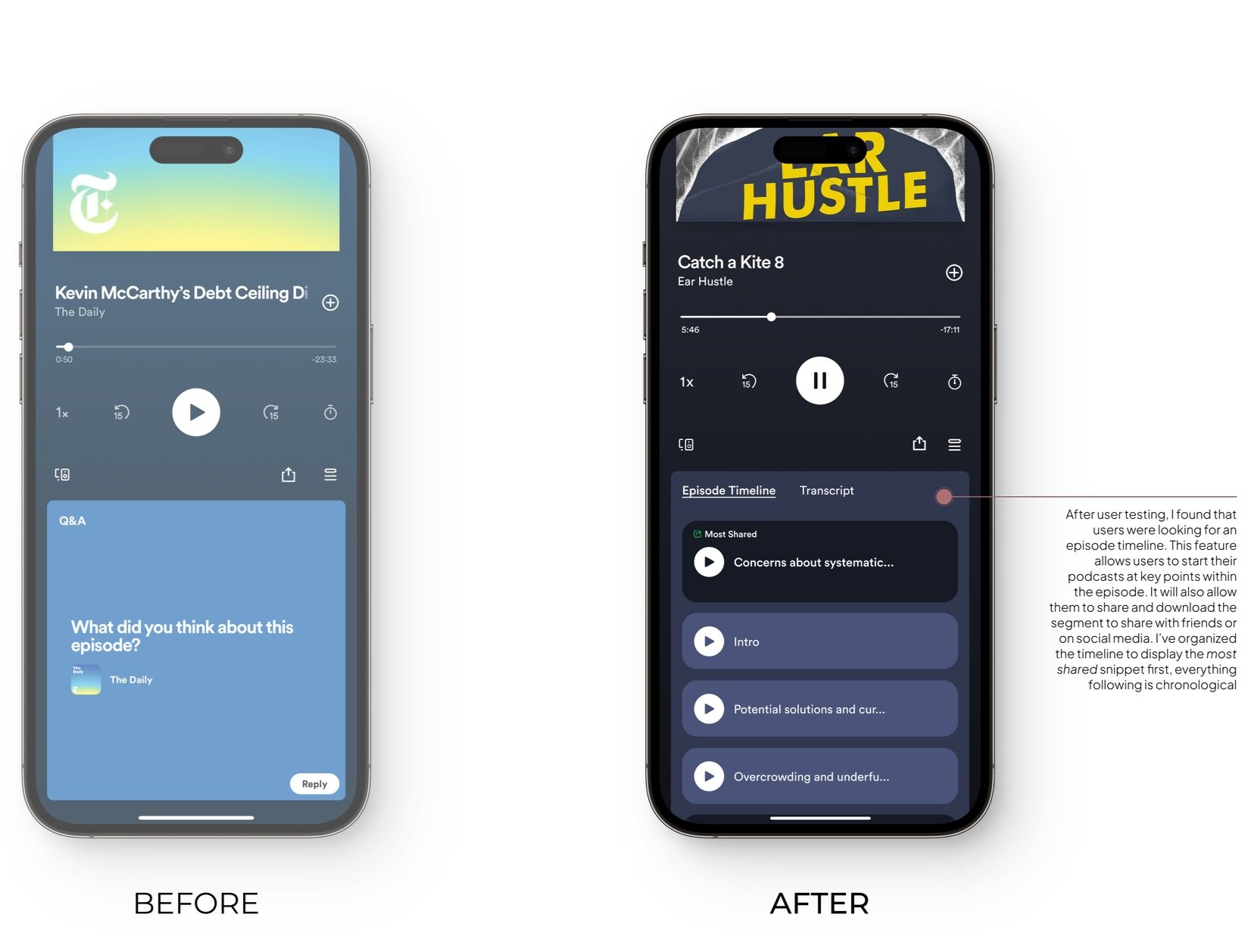
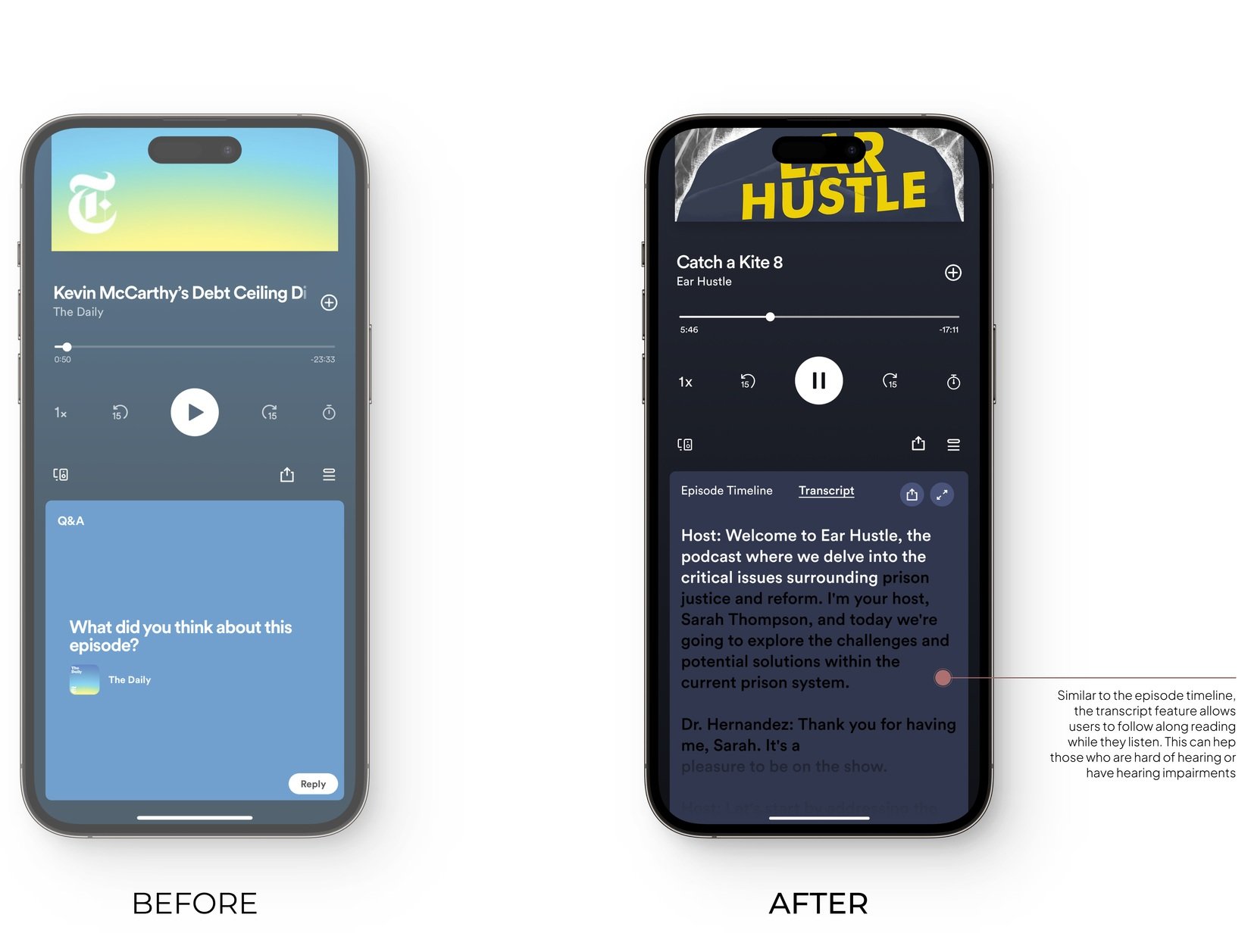
Introducing an episode timeline and transcript
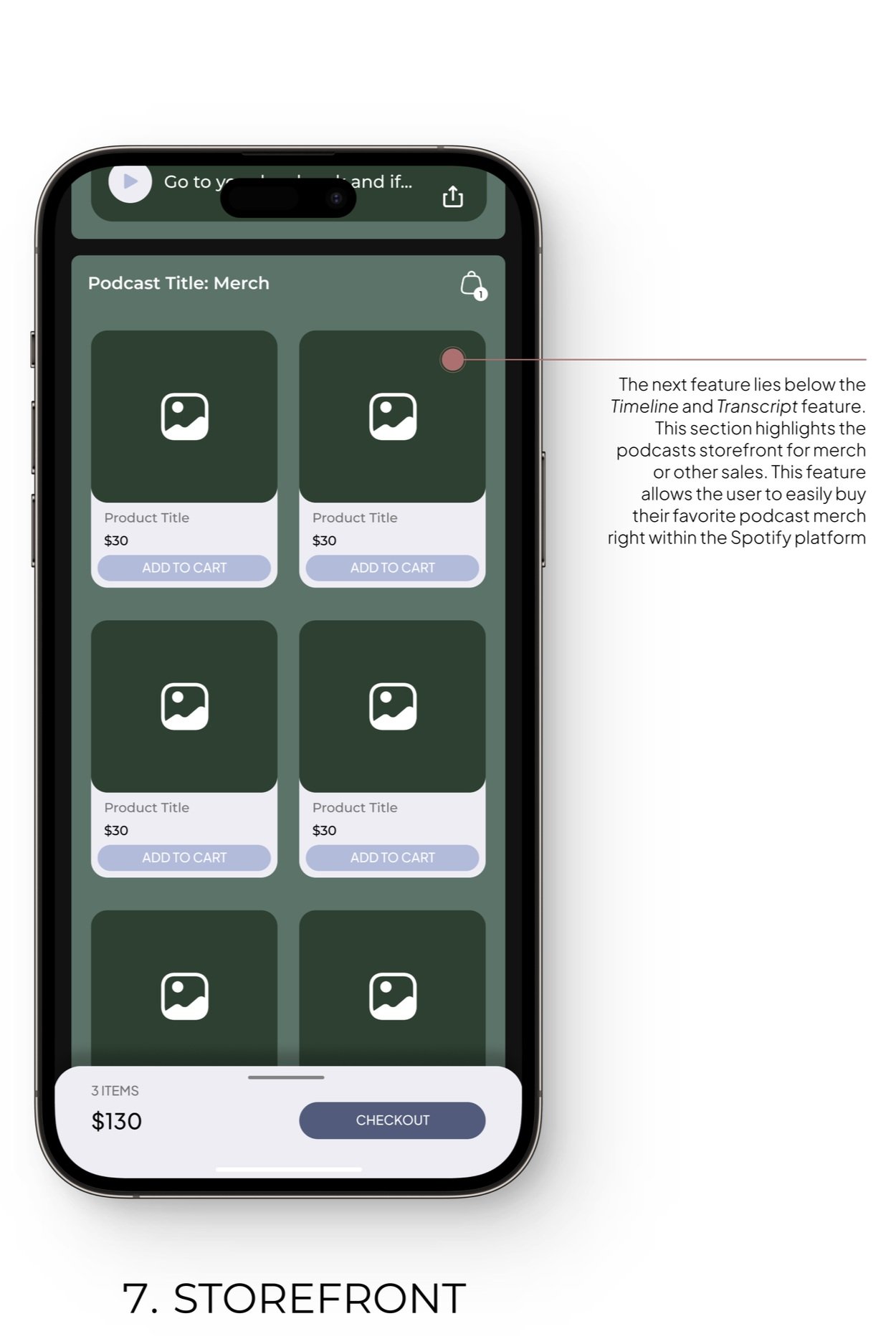
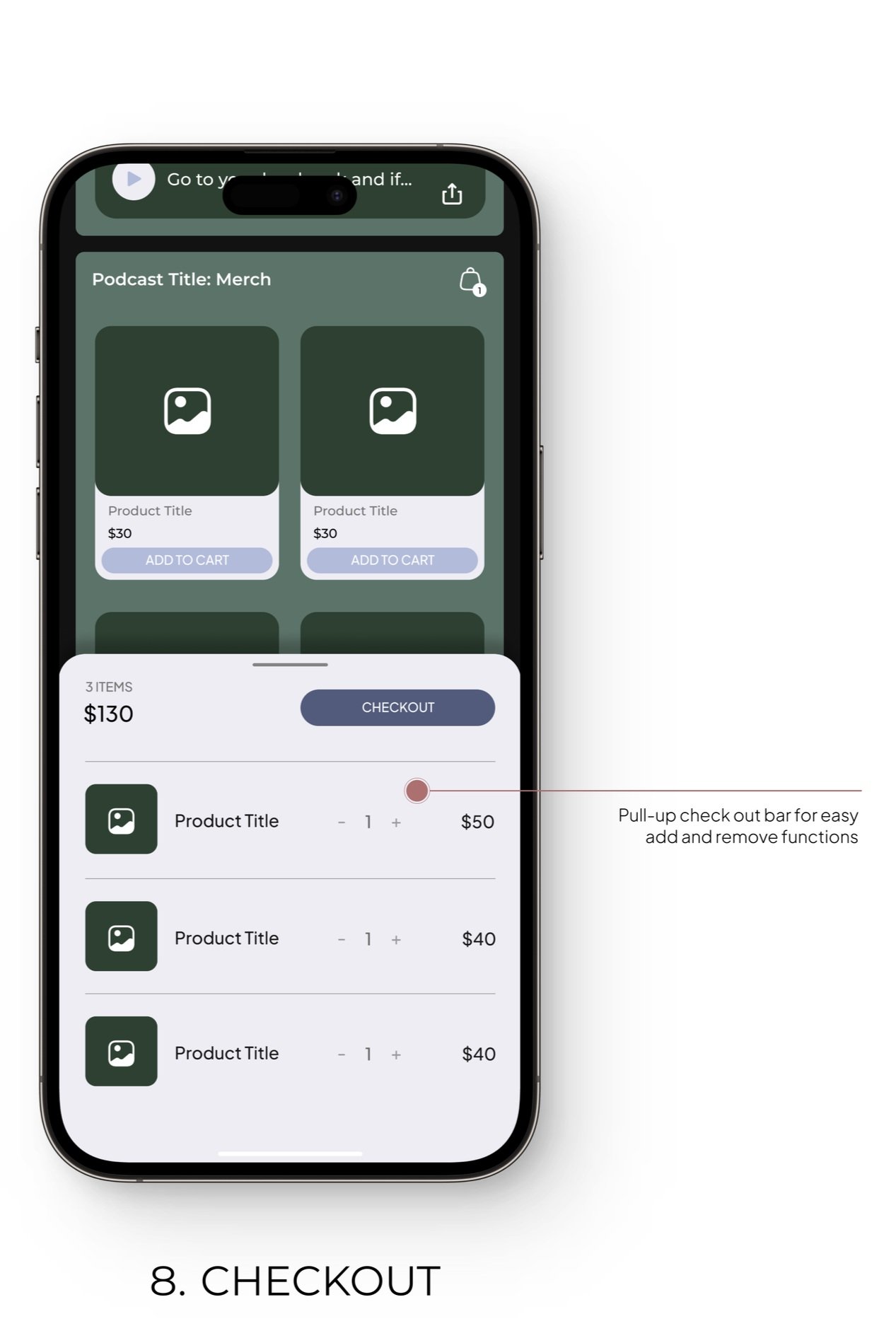
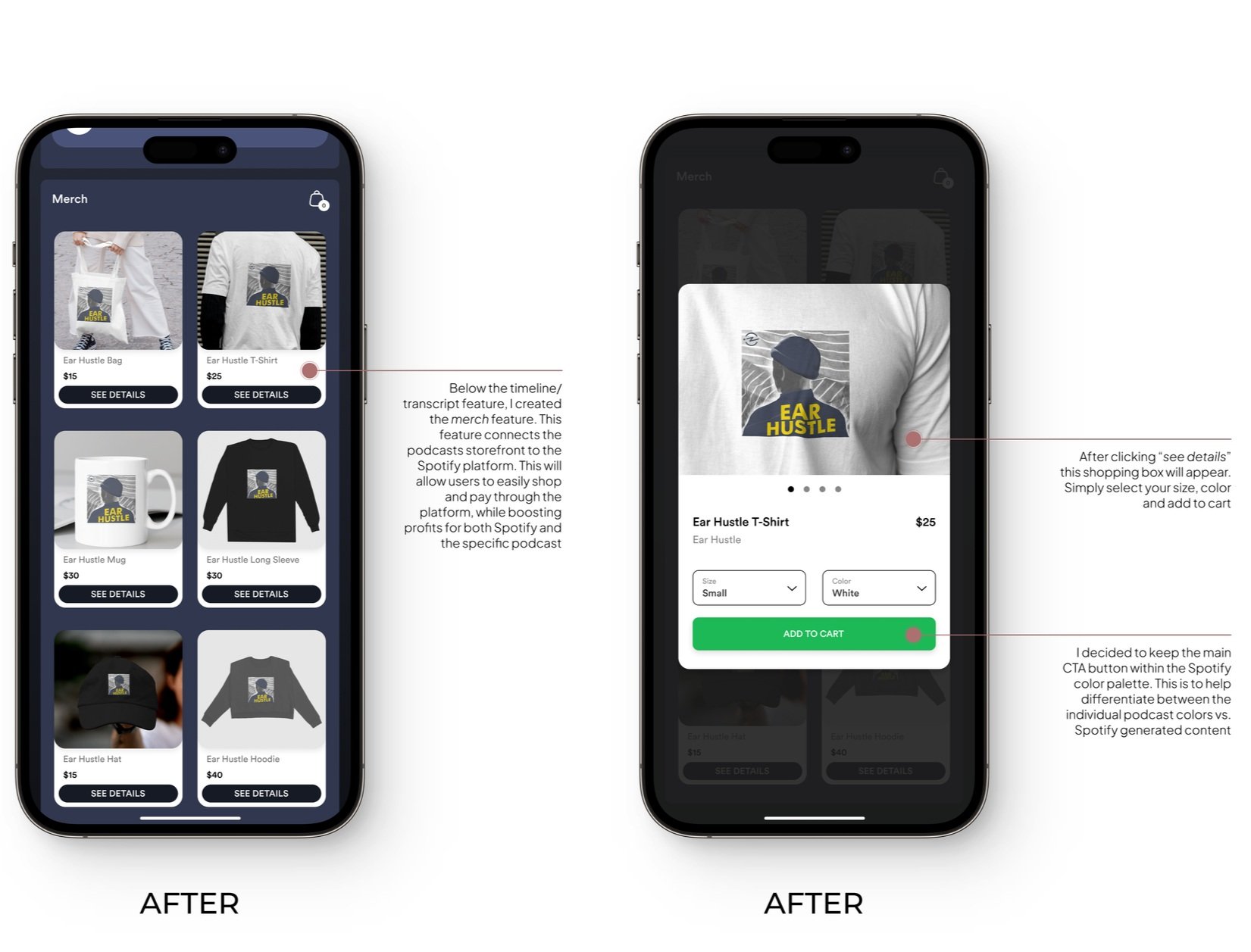
Facilitating links to podcast merchandise or storefronts
Secondary and Competitive Research
RESEARCH FINDINGS
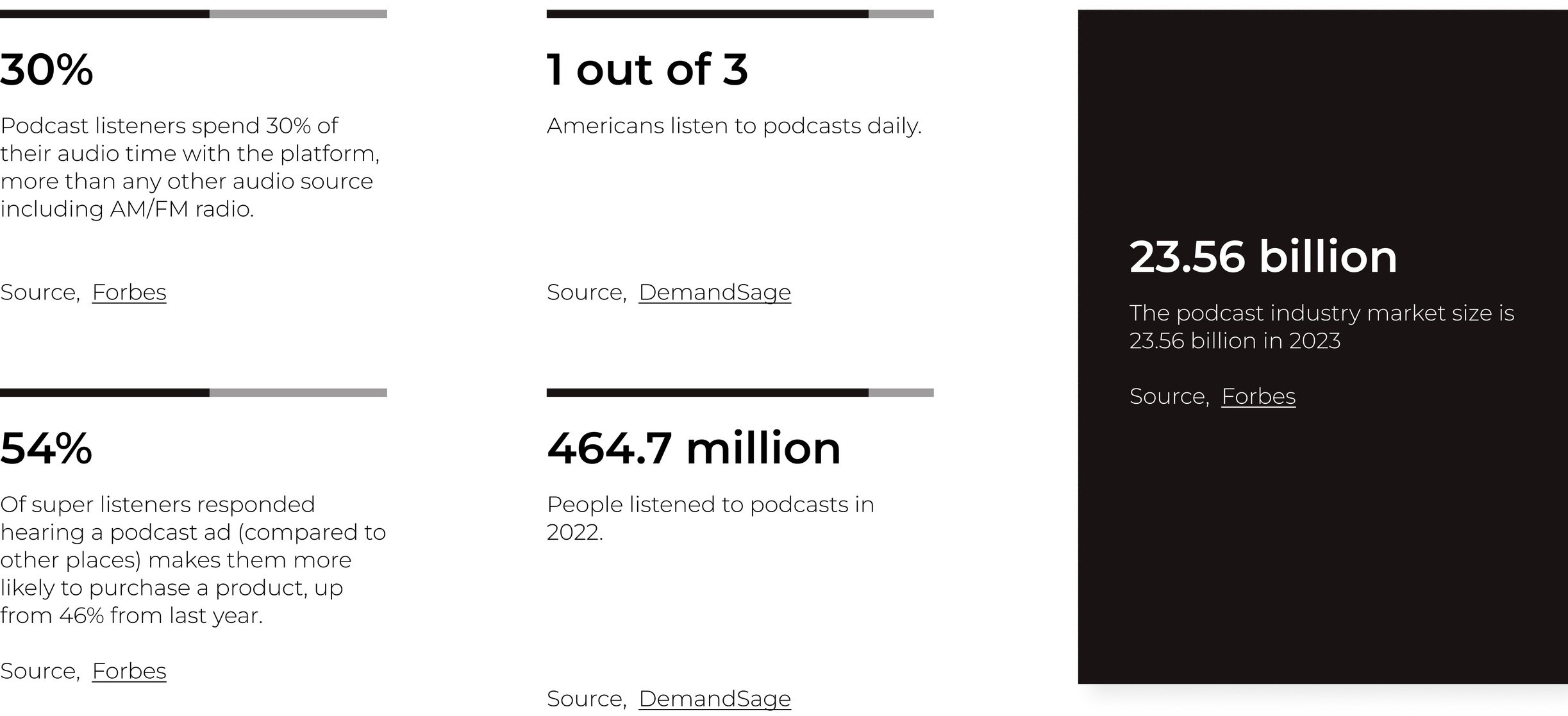
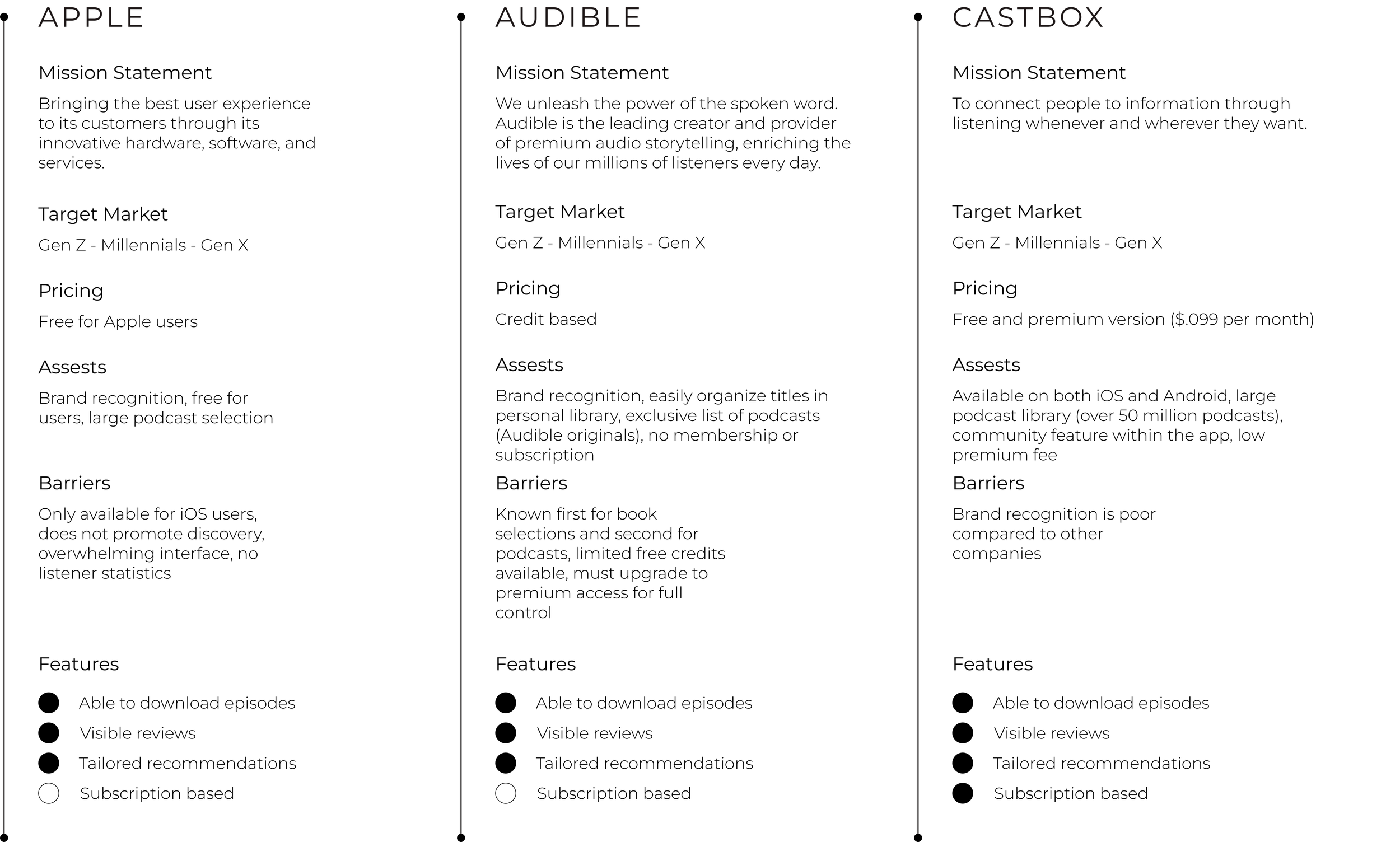
Prior to design, grasping the podcast landscape was pivotal. This involved identifying rivals, gauging industry dynamics, and exploring avenues for improvement. By capitalizing on competitors' weaknesses and adopting their strengths, Spotify can reposition itself for a renewed competitive advantage in the streaming realm.
User Interviews
DISCOVERING PAIN POINTS
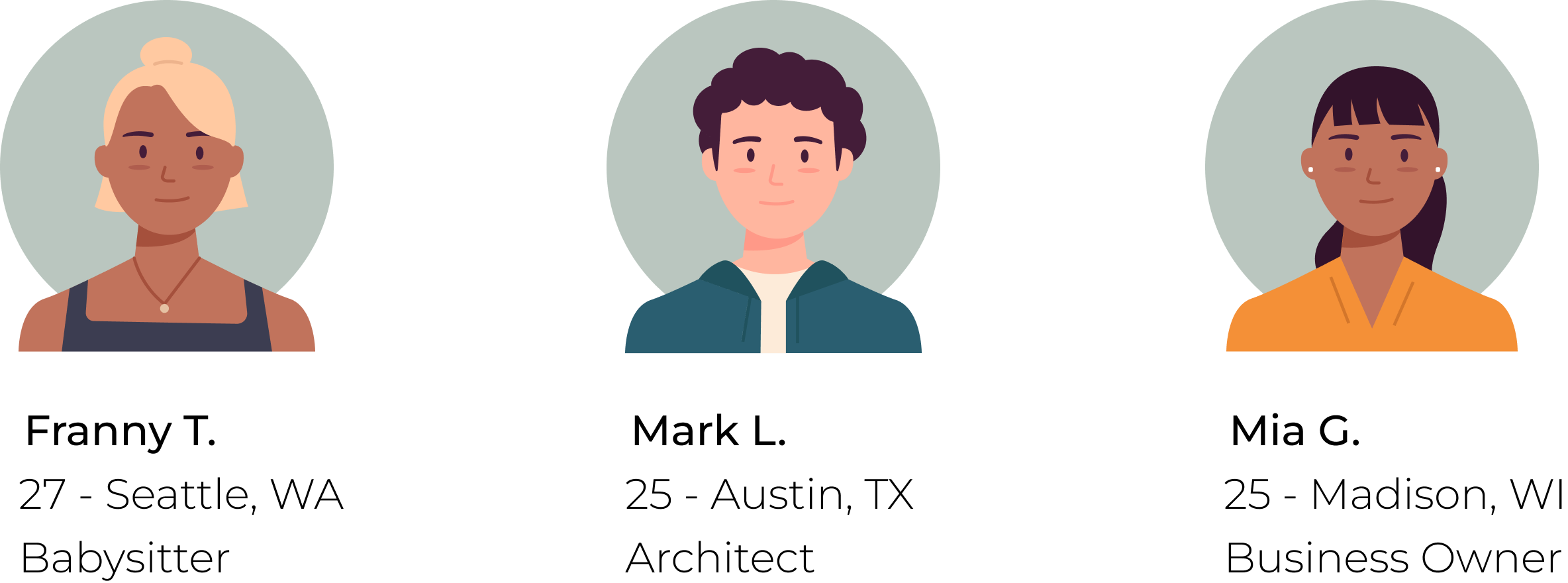
Uncovering user challenges, I conducted three semi-structured interviews for qualitative data. This shaped personas, pinpointed issues, and offered behavioral insights. Zoom sessions facilitated the interviews, with audio transcripts aiding reflection on the conversations.
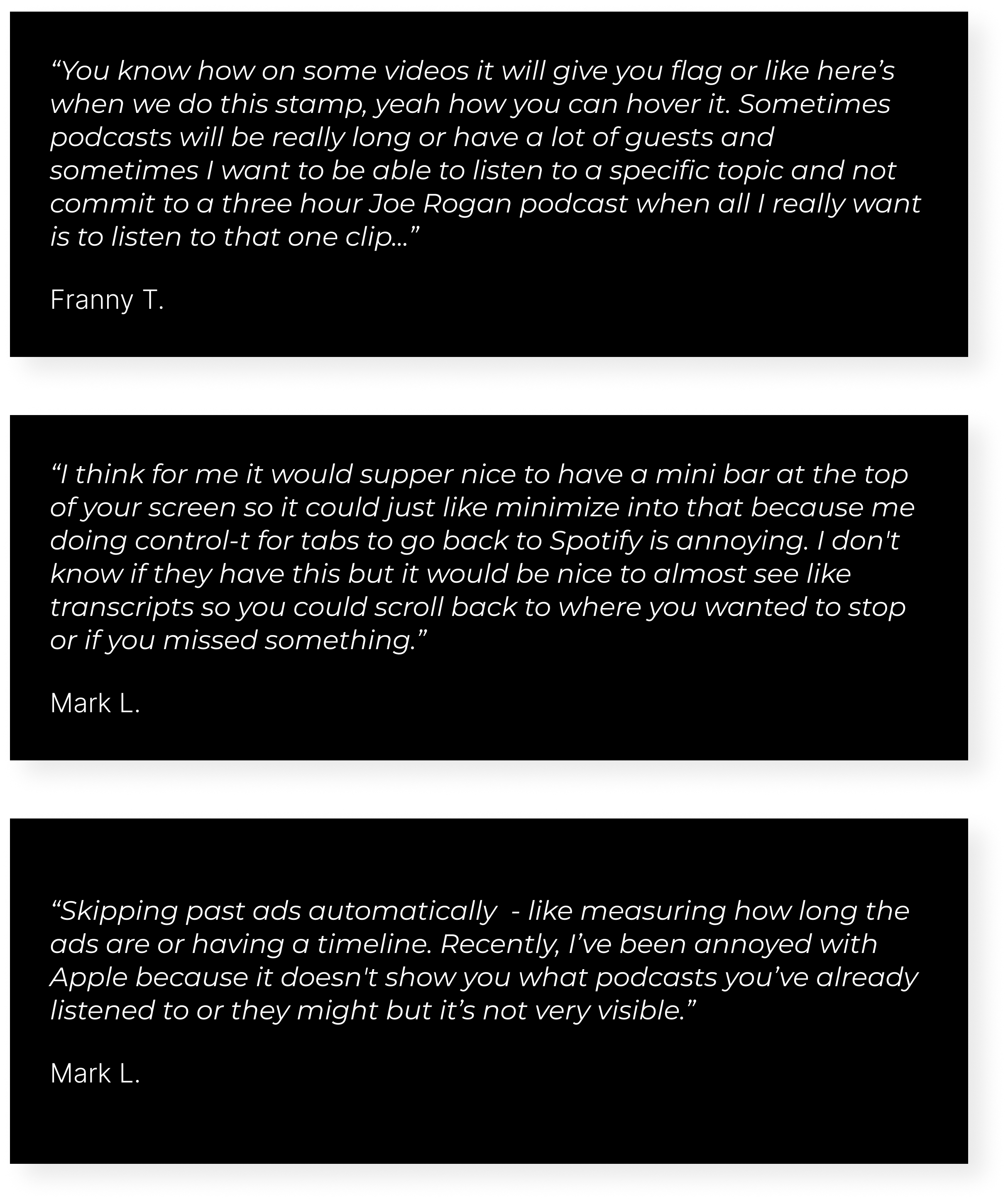
MAGIC WAND QUESTION
The "magic wand question" was a gem in user interviews. It prompted boundary-free responses, revealing ideal podcast preferences and tools. When I asked, "With a magic wand, how would you shape your perfect podcast experience? What tools would enhance it?" I received responses like:
User Personas
A REPRESENTATION OF USERS
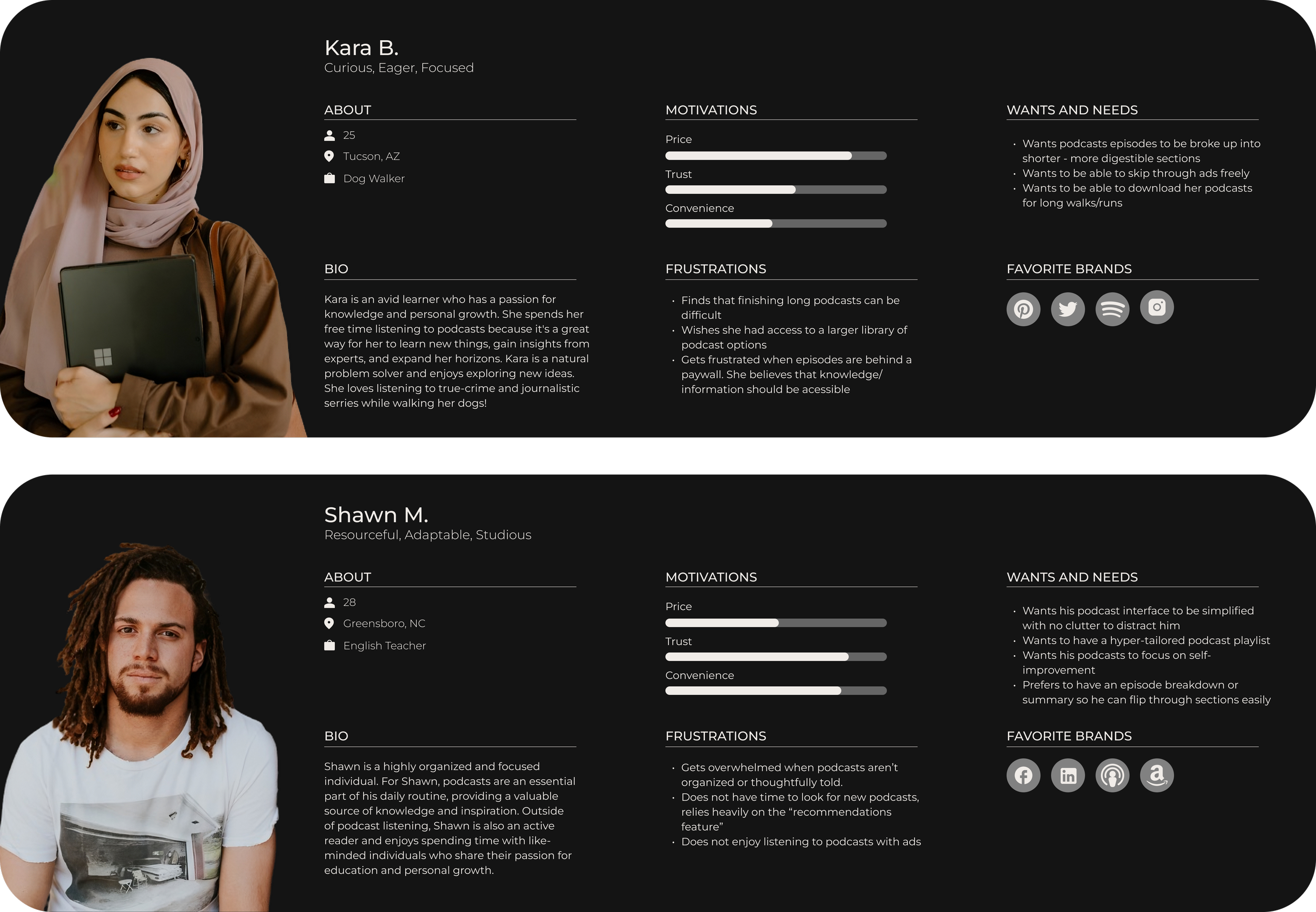
Concluding user interviews, I synthesized findings into two user personas, a vital step for Spotify's focused user base. Understanding Spotify Podcast users, their habits, and broader interests guides design discussions in subsequent stages.
Information Architecture
HOW SHOULD WE ORGANIZE?
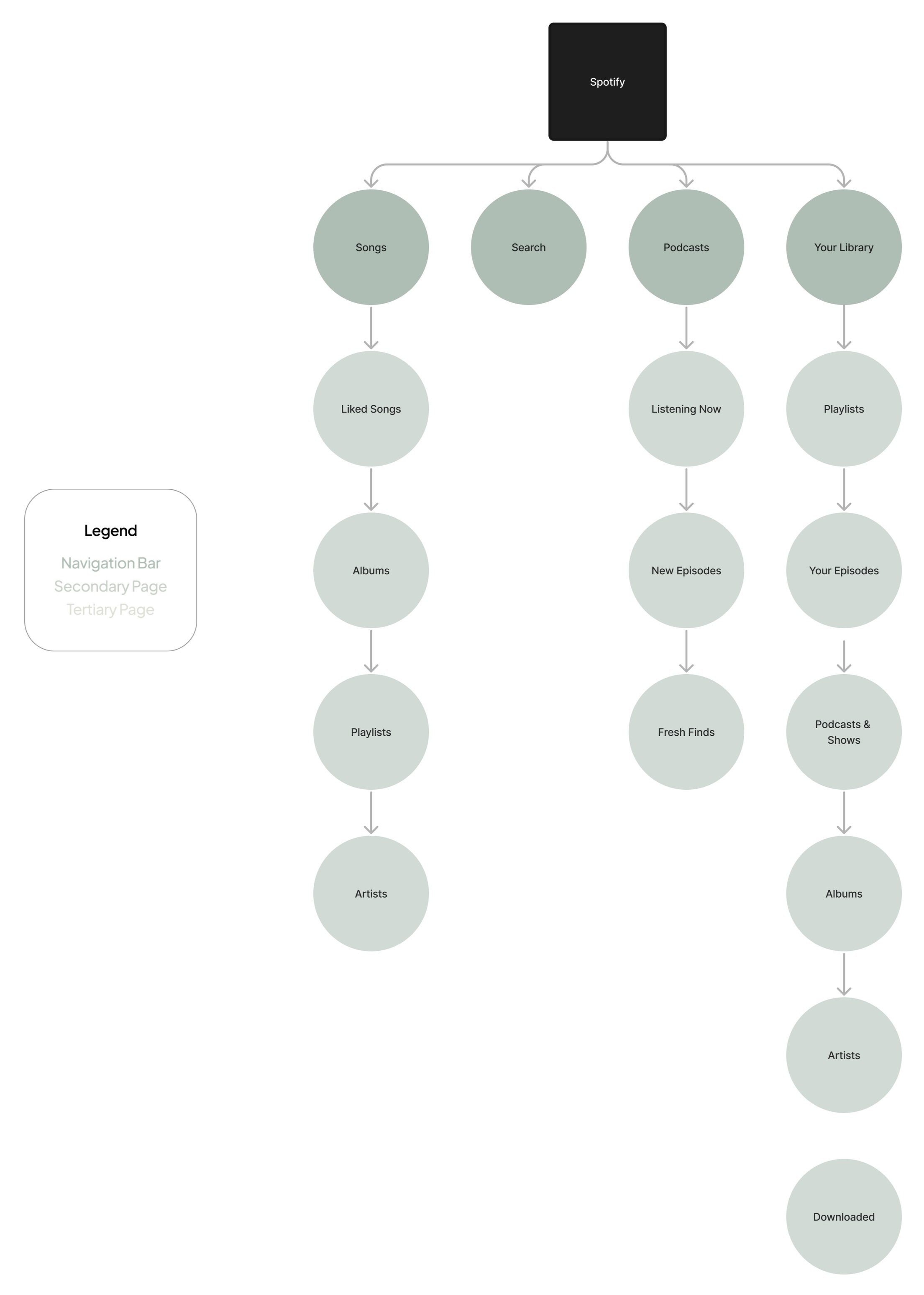
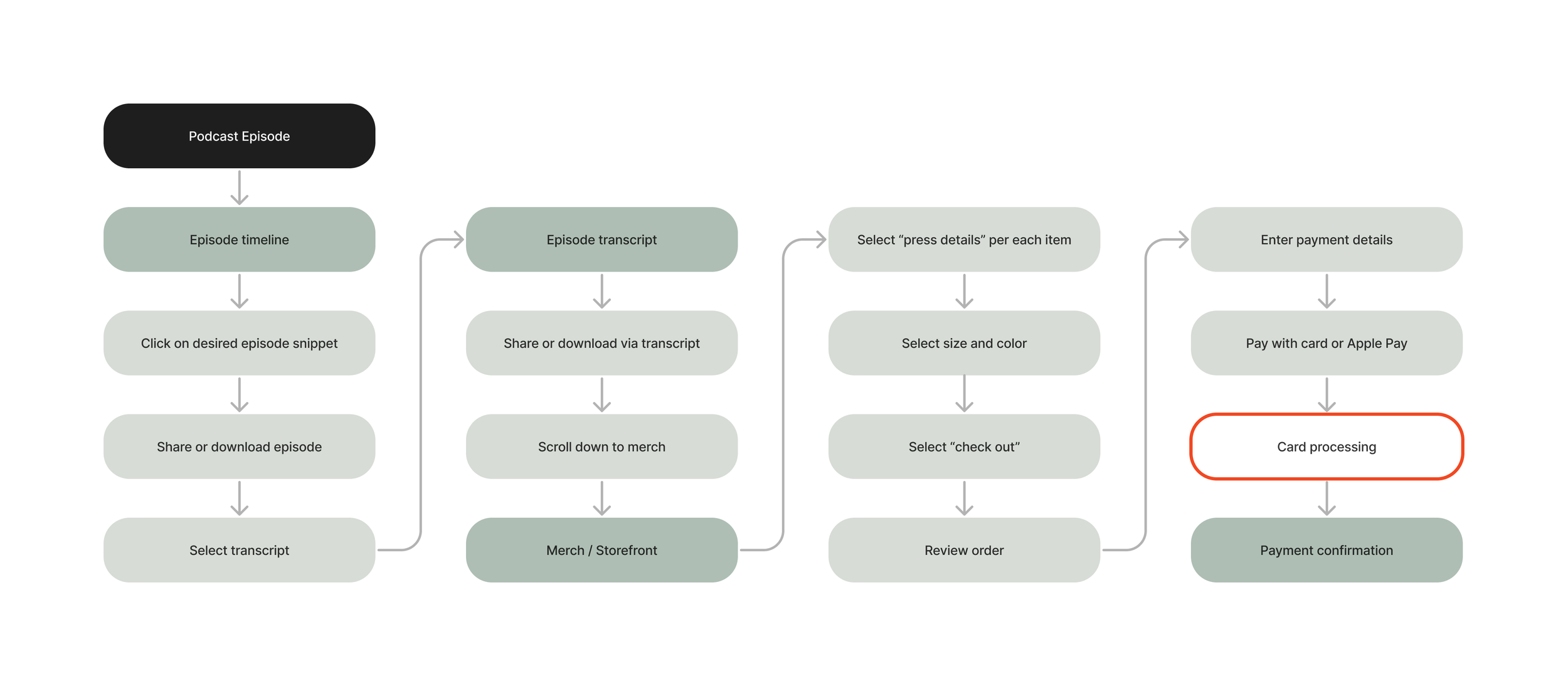
Organizational decisions shape a seamless and user-friendly design, akin to arranging spaces like kitchens or bedrooms according to user expectations. By distilling insights from user interviews, I crafted site maps and task flows representing new features.

Research Synthesis + Feature Roadmap
HOW MIGHT WE?
1
2
3
How might we eliminate the stress of using podcasts apps (finding, podcasts, listening to episodes, etc) through a better platform interface?
How might we make podcast listening more organized and efficient?
How might we make podcasts more user-friendly by including features that increase user satisfaction?
MUST HAVE FEATURES

SKETCHING
NO IDEA IS BAD
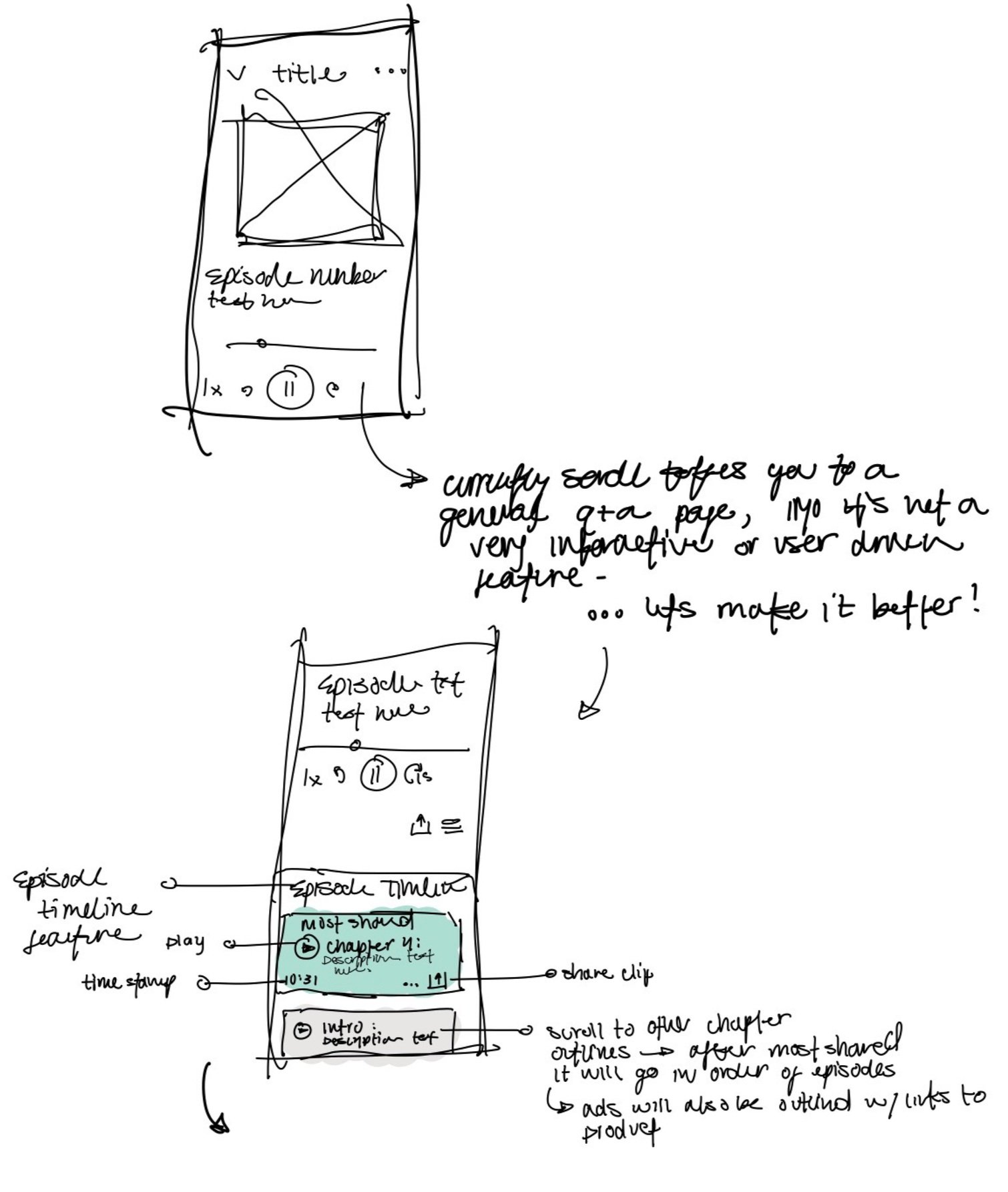
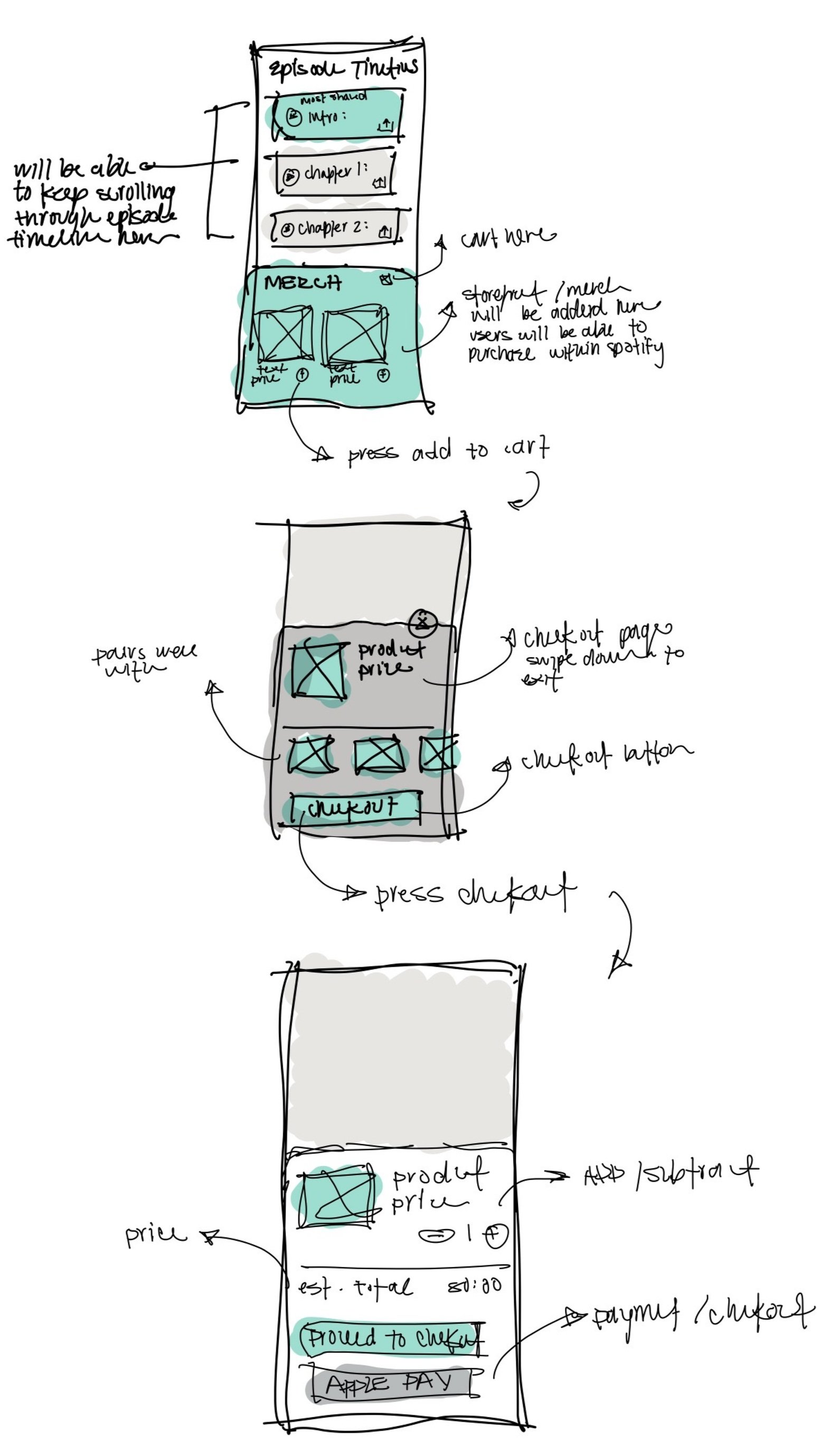
During the sketching and brainstorming phases, no ideas are bad; it’s a time to throw out all ideas onto the page. This process helps refine the visuals and is useful to think through the overall user flow. Keeping things loose and sketchy makes this creative process explorative and efficient.
LO-FI WIREFRAMES
GEARING UP FOR USER TESTING
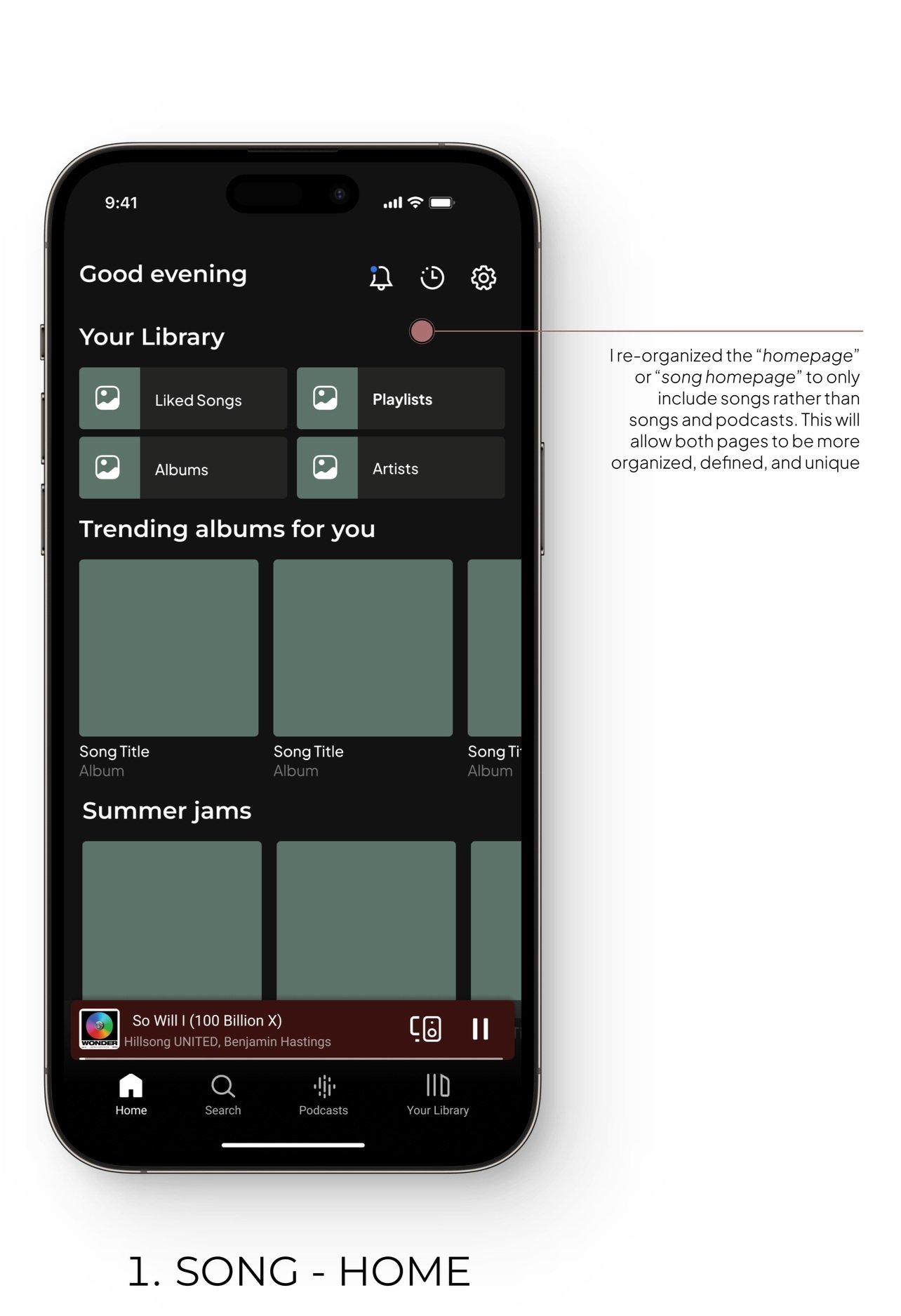
In order to begin user testing, I developed a lo-fi prototype. This prototype not only allowed me to get great user feedback but also allowed me to take my sketches and create a more thoughtful and refined design.
USABILITY TESTING
USER TESTING
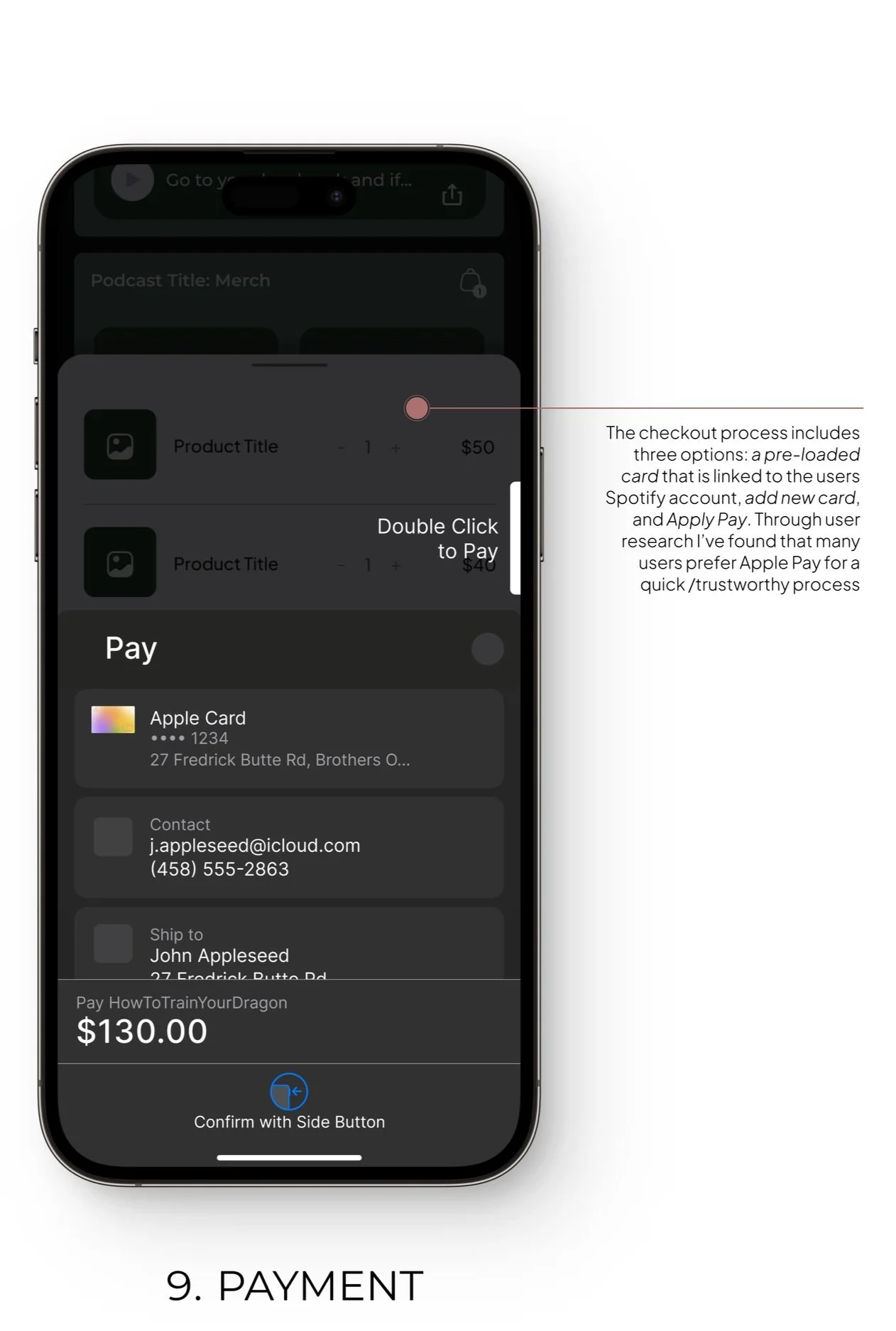
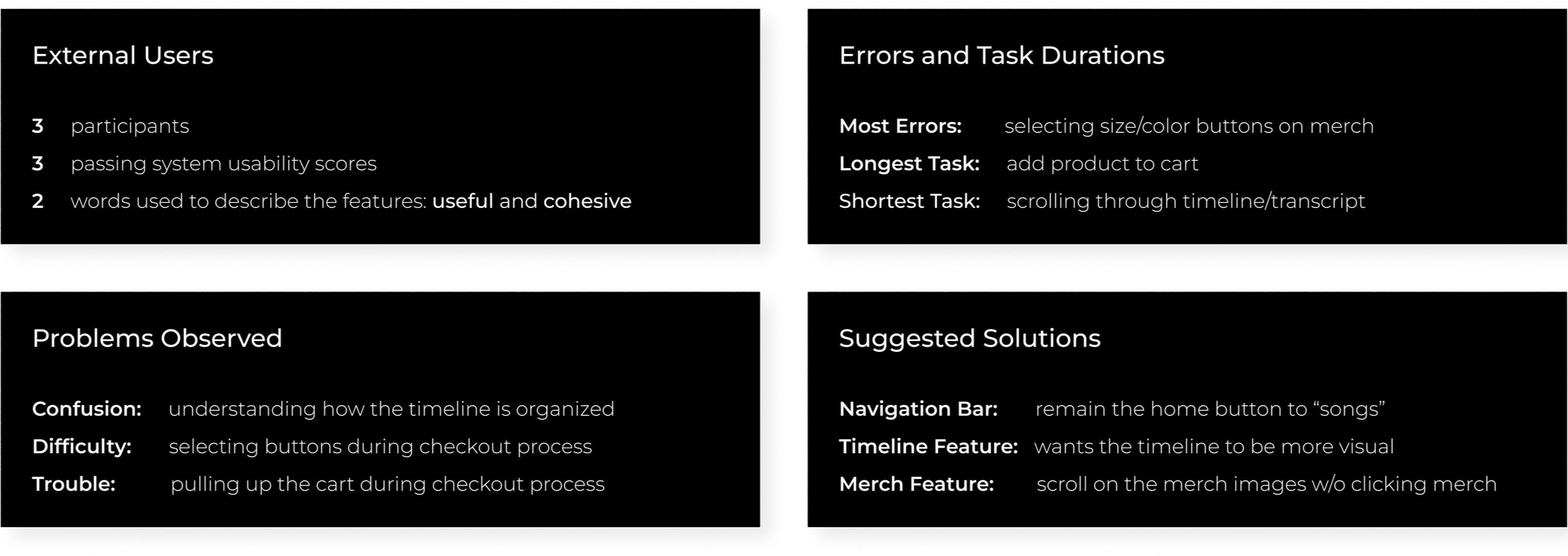
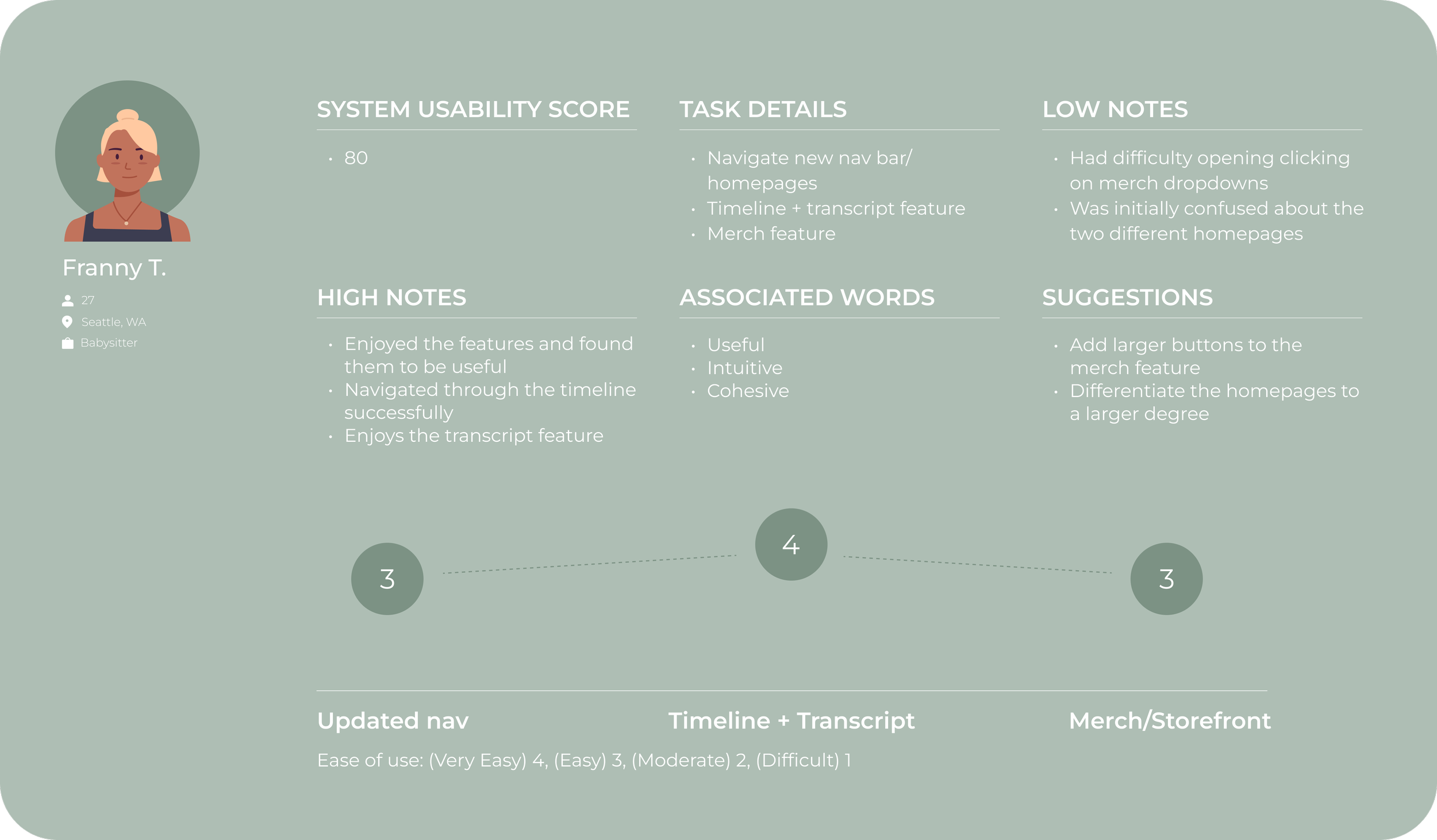
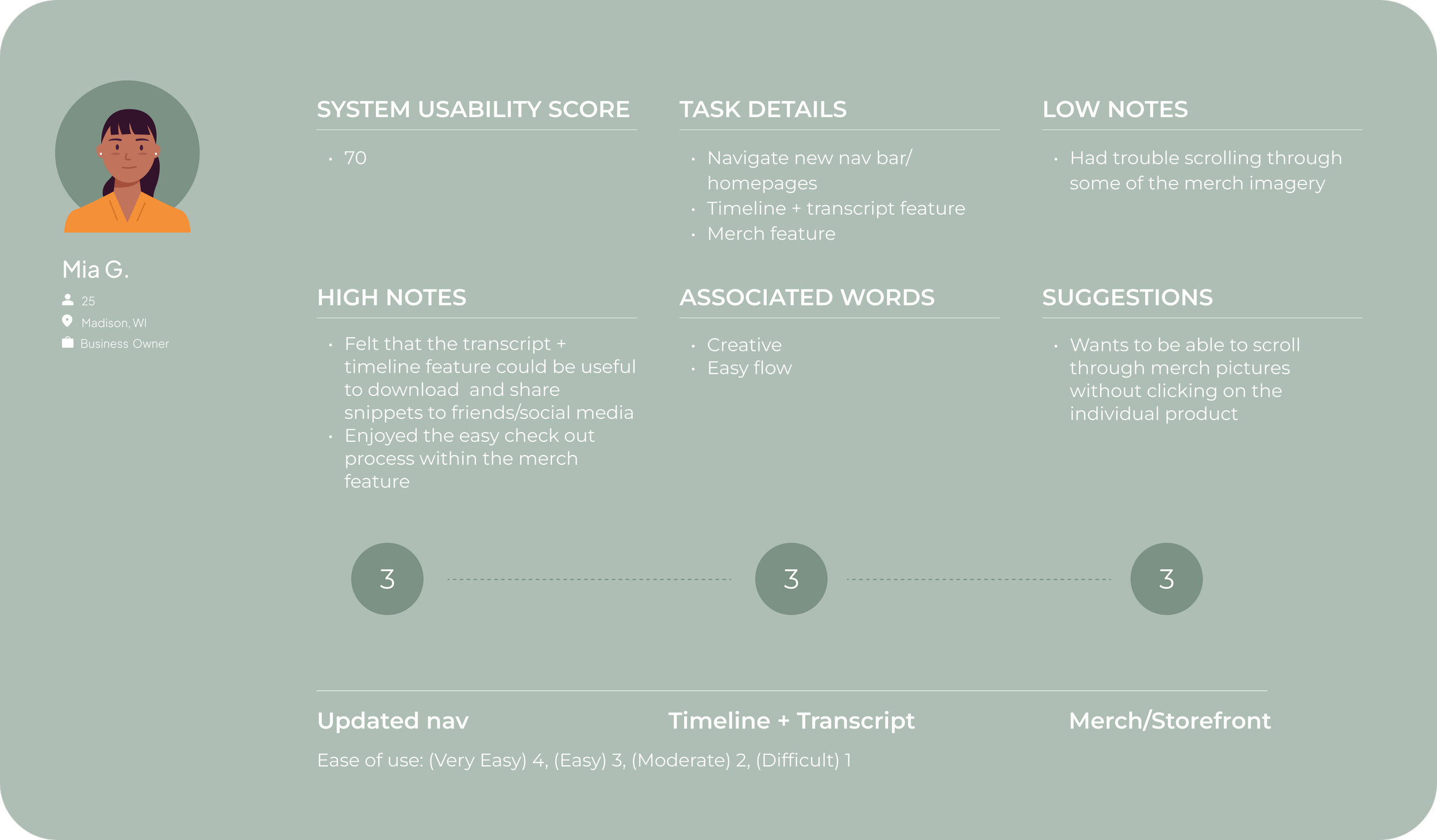
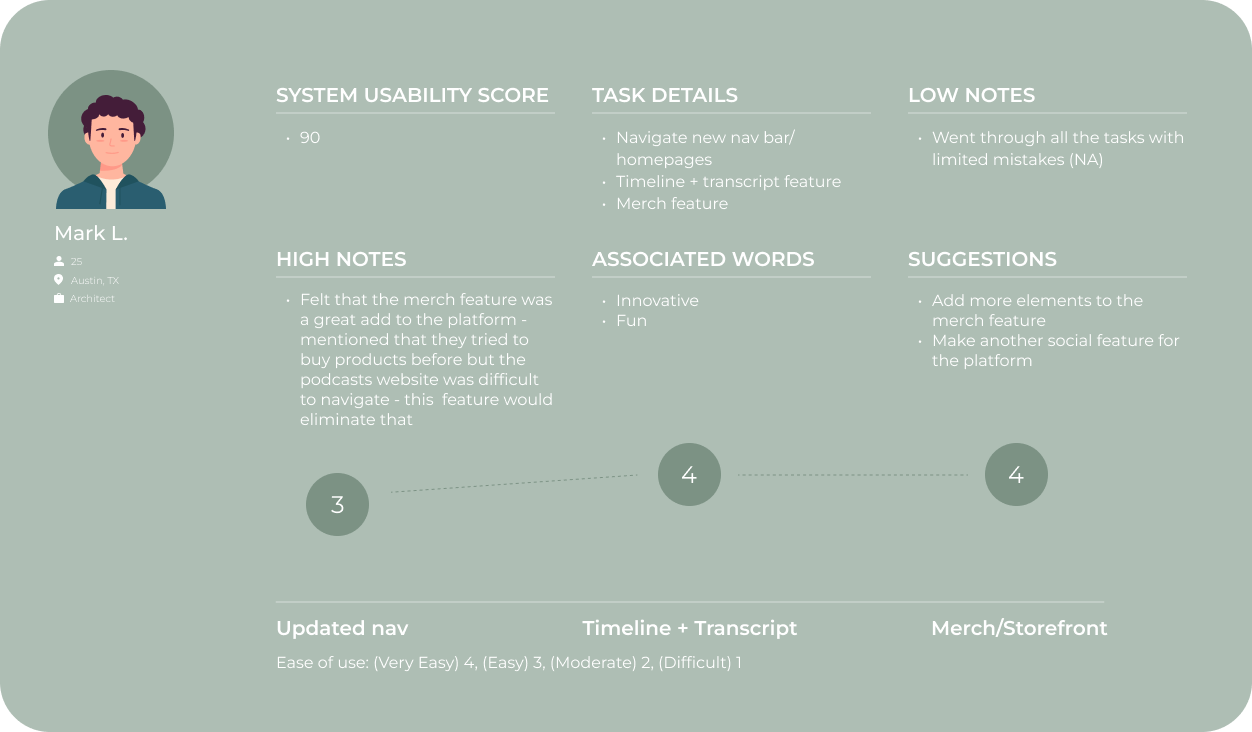
To assess the hi-fi prototype, I conducted three in-person usability tests. Guiding participants through my prototype, I tasked them with three distinct flows: navigating the new podcast homepage, engaging in merchandise selection and checkout, and interacting with the timeline/transcript feature.
RESEARCH GOALS
Craft a user-friendly, responsive, informative, and visually appealing website to enhance brand visibility and online sales. Evaluate feature intuitiveness and utility for users. Assess feature integration within the app's format. Explore user interactions with timeline, transcript, and merchandise elements. Identify podcast-listening challenges. Collect insights on product effectiveness.
DESIGN
WORKING WITH CONTRAINTS
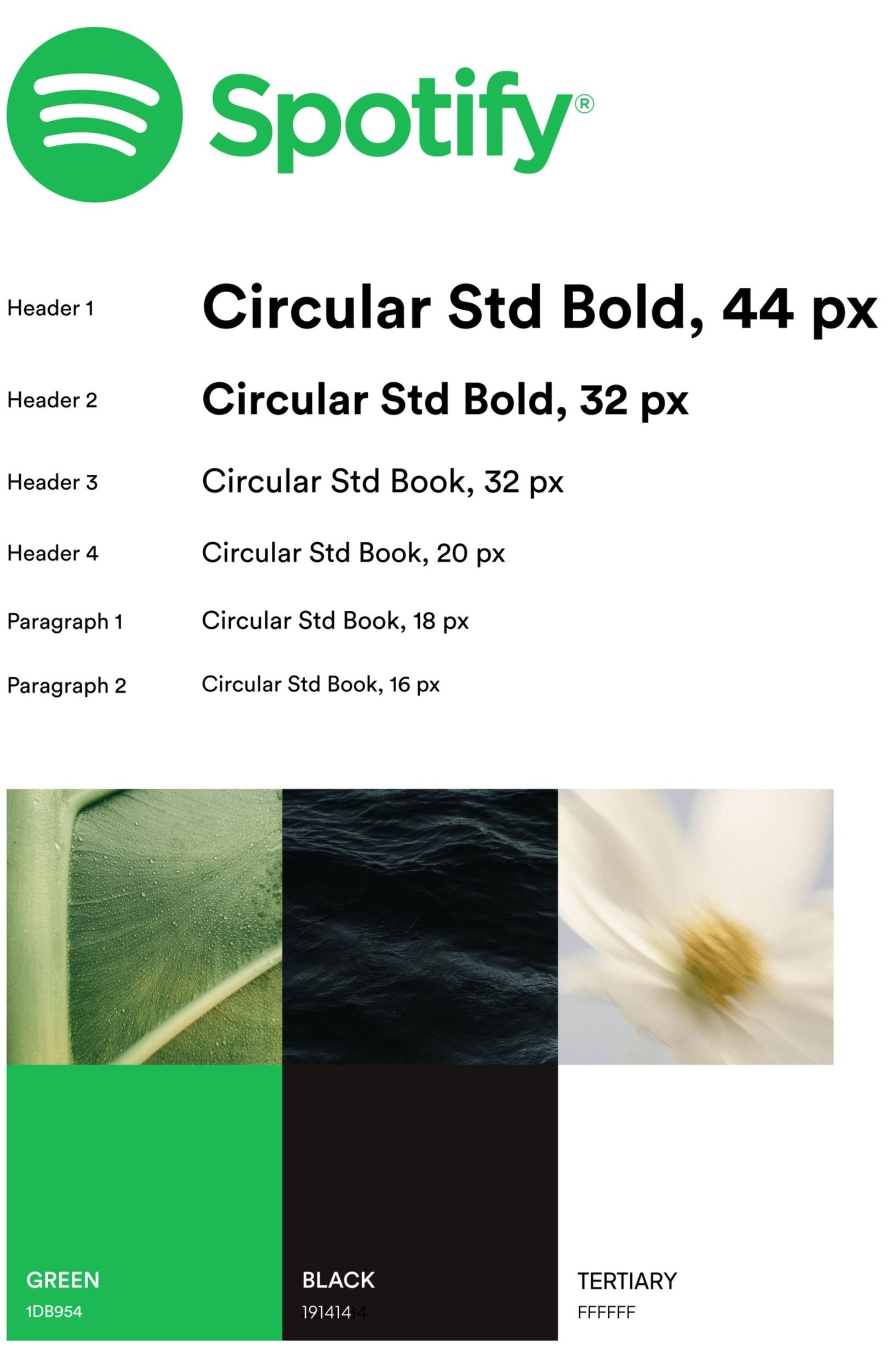
When operating in-house, your focus often shifts to augmenting existing products rather than crafting entirely new ones. In this project, I adhered to stringent limitations. Branding elements remained fixed. Below, you'll find a design overview encompassing Spotify's established color palette and typography.
HI-FI WIREFRAMES
FINAL PRODUCT
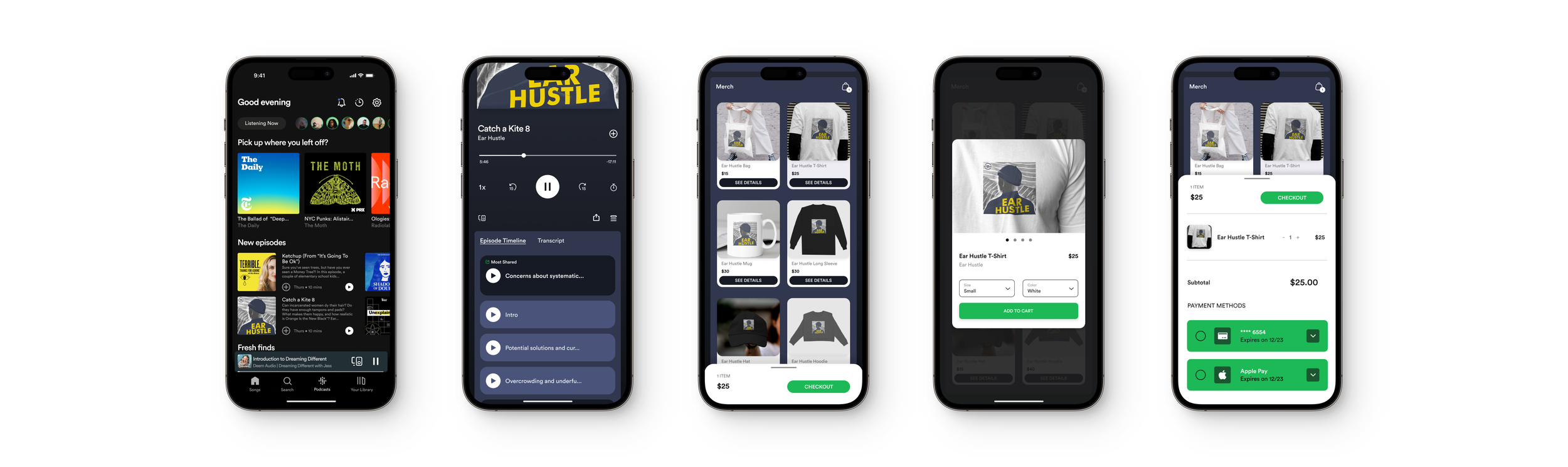
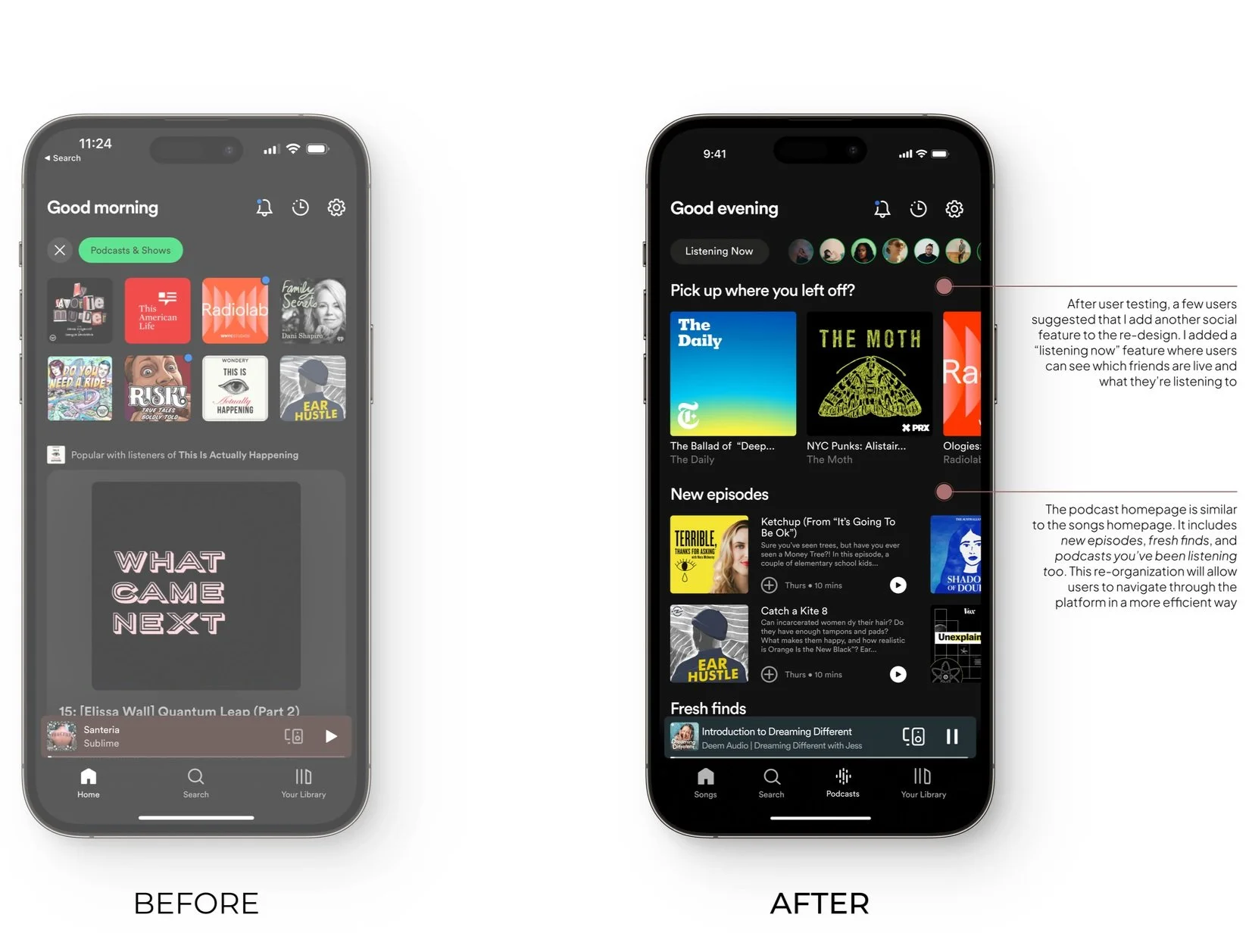
Incorporating user test insights and my own enhancements, the hi-fi prototype elevates Spotify's podcast listening experience. To summarize, the final features comprise:
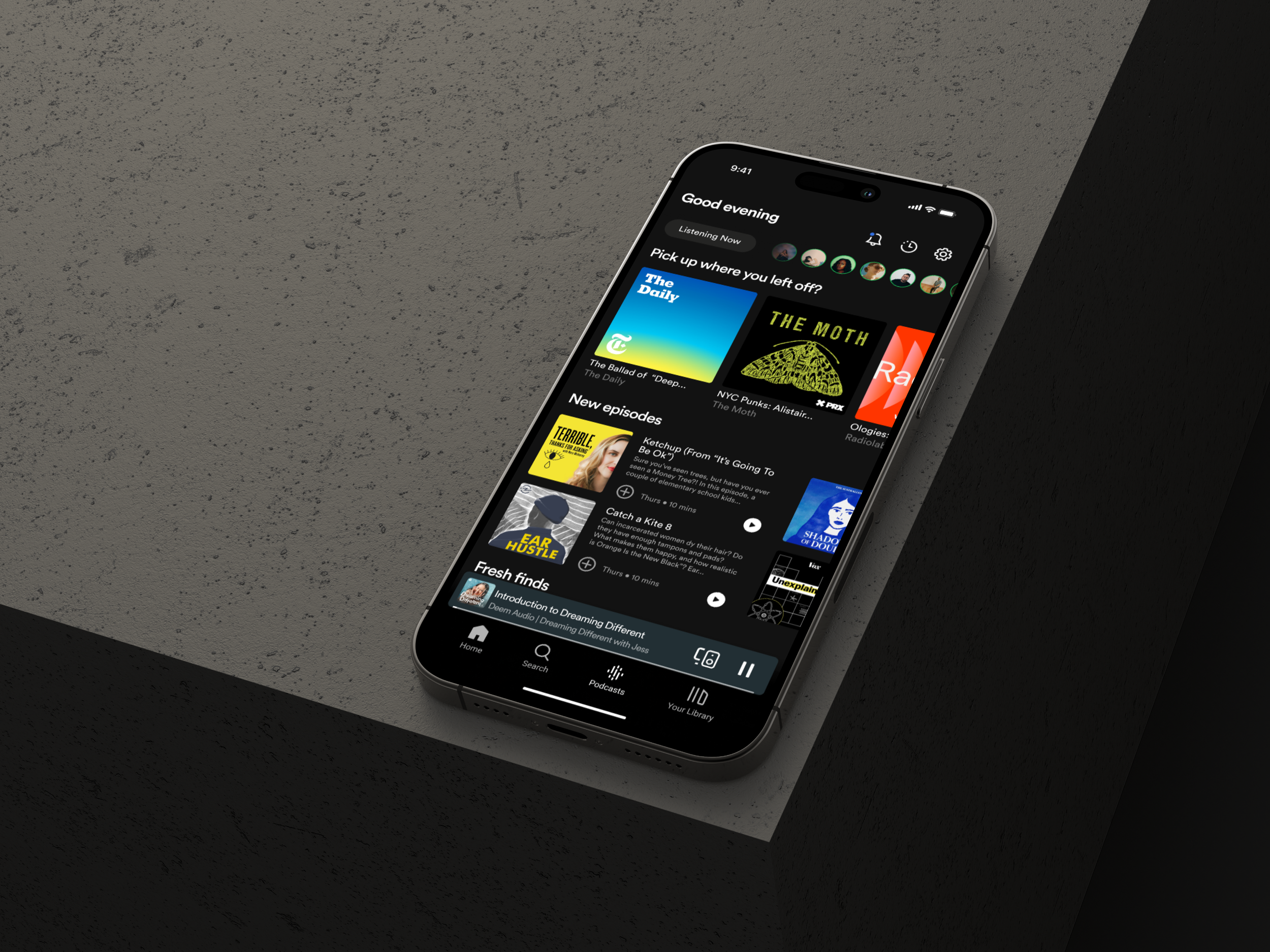
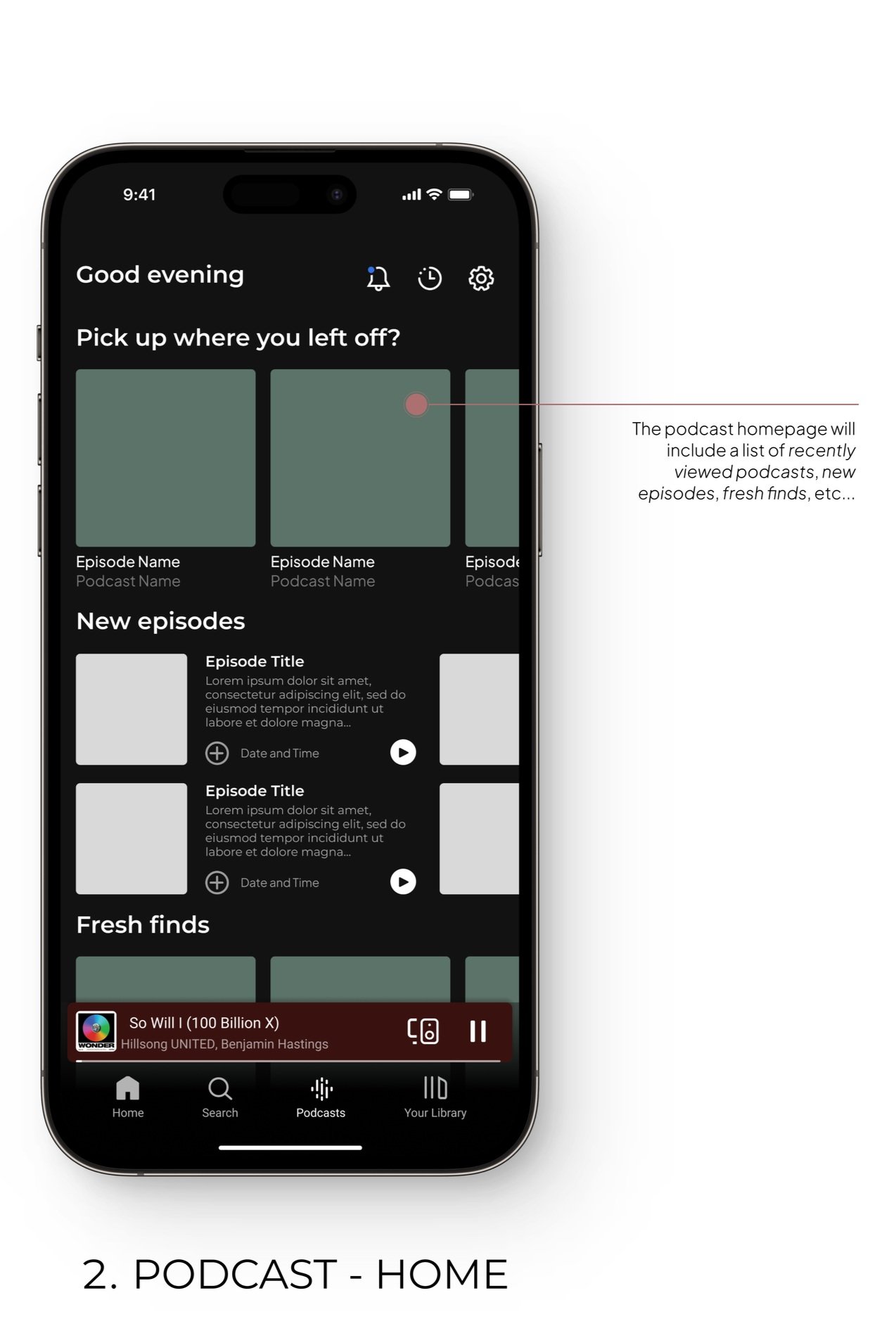
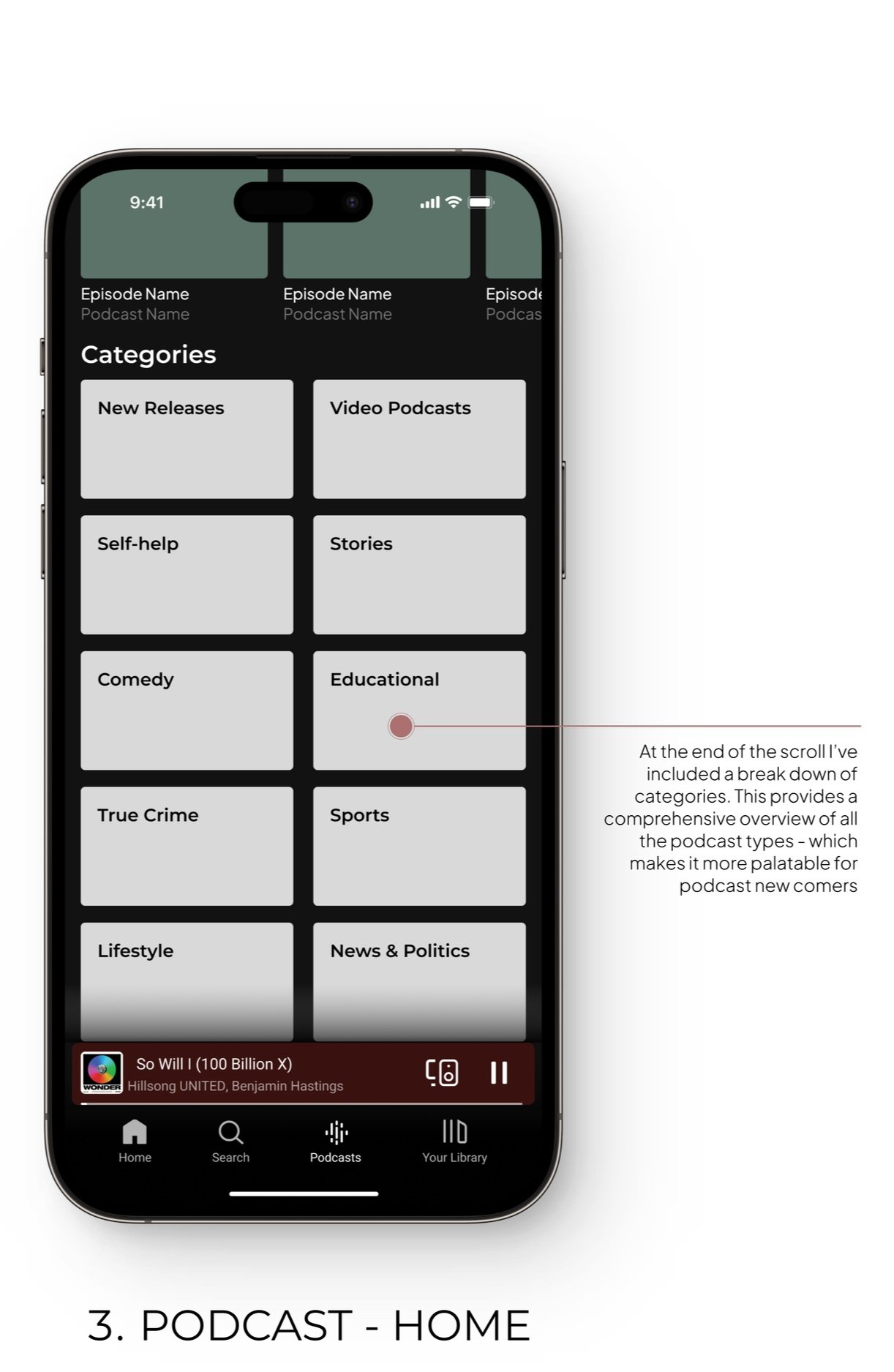
Revamped navigation bar and homepage for enhanced organization and usability
"Listening now" social feature showcasing live podcast listeners
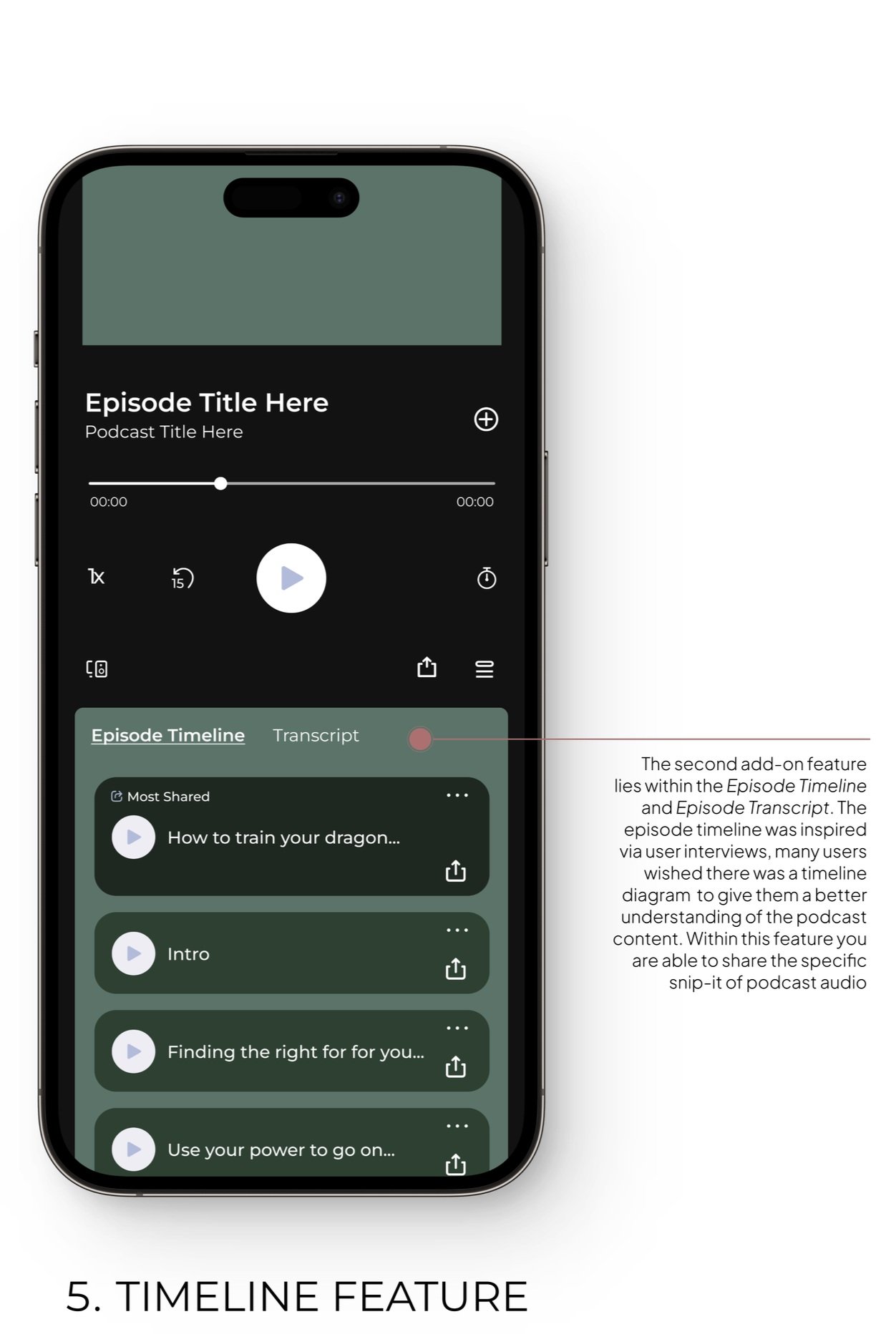
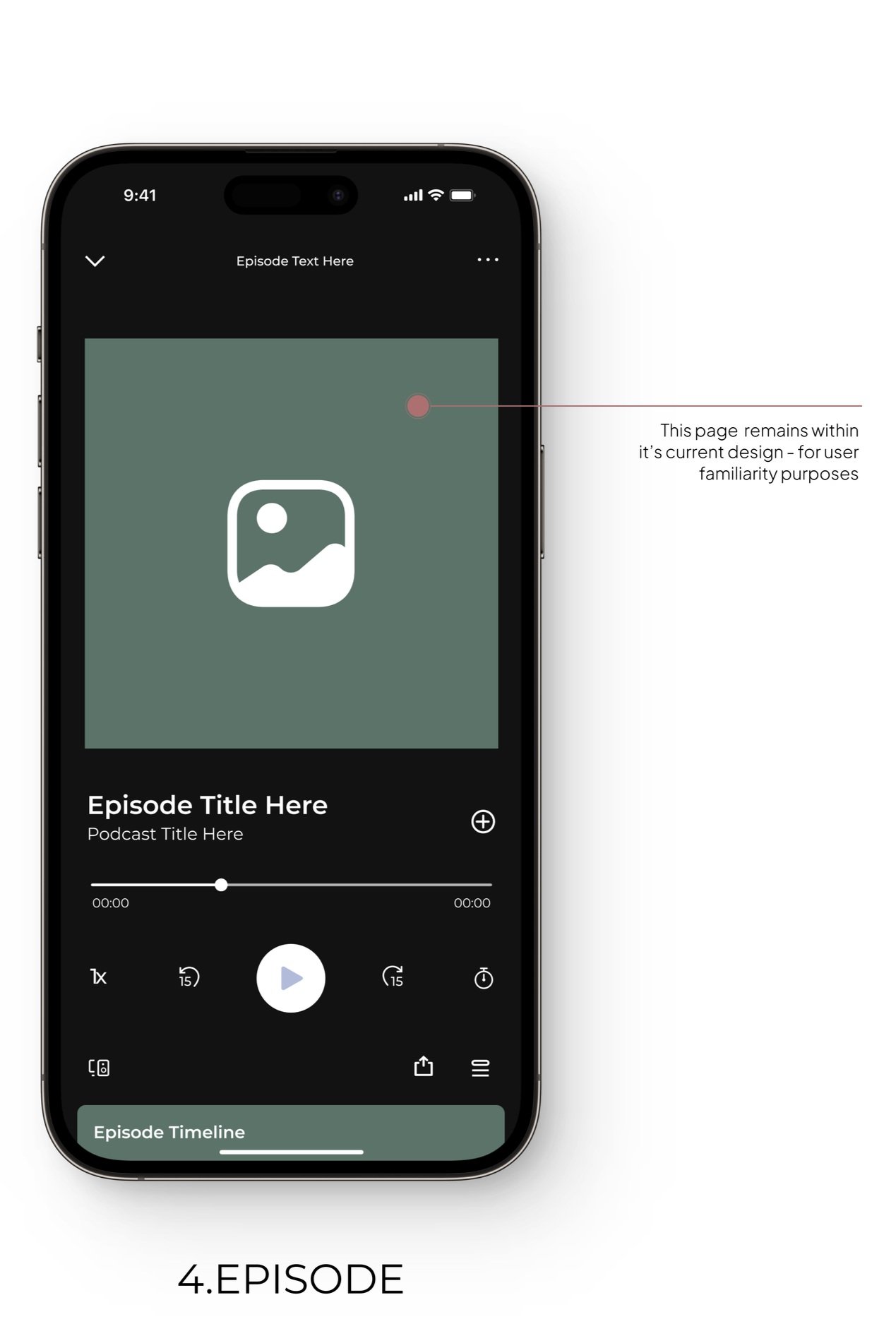
Podcast timeline and transcript offering an episode overview
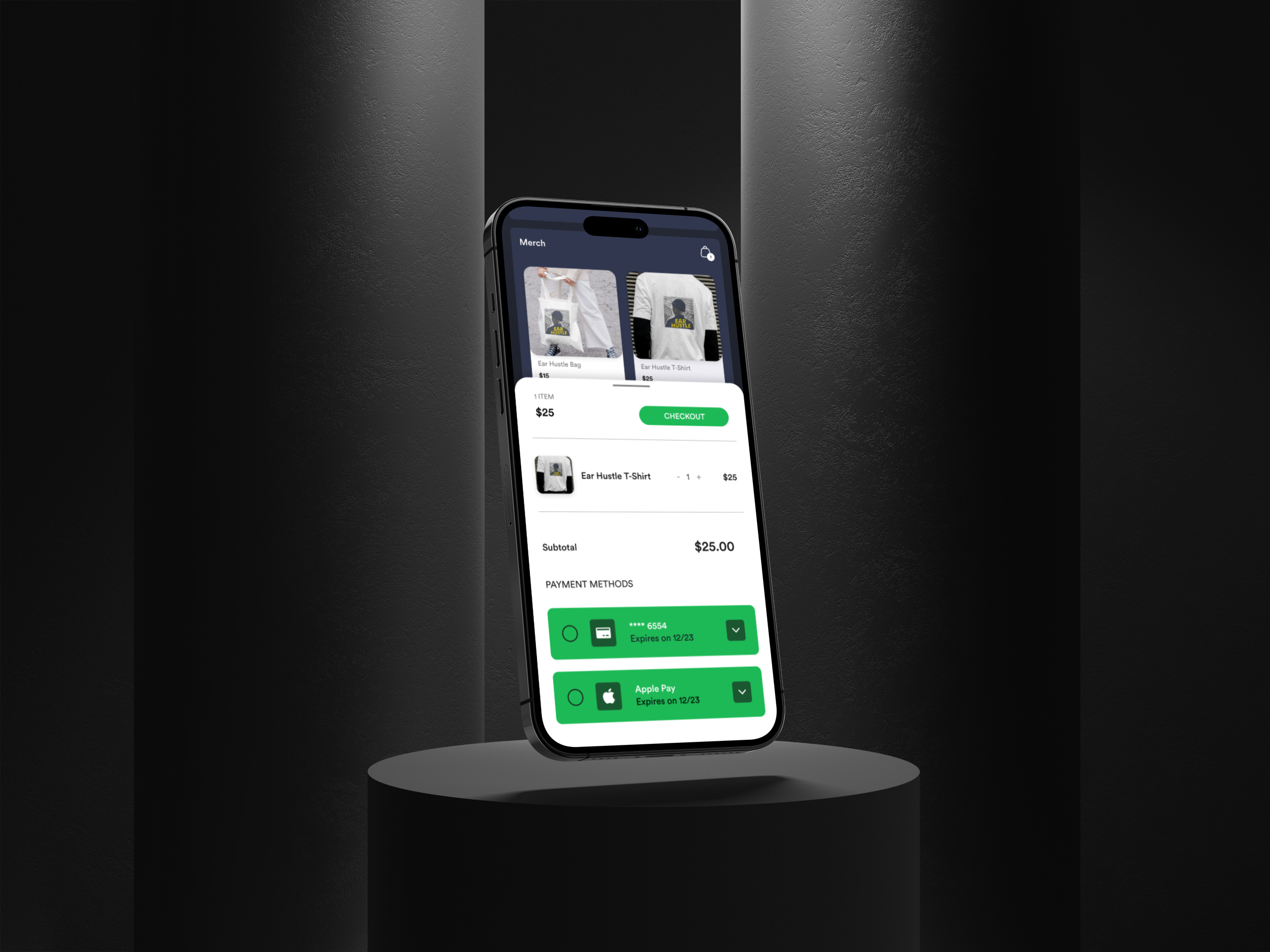
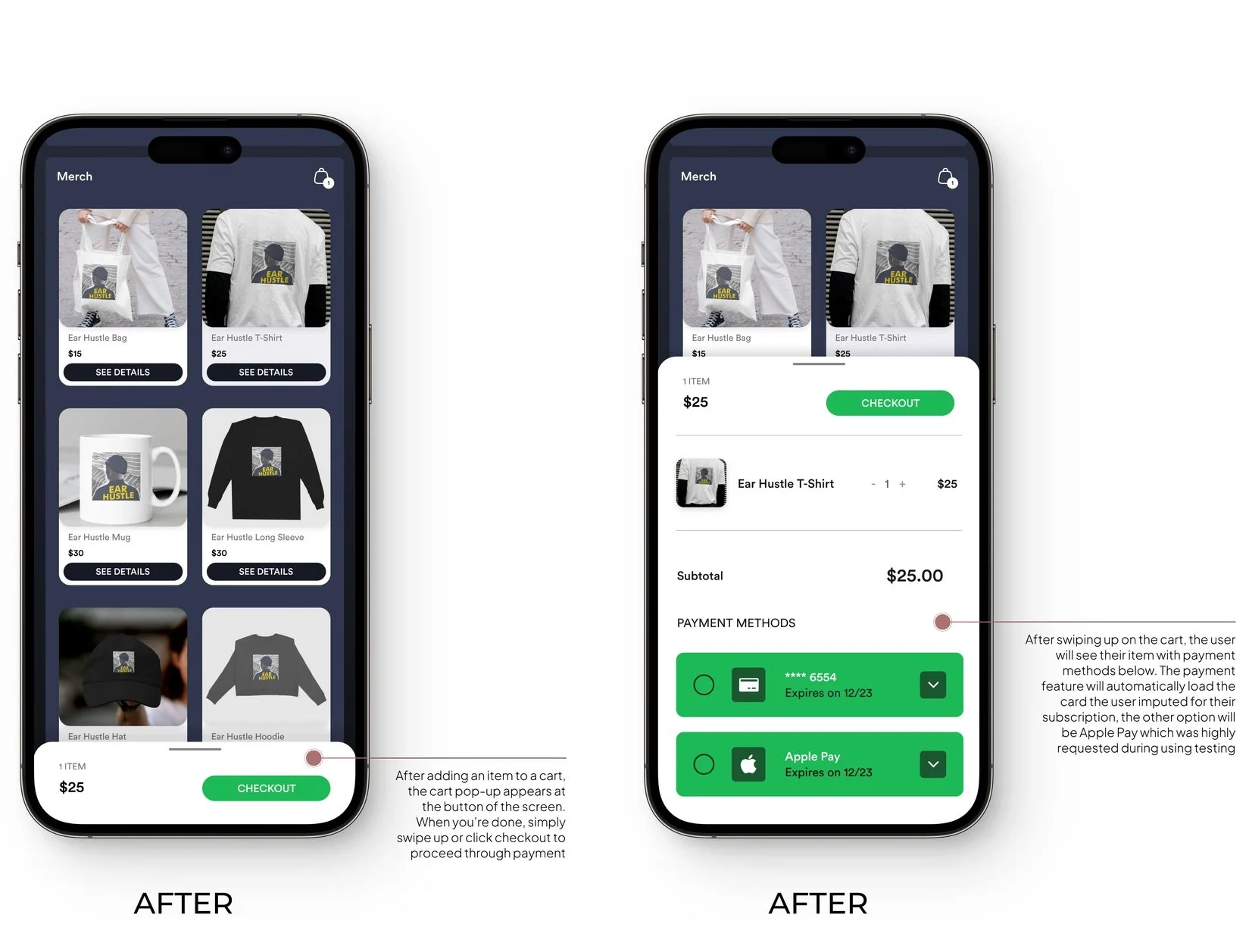
Merch section seamlessly connecting the podcast's storefront to Spotify, a unified source for merch while enjoying podcasts.
CLOSING THOUGHTS
DESIGN IS ITERATIVE
Design is an iterative process that frequently undergoes multiple revisions until achieving perfection. Given more time, I would have delved further into user testing post-hi-fi wireframes, obtaining valuable insights into the intended user base. Armed with research, I'd revisit my wireframes and re-design according to feedback. In conclusion, I firmly believe that design is therapeutic. The journey of creation or re-creation is a captivating, intricate, and iterative one.